KRG Minister Announces Strategic Shift Toward Contemporary Vocational Learning
The Kurdistan Regional Government is transitioning vocational schooling from a classic academic model to a modern "dual system" that prioritizes practical training within the private sector
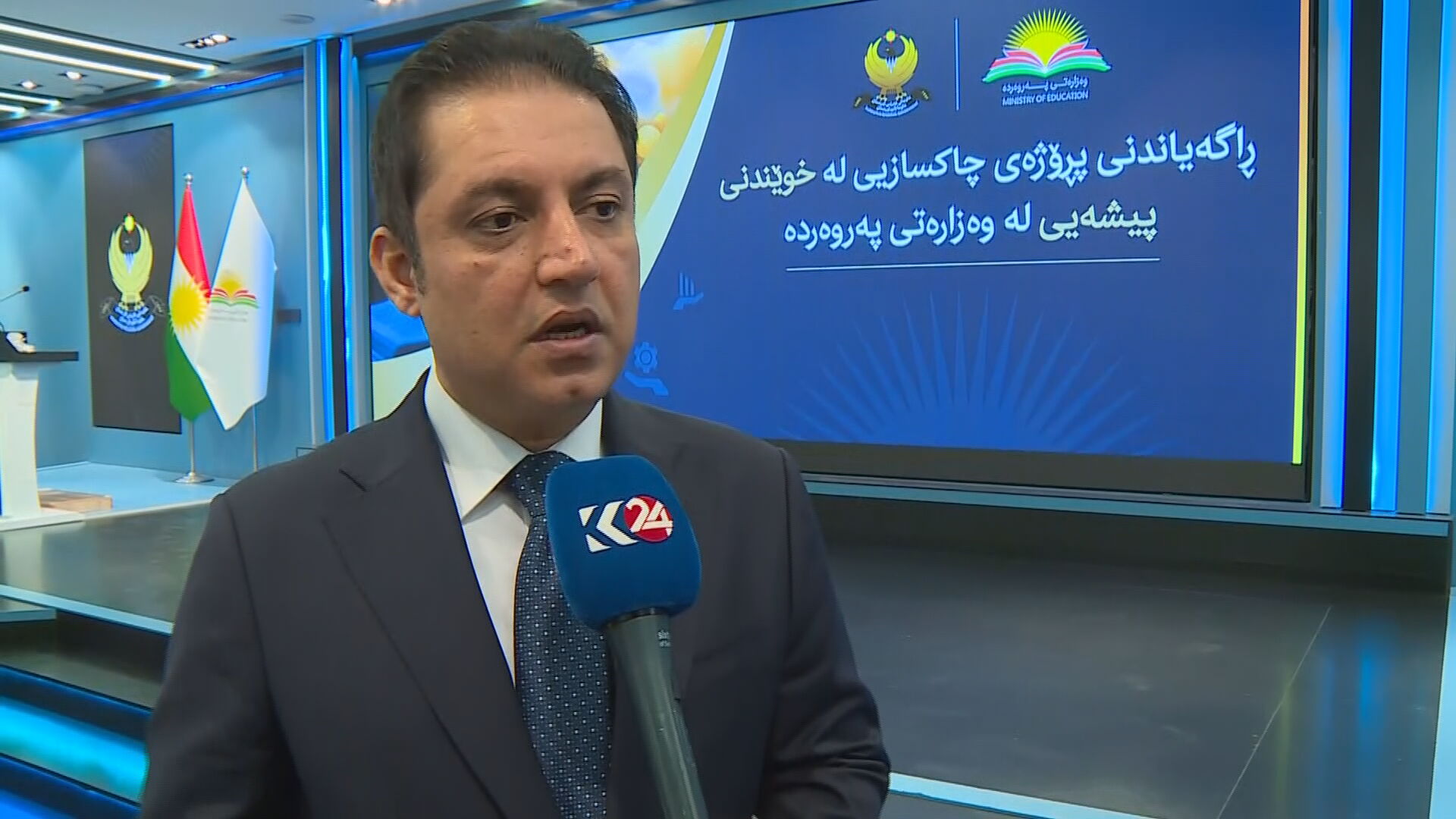
ERBIL (Kurdistan24) - In a decisive move to align the regional workforce with the demands of a modern economy, Minister of Education Alan Hama Saeed on Thursday announced a sweeping transformation of the vocational education sector, transitioning from traditional classroom-based instruction to a contemporary, site-based practical model.
The minister revealed the details of the reform package on Thursday, marking a departure from outdated educational structures. The Kurdistan Regional Government (KRG) has officially discarded curricula dating back to the 1970s and 1980s, replacing them with modern programs developed in 2023 and 2024 that are already being implemented in classrooms.
The cornerstone of the reform is the introduction of a "dual system" designed to bridge the gap between academic theory and professional reality. Under this new framework, students in Grade 10—the first year of vocational study—will focus on a foundation of English language proficiency and essential supporting subjects.
During the second and third years of study, the curriculum splits: students receive theoretical instruction within their schools while completing their practical and applied training directly at professional work sites relevant to their specific trades.
The strategic goal is to ensure graduates are immediately employable. Minister Alan Hama Saeed told Kurdistan24: "The strategic objective of the ministry is to prepare skilled and competent cadres, so that the graduate is in demand by the labor market and the private sector immediately after finishing their studies, given the modern practical and academic experience they possess."
The reform also includes a significant expansion of the vocational landscape. The number of specialized trades available to students has tripled, growing from just five specialties to 15 diverse fields.
This transformation follows a successful three-year pilot program in Erbil, where a vocational institute utilizing contemporary systems and English-language instruction demonstrated high success rates. Following these results, the KRG expanded the model to Sulaimani.
Guided by the directives of Prime Minister Masrour Barzani to ensure equitable development across all territories, the ministry also established a similar institute in the Kfri district. This year, the "Pilot Project" has been further extended to four vocational secondary schools in Erbil, and one each in Sulaimani and Duhok.
This vocational shift is a key pillar of a wider educational overhaul in the Kurdistan Region. It follows the Fourth Kurdistan Educational Forum (KEF 2026) held in late July, which operated under the theme "Modern Education: Skills and Quality."
During that forum, Prime Minister Masrour Barzani launched the "My School" (Qutabxanekem) interactive platform, a flagship digital initiative aimed at integrating technology into the public school system. Minister Alan Hama Saeed previously noted that while the platform is ready for primary education, development is ongoing for Grades 10, 11, and 12 to ensure secondary students are equipped for a digital economy.
The modernization efforts also involve the largest curriculum reform in the region’s history. The Ministry of Education has revised 110 textbooks across all grade levels, from kindergarten to Grade 12, introducing 12 entirely new subjects. This massive undertaking, which is 80% complete, aims to refresh classroom content and align learning with international standards.
By linking curriculum development, digital transformation through the "My School" platform, and the new dual vocational system, the KRG is laying the foundation for an education system that is both resilient and internationally aligned.
The current reforms represent a long-term roadmap to ensure that by the 2028-2029 academic year, every student in the Kurdistan Region has access to a modern, consistent, and practical education that meets the challenges of an evolving global market.