Kurdistan Region Unveils 10-Year Road Development Master Plan
KRG Minister Dana Abdulkarim says 872 road projects spanning 3,400 kilometers are complete, with 522 more underway amid funding and housing challenges.
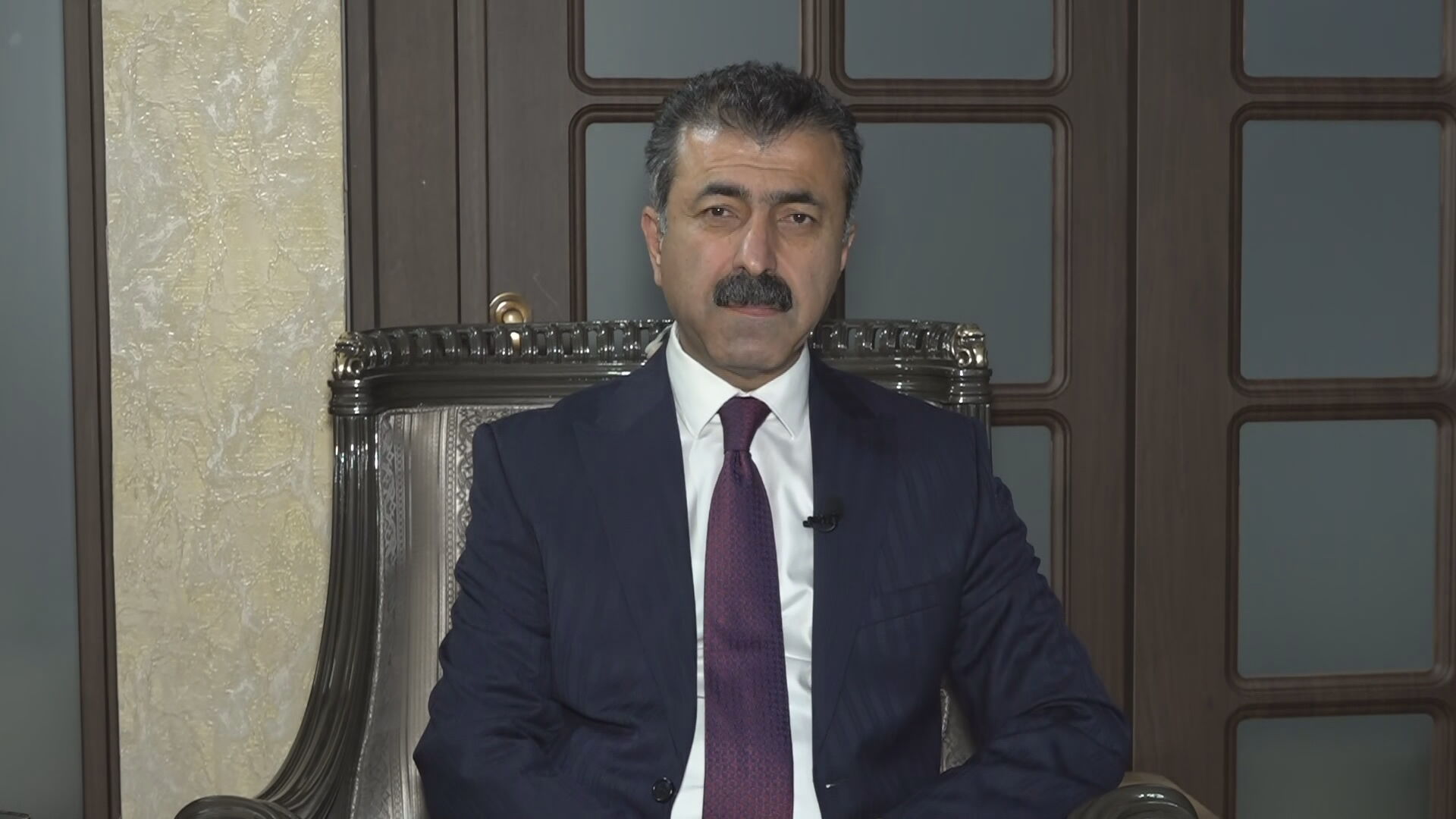
ERBIL (Kurdistan24) - The Kurdistan Regional Government (KRG) has completed 872 road projects covering 3,400 kilometers at a cost exceeding 1.148 trillion Iraqi dinars under its Ninth Cabinet, Construction and Housing Minister Dana Abdulkarim said on Thursday, Nov. 5, while outlining plans to modernize the Region's road network over the next decade.
Speaking to Zhino Mohammed on Kurdistan24's "Basi Roj" program, Abdulkarim said another 522 projects, valued at more than 3.3 trillion dinars, remain under implementation.
Once completed, those works are expected to add approximately 3,000 kilometers of roads, including main routes, secondary connections and dual carriageways.
He said roads serving more than 450 villages had also been paved and opened, compared with the 370 villages he cited in an earlier interview. The figures, he explained, cover different categories of projects rather than only major highways.
The minister described a road master plan presented at a conference in September as the basis for future investment.
The 10-year strategy seeks to upgrade the network to engineering standards comparable with those of developed countries, while taking account of population growth and changing transport needs.
The plans remain dependent on budgets and implementation, he acknowledged. Abdulkarim said financing constraints have repeatedly interrupted construction, even where contracts have been signed and work has begun.
Newly Opened Road and Continuing Construction
The interview followed Prime Minister Masrour Barzani's inauguration of the Kore-Shaqlawa-Qandil road, a roughly 10-kilometer section built at a cost of more than 109 billion dinars.
The minister said it includes two tunnels, two underpasses and an overpass and forms part of a longer route planned toward the Haji Omeran border area.
The opening does not mean the entire planned border route has been completed.
Abdulkarim said several stages remain before the road reaches Haji Omeran, making the newly inaugurated section one part of a longer transport corridor rather than the final stage of construction.
One distinctive feature is a specially marked section of road designed to play the Kurdish anthem "Ey Reqib" through vibrations as vehicles pass over it at the specified speed.
Abdulkarim said the feature, proposed by the prime minister, is permanent and could be considered for other roads if residents respond favorably.
Elsewhere, the Erbil-Koya dual carriageway has reached 48 percent completion, according to the minister.
He said work had resumed on the second and third phases of the Dukan-Chwarqurna road, with approximately 20 to 25 kilometers already completed and in use. The ministry hopes to finish those phases by the end of 2027.
He also said the design of the Koya-Dukan road had been completed, but its final cost assessment was still being prepared for submission to the Council of Ministers during November.
Approval would be needed before implementation could begin, potentially before the end of 2026.
Other priorities in the master plan include the Said Sadiq-Penjwen dual carriageway, further stages of the Qandil-Haji Omeran route, expected to include about 11 tunnels overall, and a proposed expressway that could attract investment-sector participation.
Why the Erbil-Sulaimani Road Was Delayed
Asked why the Erbil-Duhok road had advanced further than the Erbil-Sulaimani route, Abdulkarim rejected the suggestion of political discrimination.
He said substantial work on the Duhok connection had begun under previous cabinets, while the Sulaimani route stalled amid the 2014 federal budget cuts, financial difficulties and the war against ISIS.
He also criticized the legacy of administrative division between Erbil and Sulaimani. Although the two administrations were formally unified in 2005, he argued that a 57-43 percent arrangement had continued to influence how government institutions functioned and how services were delivered.
"Since 2005, the government has been united formally, but in practice there have continued to be two administrations," he said, calling for the institutional issue to be resolved.
The minister identified another obstacle at the road serving villages near the foothills of Qandil.
He said the contract was in place, but the contractor could not obtain advance payments in cash despite the ministry crediting the relevant bank account. Under contractual provisions, he explained, contractors can suspend work when payments are unavailable.
Abdulkarim said similar cash shortages had delayed other projects and thanked companies that continued construction using their own resources. His account described why certain projects had slowed, but did not provide new dates for all outstanding works.
Housing Dispute Remains Unresolved
The discussion also addressed delayed housing for low-income families. Abdulkarim clarified that the often-mentioned 20,000-unit program belongs to the Kurdistan Board of Investment, while his ministry oversees a separate scheme of 9,000 units contracted in 2012.
Some of those units have been completed; others are at different stages of construction, including above and below 50 percent.
The minister said the ministry favors allocating both finished and unfinished homes through an applicant points system, with completed units going to higher-scoring applicants and the government subsequently finishing those still under construction.
The Council of Ministers, he said, instead favors distributing only completed units at this stage.
"We, as the ministry, want all of the units to be distributed, while the Council of Ministers says only the completed units should be distributed," he explained.
No final decision has been reached on that disagreement. For the road network, meanwhile, the minister's figures show substantial completed work alongside a larger pipeline of projects whose delivery will depend on funding, approvals and the resolution of longstanding administrative and payment problems.