US Prepares for Possible Iran Strikes While Regional Mediators Seek Deal
Trump weighs renewed Iran strikes after security talks as Qatar and Russia pursue diplomacy and Tehran demands concessions following the US midterm elections.
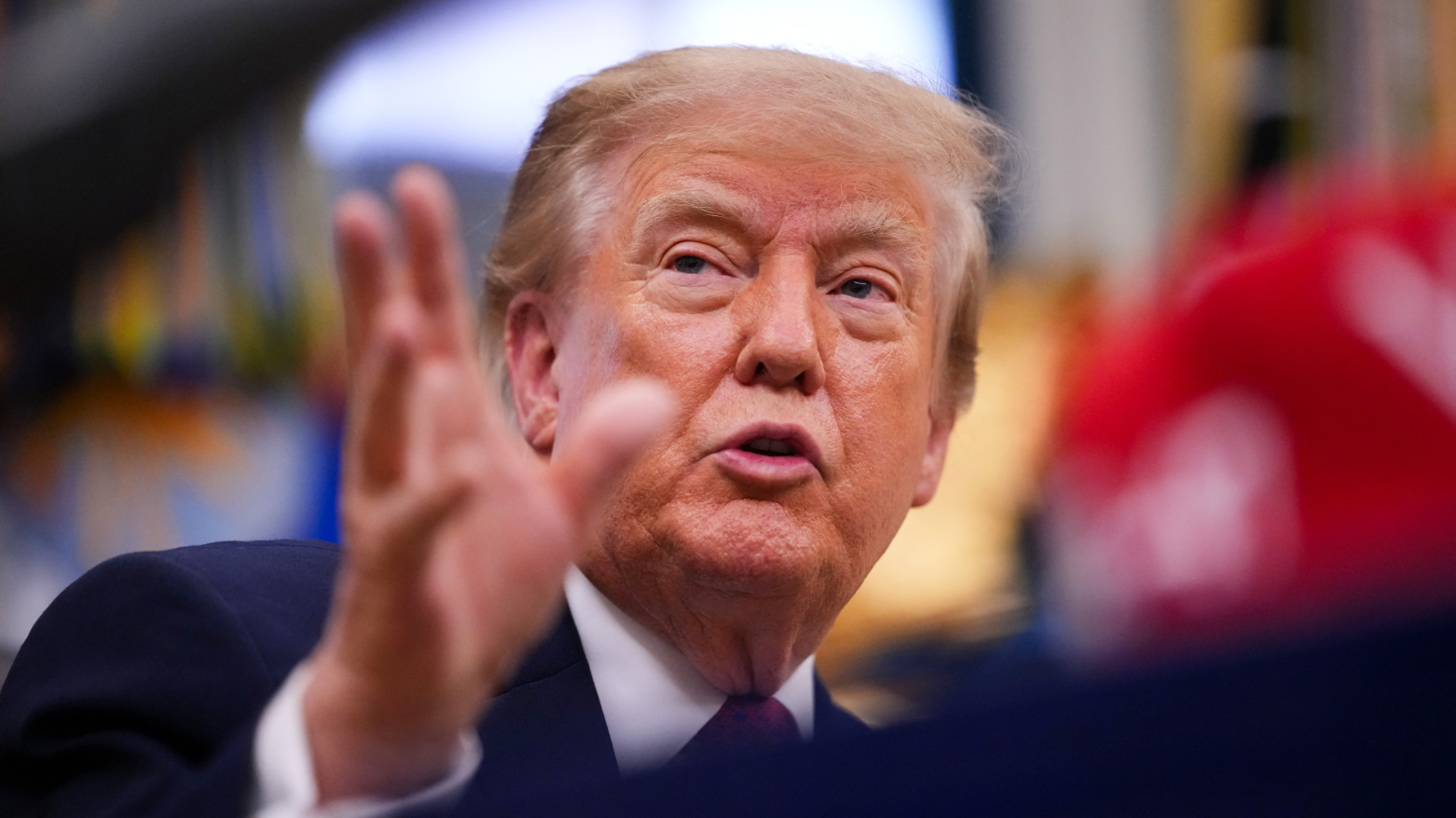
ERBIL (Kurdistan24) - US President Donald Trump is weighing whether to resume large-scale attacks on Iran following a meeting with his national security advisers, as regional mediators pursue a proposal to restart negotiations and Tehran insists that Washington first meet its conditions.
Trump met senior security officials on Thursday, Nov. 5, in the first such discussion about Iran since the US midterm elections, Axios reported, citing two American officials. The meeting came as the administration considered renewed military operations, continued economic pressure or a negotiated arrangement involving concessions to Iran.
The president told reporters in the Oval Office that a decision would come soon, while raising the possibility of further strikes aimed at preventing Iran from rebuilding its nuclear program. He also expressed reluctance to inflict further destruction on the country, without ruling out renewed attacks.
"Now we will make a decision," Trump said, according to Axios. He did not announce a military order or a deadline for reaching an agreement.
The immediate question for Washington is whether another round of strikes would secure concessions that months of conflict and economic restrictions have not produced, or further deepen a regional war that has already disrupted shipping, raised energy costs and contributed to political discontent in the United States.
Three Choices After the Midterms
Axios correspondent Barak Ravid reported that the White House was considering three broad options: intensifying attacks, maintaining measures designed to restrict Iran's economy, or reaching a settlement requiring Washington to make significant concessions. None had been publicly selected by Thursday.
US Central Command was completing preparations for a possible return to major combat operations but had received no new directive from Washington, a US official told Axios. The report also identified the potential arrival of a third American aircraft carrier strike group as one indicator of preparations for renewed hostilities.
The USS Theodore Roosevelt and its accompanying vessels were due to make a port call in Singapore beginning Friday, the official said. The group was not expected to reach the area overseen by Central Command before mid-November. Its movement, therefore, did not constitute confirmation that Trump had decided on another offensive.
Trump's calculations come after Democrats made substantial gains in Tuesday's midterm elections. The Iran war, launched by the United States and Israel on Feb. 28, was among the issues facing voters, alongside broader concerns about household costs and economic conditions.

In reporting by The Associated Press journalists Aamer Madhani, Linley Sanders, Samy Magdy and Matthew Lee, Vice President JD Vance directly linked the Republican defeat to the war. Trump acknowledged its political impact but said he would not have handled the military campaign differently.
The AP Voter Poll, which surveyed more than 100,000 voters, found that about six in ten believed US military action against Iran had been the wrong decision. Approximately one-third said the war had been crucial to their congressional vote, compared with roughly half who gave that importance to living costs or government corruption.
Those findings indicate substantial opposition to the campaign without establishing that it alone determined the election outcome. They also leave Trump facing competing pressures: demands to curtail a costly conflict and arguments that Washington should intensify pressure to achieve its stated nuclear objectives.
The AP reported that voters were especially concerned about fuel prices, with roughly six in ten saying they were very worried about gasoline and diesel costs. About two-thirds of that group supported Democratic candidates in their local House races. The survey figures underscore how the war has become intertwined with household expenses, even for voters whose foremost concern was not foreign policy itself.

Qatar's Proposed Sequence for a Deal
While the administration reviewed its military options, diplomats were attempting to create a route back to negotiations. Iranian Foreign Minister Abbas Araghchi spoke Thursday with regional interlocutors from Qatar, Saudi Arabia, Turkey, the United Arab Emirates, Oman and Egypt, according to Axios.
Qatari mediators were discussing a draft two-day confidence-building arrangement with Iranian officials and the White House. The proposal would link early US economic and maritime steps to renewed international access to Iranian nuclear facilities and negotiations over enriched uranium.
On its proposed first day, Washington would lift its naval blockade and release a portion of Iran's frozen funds. In return, Tehran would formally invite inspectors from the International Atomic Energy Agency to visit nuclear sites damaged in the war, drawing on an understanding reached in Cairo the previous year, according to regional sources cited by Axios.
The second day would involve reopening the Strait of Hormuz, followed by renewed nuclear talks centered on Iran's stockpile of highly enriched uranium. The proposal remains under discussion; neither government was reported to have accepted its sequence or agreed to implement it.
The description of a proposed reopening does not mean all passage through the strait has stopped. The Associated Press reported that oil shipments had resumed with US Navy escorts for international tankers, even as the wider confrontation and restrictions on shipping continued.
The distinction matters because the strait remains central to both Iranian leverage and global energy markets. A broader agreement on navigation could affect shipping conditions far beyond the two countries, but access arrangements and nuclear monitoring would still require negotiated implementation.
The negotiating sequence also leaves sensitive questions unanswered. The reported draft does not specify how much money would be released, how inspectors would gain safe access to damaged facilities or what guarantees either party would receive once talks resumed. The highly enriched uranium stockpile remains a potential source of disagreement because discussions over inspection and disposition are not equivalent to a final nuclear settlement.

Tehran Looks to Moscow
Iran was also engaging Russia. Mohsen Rezaei, secretary of Iran's Supreme National Security Council, met Russian President Vladimir Putin at the Kremlin on Thursday, days after the two had spoken by telephone and Putin offered to help mediate between Washington and Tehran.
Rezaei said he brought a message from Iran's Supreme Leader Mojtaba Khamenei and that Putin expressed readiness to assist efforts to end the war. But he also indicated that Tehran would not reopen the Strait of Hormuz or begin negotiations until seven conditions communicated to the Americans were fulfilled.
The report did not list those seven conditions, leaving their precise contents and the distance between the negotiating positions unclear. Rezaei's position nevertheless contrasted sharply with the proposed two-day arrangement, under which reciprocal steps would begin before broader nuclear negotiations resumed.
Public anger in Iran was also visible. Agence France-Presse reported that demonstrators in Tehran's Enghelab Square burned a large poster depicting Trump, Vance, US envoy Steve Witkoff and Israeli Prime Minister Benjamin Netanyahu. Some participants waved red flags demanding revenge for the death of former Supreme Leader Ayatollah Ali Khamenei, killed in the opening US-Israeli attacks in February.
The demonstrations followed the Republican election losses, which Iranian officials portrayed as a political setback for Trump. Rezaei claimed Tehran had already defeated Washington strategically, including in the Strait of Hormuz, although that was his government's characterization of an ongoing conflict rather than a settled military outcome.

Military Risks and Domestic Costs
Israeli Prime Minister Netanyahu had urged Trump to resume strikes during a weekend telephone call, according to an individual briefed on the exchange who spoke to AP. Trump reportedly offered no commitment. Regional officials also expressed concern that the US president might consider himself less politically constrained after the elections.
Former CIA analyst Brian Haggerty, now with Defense Priorities, told AP that the election could affect Trump's sense of political freedom but not the underlying question of what renewed attacks would accomplish. David Schenker, a former US assistant secretary of state, identified strikes on a deeply buried Iranian nuclear facility or broader infrastructure as possible options, while warning of further energy-price consequences.
Other analysts emphasized that Iran's response would shape any attempted end to the fighting. Bradley Bowman of the Foundation for Defense of Democracies pointed to the risk of continued attacks on shipping even if Washington sought to stop military operations.
The war has already spread beyond Iran. Fighting involving Yemen's Houthis and a Saudi-led coalition has heightened instability around the Red Sea, while attacks and counterattacks have damaged regional infrastructure and contributed to higher fuel and transport costs. The AP said Brent crude fell below $95 a barrel on Wednesday, its lowest level in two months, illustrating how quickly markets can respond to shifts in expectations about the next stage of the conflict.
For Trump, diplomacy offers a possible means of restoring navigation and nuclear inspections without another major assault, but the discussions have yet to produce a deal. Military escalation might increase pressure on Tehran while risking further retaliation and economic disruption. Continuing the existing restrictions presents another option, without necessarily resolving the conflict.
For now, the distinction between planning and action remains decisive: US forces are preparing for contingencies, mediators are exchanging proposals and Iran is maintaining its conditions. Trump has signaled that his decision is approaching, but neither a new bombing campaign nor a diplomatic settlement has been announced.