Türkiye’s Peace Process Framework Bill Clears Justice Commission
Türkiye’s “Law on Strengthening National Solidarity and Social Integration” has cleared the Justice Commission, paving the way for its consideration by the General Assembly
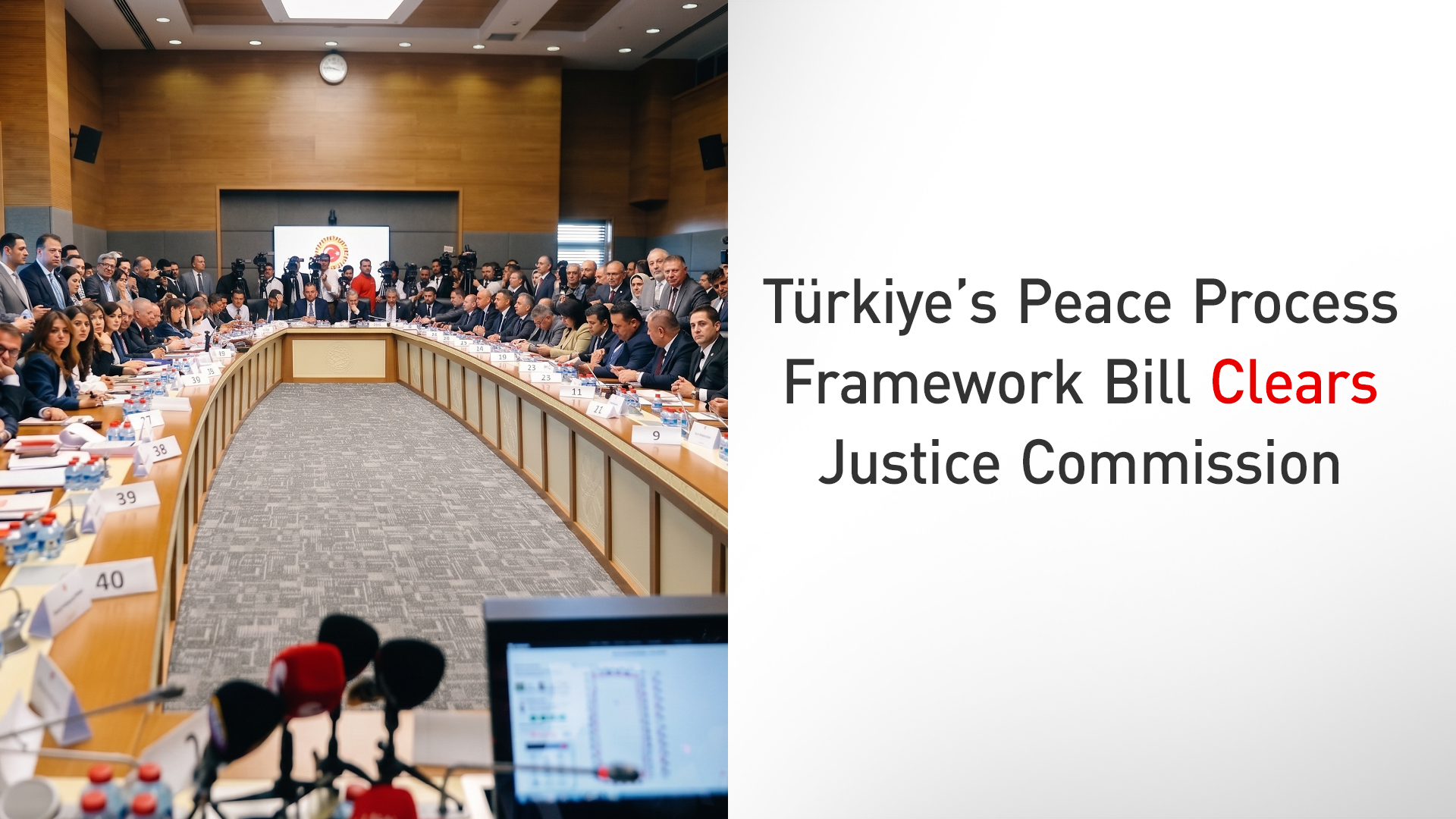
ERBIL (Kurdistan24) - Türkiye’s “framework law” proposal has advanced to the next stage of the legislative process after the Justice Commission of the Turkish Grand National Assembly (TBMM) approved all of its articles following an intensive 18-hour session.
The proposal, formally titled the “Law on Strengthening National Solidarity and Social Integration,” was approved after lengthy discussions in the commission, with tensions occasionally rising during the meeting as political parties debated the legislation.
The full text of the proposal was put to a vote in the early hours of Friday, with all articles approved and the commission stage completed.
Under parliamentary procedure, political parties have until 11 a.m. on Friday to submit additional reservations or remarks concerning the proposal and the commission's decision.
Once that deadline expires, the proposal is expected to be turned into a formal report before moving to the next stage of the legislative process.
Under the parliament's internal rules, legislation that completes the committee stage is subject to a 48-hour waiting period before it can be placed on the agenda of the General Assembly.
Accordingly, the “Law on Strengthening National Solidarity and Social Integration” is expected to reach the General Assembly within two days.
Proposal follows peace-process initiative
The legislation is part of the framework of Türkiye’s ongoing peace process.
The 12-article proposal was previously signed by the Peoples’ Equality and Democracy Party (DEM Party), paving the way for its submission to the TBMM. The proposal was also backed by the Justice and Development Party (AK Party) and the Nationalist Movement Party (MHP), while four lawmakers from HÜDA PAR signed it as well. The Republican People's Party (CHP) had also announced that it would sign the proposal.
The draft establishes a legal framework for measures associated with the peace process and addresses offenses linked to establishing or leading the PKK/KCK, membership in the organization, knowingly assisting it, propaganda activities, offenses committed within organizational activities, and crimes under Law No. 6415 on the Prevention of the Financing of Terrorism committed on behalf of the organization.
The proposal excludes intentional homicide committed within the framework of organizational activities, as well as crimes committed before June 1, 2005, that carry life imprisonment or aggravated life imprisonment.
Eligibility would be determined by the judicial authorities handling the relevant investigations or prosecutions.
Under the draft, investigations and prosecutions involving offenses carrying a maximum sentence of 15 years or less would be postponed for five years. Cases involving sentences exceeding 15 years, life imprisonment, or aggravated life imprisonment would be deferred for 10 years.
The proposal also provides for the postponement of prison-sentence execution. Sentences totaling 15 years or less would be suspended for five years, while longer sentences, including life imprisonment and aggravated life imprisonment, would be suspended for 10 years by decision of the enforcement judge, subject to appeal.
If no new offense is committed during the relevant postponement period, the sentence would be deemed served, according to the draft.
The proposal establishes an oversight board chaired by the Vice President and comprising the ministers of Justice, Foreign Affairs, Interior, and National Defense, alongside the Presidential Secretary-General, the head of the National Intelligence Organization (MIT), and the Secretary-General of the National Security Council.
Implementation would be coordinated by the Presidential Secretariat, while a 17-member Parliamentary Monitoring Commission would oversee activities carried out under the law.
The draft also envisages a joint directive by the ministries of National Defense and Interior, in consultation with security institutions, concerning registration procedures for surrender and disarmament.
Individuals seeking to benefit from the legislation would be required to submit written applications within six months of the publication of the relevant National Security Council decision in the Official Gazette.
The proposal now moves beyond the Justice Commission, with its next major legislative stage expected to be consideration by the TBMM General Assembly.