Al-Wala'i Says Retaliation Is Delayed, Not Abandoned
The Kata'ib Sayyid al-Shuhada leader's warning underscores the tension between Iraq's push for state control and armed factions' commitment to retaliate for recent strikes
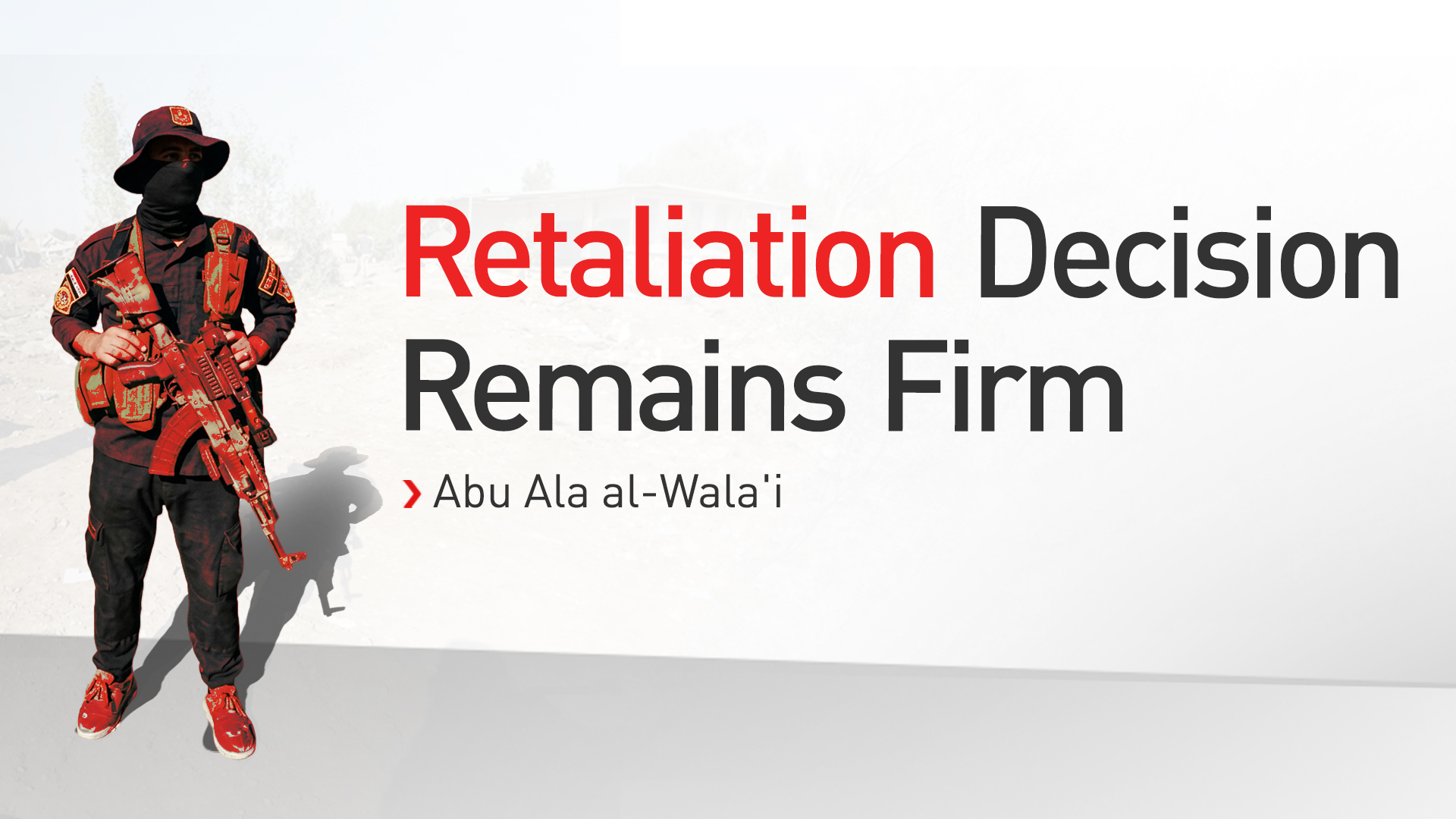
ERBIL (Kurdistan24) - The decision by Iraq's Islamic Resistance factions to postpone retaliation for recent US and Saudi strikes has not amounted to a decision to abandon it, according to Abu Ala al-Wala'i, the secretary-general of Kata'ib Sayyid al-Shuhada.
In a statement issued Saturday, al-Wala'i described retaliation as an ideological and national obligation and said the decision to respond remained intact despite a temporary delay requested by political leaders, including Badr Organization Secretary-General Hadi al-Amiri.
The statement places Iraq's armed factions at the center of a difficult calculation for Baghdad.
The federal government is simultaneously seeking to prevent Iraqi territory from being used to attack neighboring countries, raising military readiness and strengthening security coordination with Saudi Arabia, while factions within the Popular Mobilization Forces (PMF) continue to frame retaliation as a matter of principle.
The result is a pause in military action without a corresponding resolution of the underlying dispute.
Retaliation Put on Hold
Al-Wala'i said the Islamic Resistance had postponed its response after appeals from al-Amiri and other political figures.
"Retaliation is an ideological and national duty," al-Wala'i said, adding that the decision remained firm while its timing was being reconsidered.
The Islamic Resistance separately confirmed that an attack planned for Friday had been postponed following al-Amiri's request and what it described as positions adopted by several political leaders.
The two statements are significant because they distinguish between postponing retaliation and abandoning retaliation.
Al-Wala'i's message indicates that the factions have accepted political intervention over the timing of a response, but not necessarily over whether a response should occur. He also called on those responsible for the strikes to use the pause to address what he described as Iraq's rights and the consequences of the attacks.
The language keeps open the possibility of military action while creating additional time for political and diplomatic efforts.
Baghdad's Security Dilemma
The statements come as Baghdad has moved in the opposite direction, emphasizing that decisions involving war, peace and the use of Iraqi territory belong to the state.
Prime Minister Ali al-Zaidi told the head of Saudi Arabia's General Intelligence Directorate, Khalid Ali Humaidan, on Friday that Iraq would not permit its territory to become a launching point for activity that harms other countries in the region.
"We will not allow Iraqi territory to become a place from which any activity that harms the countries of the region is launched," al-Zaidi said.
Read More: Iraqi PM, Saudi Intelligence Chief Discuss Regional Security and Coordination
The meeting, according to the Iraqi prime minister's office, focused on regional developments, security coordination and information sharing between Baghdad and Riyadh.
The timing is important. Saudi Arabia has warned of possible attacks by Iran-backed groups from both Iraq and Yemen, while Iraqi authorities have raised the readiness of security and military forces amid intelligence reports of potential attacks against Saudi and US interests.
Read More: Reuters: Saudi Official Warns of Potential Two-Front Attack from Iran-Backed Groups
The government has therefore faced pressure on two fronts: preventing a new escalation originating from Iraq and managing factions that regard retaliation as an obligation.
The Political Intervention
Al-Amiri's intervention has provided Baghdad with a temporary opening to contain the immediate threat of escalation.
His appeal to the Islamic Resistance was followed by the group's announcement that its planned response had been postponed. That sequence suggests that political influence within Iraq's Shiite political and armed networks remains relevant to decisions involving the use of force.
Read More: Iraqi Islamic Resistance Says Attack Postponed After Political Leaders’ Appeals
But al-Wala'i's subsequent statement also demonstrates the limits of that intervention.
Rather than presenting the postponement as the end of the matter, he described it as a pause. His emphasis on ideology, sacrifice and national sovereignty frames retaliation as something larger than a tactical military decision.
That distinction matters because it makes the timing negotiable while leaving the underlying commitment intact.
For Baghdad, this creates a narrow space for diplomacy. The government can seek to prevent an immediate attack while continuing discussions with Saudi Arabia and other regional actors, but it must also contend with factions whose strategic calculations do not necessarily coincide with those of the state.
Why the PMF Is Central to the Dispute
The dispute also reflects the complicated structure of Iraq's PMF.
Kurdistan24's previous analysis found that PMF facilities had been subjected to more than 165 airstrikes and bombardments during 2026 by the end of July, with more than 100 fighters killed and nearly 300 wounded, according to PMF and government figures.
The attacks occurred in two major phases. The first involved 145 strikes during the 40-day US-Israeli-Iranian conflict earlier in the year. A second wave came on July 29, when US and Saudi forces struck PMF-linked facilities across several Iraqi provinces.
Read More: Inside the Popular Mobilization Forces: Why Were Their Bases Bombarded 165 Times in 2026?
The July strikes reportedly killed at least 20 fighters and wounded 32 others, according to the PMF Commission.
Some PMF factions simultaneously operate as components of Iraq's official security architecture and maintain independent ideological and organizational identities. Among the groups identified with the Islamic Resistance is Kata'ib Sayyid al-Shuhada, led by al-Wala'i.
That dual position complicates Baghdad's efforts to establish a clear distinction between state security policy and the decisions of armed factions.
The government's position has increasingly focused on preventing Iraqi territory from being used for attacks against other states, while the factions emphasize what they describe as resistance and retaliation.
Saudi Arabia Raises the Stakes
The Saudi position adds another layer to the calculation.
According to a Reuters report, a senior Saudi official said intelligence from Saudi Arabia, the United States and other regional countries indicated that Iran-backed groups could potentially launch coordinated attacks against civilian and economic targets.
The official said Saudi Arabia had observed movements of drones and missiles and warned that energy infrastructure, ports and airports could be among the potential targets.
Riyadh's concern is not limited to Iraq. The Houthis in Yemen have also continued attacks against Saudi territory, creating the possibility of pressure on the kingdom from both its northern and southern approaches.
The Reuters report said Saudi authorities believed potential attacks could undermine ongoing diplomatic efforts aimed at reducing regional tensions.
That context gives additional weight to Baghdad's attempts to restrain armed factions. Any attack launched from Iraqi territory could transform an already tense dispute into a broader confrontation involving Iraq, Saudi Arabia and the United States.
Washington's Pressure on Al-Wala'i
Al-Wala'i's position also comes against the backdrop of sustained US pressure on him and his organization.
In April, the US State Department's Rewards for Justice program offered up to $10 million for information concerning Hashim Finyan Rahim al-Saraji, also known as Abu Ala al-Wala'i.
The US government identifies Kata'ib Sayyid al-Shuhada as an Iran-aligned terrorist organization and has accused the group of attacks against US personnel and diplomatic facilities in Iraq and Syria.
Read More: U.S. Offers $10 Million Reward for Information on Kata'ib Sayyid al-Shuhada Leader
The US Treasury Department has also imposed sanctions on senior figures associated with the organization and other Iran-aligned Iraqi armed groups.
These measures have contributed to a direct confrontation between Washington and factions that reject the continued presence of US forces in the region.
For al-Wala'i, the issue is therefore not simply a response to the July 29 strikes. His statement places retaliation within a broader ideological framework in which attacks against PMF-linked groups are portrayed as attacks on Iraqi sovereignty and the legitimacy of the resistance.
Diplomacy Has More Time, Not More Certainty
The immediate postponement gives Baghdad additional time to pursue diplomatic channels.
The meeting between al-Zaidi and the Saudi intelligence chief indicates that communication between Baghdad and Riyadh remains active. Iraq has also repeatedly emphasized its neutrality and rejected the use of its territory as a platform for attacks on neighboring states.
At the same time, the Islamic Resistance's statements show that political appeals have so far produced a delay rather than a fundamental change in position.
That distinction is likely to remain central to Iraq's security calculations.
The government needs to demonstrate that it can control military and security decisions within its territory, while political leaders seeking to prevent escalation must retain enough influence over armed factions to keep the current pause in place.
For now, al-Wala'i's message leaves the outcome unresolved. The planned retaliation has been deferred, but the faction's stated commitment to respond remains.
The immediate question for Baghdad is therefore not simply whether retaliation will occur, but whether diplomacy can change the conditions that led the factions to regard retaliation as unavoidable in the first place.