Iraq's PMF Disavows 'Ghost' Bases as Baghdad Tightens Arms Control
PMF says 71 unauthorized facilities shut by Iraq's Interior Ministry have no formal ties to the force as Sept. 30 state-arms deadline approaches.
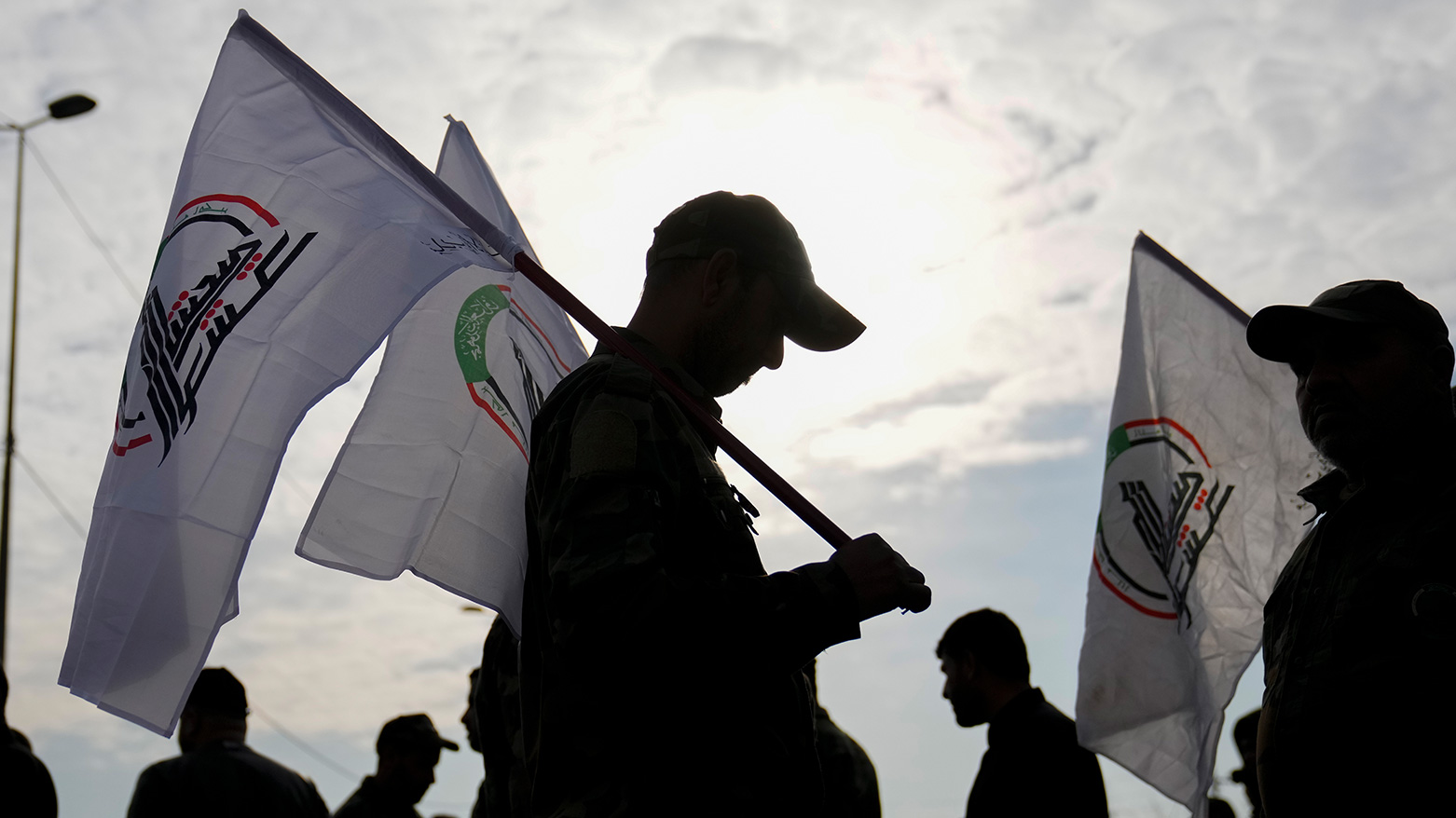
ERBIL (Kurdistan24) - Iraq's Popular Mobilization Forces (PMF) Commission has denied responsibility for dozens of unauthorized military facilities recently shut down by the Interior Ministry, as Baghdad accelerates a campaign to bring weapons, armed formations and military activity under state control.
The PMF's denial came Monday after Interior Ministry spokesperson Miqdad Miri said authorities had closed 71 unauthorized PMF-linked headquarters, described as "ghost" or "shadow" bases, as part of a nationwide security campaign.
In a statement carried by the Iraqi News Agency (INA), the PMF Commission said the facilities referenced by the Interior Ministry had no formal affiliation with the commission.
The commission also warned that it would take legal and administrative measures against individuals or entities attempting to use the PMF's name or status for unauthorized or personal purposes.
PMF distances itself from closed facilities
The PMF statement sought to draw a distinction between the officially recognized force and facilities operating outside its institutional structure.
According to the statement, the closures and monitoring operations form part of a broader campaign overseen by Iraq's General Directorate of Security Agencies and the Permanent Committee for Arms Control. The committee was established under directives from Prime Minister and Commander-in-Chief Ali Zaidi to identify and remove weapons operating outside state authority.
The PMF said it would not permit its name to be used to legitimize unauthorized activities, particularly as Baghdad moves to strengthen oversight of weapons and armed formations.
The distinction is politically significant. The PMF is formally incorporated into Iraq's security apparatus, but the government's current campaign seeks to ensure that all armed activity is conducted through officially recognized state institutions.
Baghdad presses ahead with arms registration
Miri said Monday that the Interior Ministry had closed 71 unauthorized facilities and that more than 500,000 weapons had been registered under a nationwide program designed to create a database covering roughly six million firearms.
Read More: Iraq Shuts 71 Unauthorized PMF Bases as Arms Registration Expands
The registration drive is part of Baghdad's effort to establish tighter control over the possession, movement and use of weapons.
Miri also warned that unauthorized drone launches would be treated as terrorism-related offenses, signaling that the government intends to apply the state-control policy not only to conventional firearms but also to military-capable technologies.
The Interior Ministry has not indicated that all 71 facilities were officially operated by the PMF Commission. The PMF's denial therefore adds an important qualification to the government's announcement, with the facilities described by the commission as unauthorized entities using its name rather than legitimate PMF headquarters.
Sept. 30 deadline puts pressure on factions
The developments come as Iraq approaches a Sept. 30 deadline for bringing weapons under exclusive state authority.
Government spokesperson Haider Aboudi said earlier that negotiations with armed factions were continuing but warned that groups refusing to comply would face legal action.
"Any group that refuses to disarm will be dealt with according to the law," Aboudi said.
Read More: Iraq Warns Armed Groups: Disarmament Deadline Cannot Be Ignored
The State Administration Alliance, which includes Iraq's major political blocs, has also backed the principle that weapons must remain under state control and warned that entities operating outside official institutions could be designated as outlawed.
The government has presented the policy as part of a broader effort to strengthen state institutions, protect Iraqi sovereignty and prevent the country's territory from being used to launch attacks against neighboring states.
Security posture expands beyond Baghdad
The arms-control campaign is unfolding alongside wider efforts to strengthen Iraq's security architecture.
Baghdad recently established the Badia Operations Command to oversee security across the Muthanna desert and improve coordination along Iraq's southwestern borders with Saudi Arabia and Kuwait.
The new command reflects concerns about security gaps across remote desert territory and comes amid heightened regional tensions and government efforts to prevent Iraq from being drawn into conflicts involving neighboring states.
Read More: Iraq Creates New Command to Guard Southwest Borders
Iraqi authorities have repeatedly said that decisions concerning war, peace and the use of Iraqi territory must remain under government control.
The PMF's latest statement fits into that increasingly complex picture.
While the commission maintains that the facilities closed by the Interior Ministry were not formally affiliated with it, the government is simultaneously tightening its oversight of armed organizations and expanding its efforts to identify unauthorized weapons and military sites.
With the Sept. 30 deadline approaching, the question is no longer limited to whether armed groups will accept the principle of state control.
It also increasingly concerns how Baghdad will distinguish between formally recognized security institutions and unauthorized groups operating under their names, and how effectively the government can enforce that distinction.