DEM Party Co-Chair Urges Swift Implementation of Türkiye’s Peace Framework Law
“Today, very important discussions were held in parliament, and the parties expressed their concerns,” Hatimoğulları said. “We view this law as the initial step toward consolidating peace in this country, which is why we strongly supported it.”
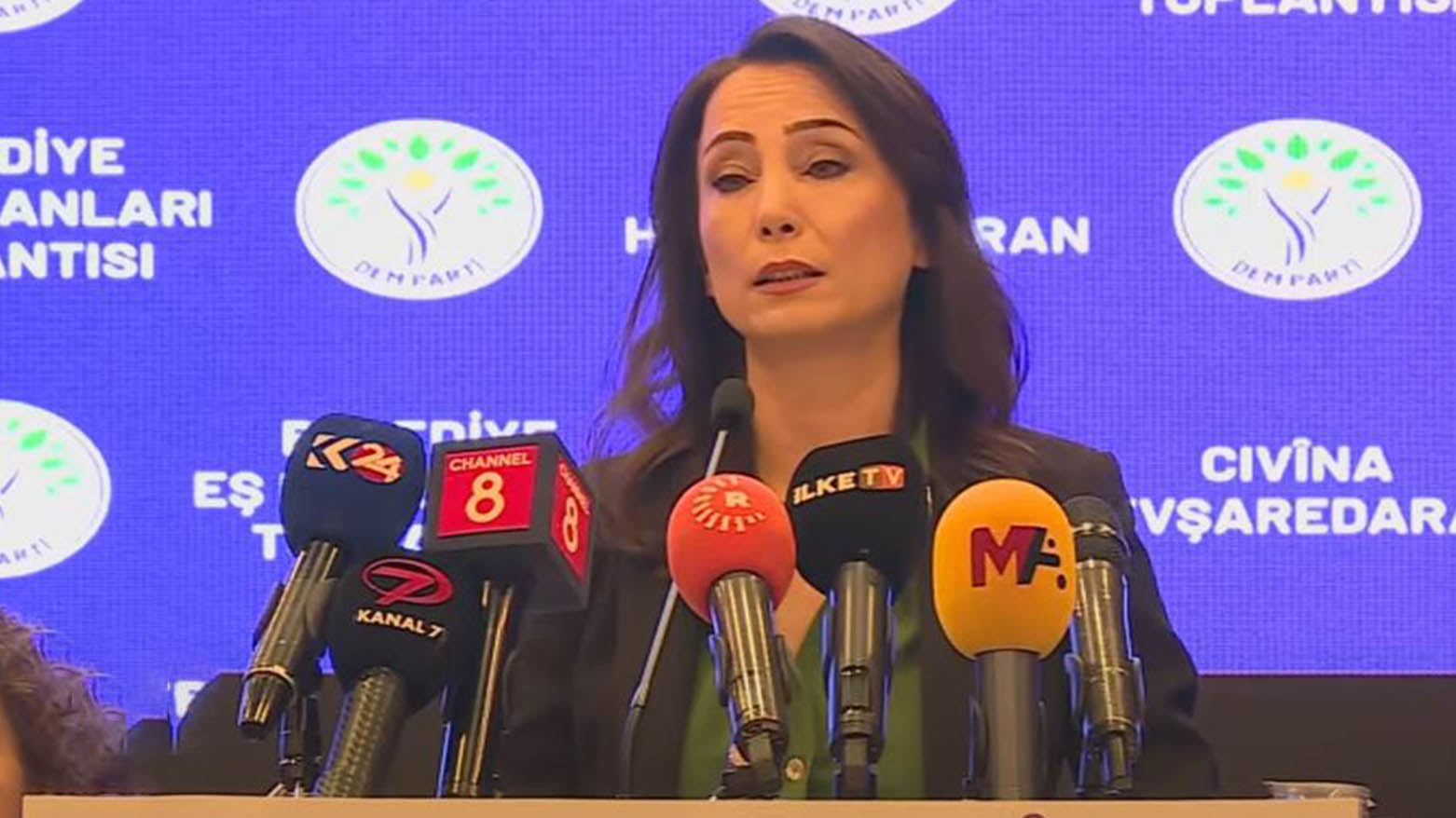
ERBIL (Kurdistan24) – Tülay Hatimoğulları, co-chair of the Peoples’ Equality and Democracy Party (DEM Party), on Tuesday called for the swift implementation of Türkiye’s newly approved Framework Law, saying practical steps were as important as its passage by parliament.
Speaking after parliamentary discussions, Hatimoğulları urged the National Security Council to promptly prepare and publish its report in the Official Gazette, allowing the legislation to take effect.
“Today, very important discussions were held in parliament, and the parties expressed their concerns,” Hatimoğulları said. “We view this law as the initial step toward consolidating peace in this country, which is why we strongly supported it.”
She stressed that the process must now move from legislation to implementation.
“What matters from now on are the practical steps,” she said. “For the law to take effect, the state must urgently establish the commission, prepare its report, and publish it in the Official Gazette. This is as vital as approving the law itself.”
Hatimoğulları also expressed hope that the resumption of parliamentary sessions would lead to further measures aimed at democratizing Türkiye and introducing new legislation.
She warned against delaying the National Security Council’s decision until the new year, saying any slowdown could undermine the peace process.
“We hope there will be no delay. Slowing down the process could lead to its disruption,” she said. “Although the approval of the law advances the process, its implementation is even more decisive.”
According to Hatimoğulları, the legislation could facilitate the political participation of prisoners, displaced people and individuals who lay down their arms, making it essential that the process not be stalled.
Meanwhile, Pervin Buldan, a member of the İmralı delegation and deputy speaker of the Turkish parliament, welcomed the legislation but cautioned that significant work remained ahead.
“May it be blessed and bring good to everyone. We have a long-term task and a long road ahead of us,” Buldan said.
Türkiye’s parliament on Monday approved a bill offering limited legal protections to some Kurdistan Workers’ Party (PKK) members who lay down their weapons, marking the first legislative step toward ending the decades-long conflict between Ankara and the PKK.
The bill passed with 468 votes in favor, 88 against and six abstentions. Backed by President Recep Tayyip Erdoğan’s ruling Justice and Development Party (AKP) and the DEM Party, it provides for the suspension of prosecutions and prison sentences for certain offenses for five to 10 years.
Lawmakers said the measure could initially result in the release of around 3,500 PKK-linked detainees. Those covered by the law who do not commit further offenses during the specified period could have their investigations dropped and sentences considered served.
The legislation excludes individuals convicted of serious crimes, including murder, and does not address the future of Abdullah Öcalan, the jailed founder and leader of the PKK.
Öcalan, 77, has spent nearly 27 years in prison on İmralı Island near Istanbul. In February 2025, he issued a historic appeal calling on the PKK to disarm and pursue democratic means to advance the rights of Türkiye’s Kurdish population.
Öcalan has remained a central figure in the peace process. However, Turkish Vice President Cevdet Yılmaz said last week that his case does not fall within the scope of the new law, while adding that Öcalan could still contribute to the peace process.
The legislation comes 18 months after Öcalan’s call for disarmament and represents a significant step in Ankara’s efforts to end a conflict that has killed tens of thousands of people since the PKK launched its armed insurgency in 1984.