KDP Official Says 72,000 Arab Settlers Brought to Kirkuk Under Former Governor
He also alleged that the Arabization process remains ongoing, claiming that Iraqi army units have prevented Kurdish farmers from cultivating their own agricultural land.
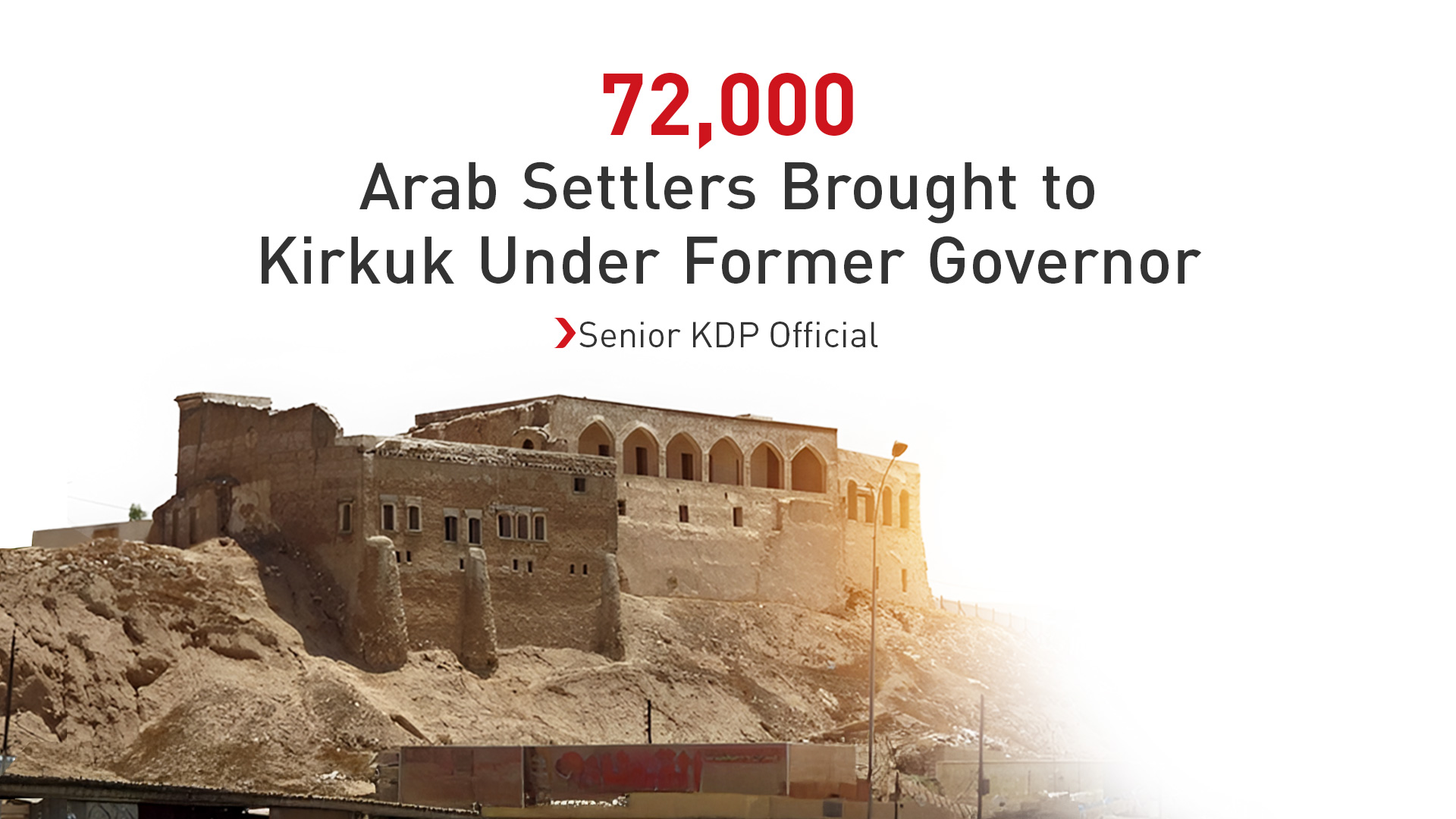
ERBIL (Kurdistan24) — Hiwa Ahmed Mustafa, head of the Kurdistan Democratic Party (KDP) Kirkuk-Garmiyan Organization Office, said Wednesday that more than 72,000 Arab settlers were brought to Kirkuk during the tenure of former Kirkuk Governor Rakan al-Jabouri, describing the move as an illegal attempt to alter the province’s demographic makeup.
Mustafa said the influx had disrupted Kirkuk’s administrative balance and contributed to what he described as discriminatory treatment of Kurds, who have become underrepresented in influential political, administrative, and security positions while Arabs hold a majority of key posts.
He also alleged that the Arabization process remains ongoing, claiming that Iraqi army units have prevented Kurdish farmers from cultivating their own agricultural land.
Mustafa called for dialogue with Arab communities in Kirkuk as well as Baghdad’s political leadership to address the disputes, restore administrative balance, and ensure stability among the province’s different communities.
He said the settlement of more than 72,000 Arabs in Kirkuk during al-Jabouri’s tenure was “completely illegal” under Article 140 of the Iraqi Constitution and was intended to change the area’s demographic composition.
Mustafa further said that the homes of many KDP cadres in Kirkuk remain occupied, stressing that the time had come to restore stability and balance among Kurds, Arabs, Turkmen, and other communities.
The issue of Kirkuk’s disputed status dates back decades. Under Saddam Hussein, the Ba’athist government pursued demographic policies that displaced Kurds and settled Arab families in the province.
Following the 2003 US-led invasion and the fall of Saddam Hussein, Kurdish authorities gained de facto control of Kirkuk. Many displaced Kurds returned, while some Arab families left after receiving financial compensation.
Iraq’s 2005 Constitution sought to address the disputed status of Kirkuk through Article 140, which established a three-stage process of normalization, a population census, and a referendum on the province’s future administrative status.
The process, however, was never fully implemented.
Tensions escalated sharply on October 16, 2017, when Iraqi federal forces and Popular Mobilization Forces (PMF) units entered Kirkuk and pushed Peshmerga forces out of the province, following the Kurdistan Region’s September 2017 independence referendum.
Since then, Kurdish officials and political organizations have repeatedly alleged that demographic and administrative changes have continued in Kirkuk. They have also raised concerns over the replacement of Kurdish officials in influential administrative and security positions and disputes over agricultural land.
Land ownership remains one of the most contentious issues, with Kurdish farmers disputing claims by Arab families holding land documents dating to the former Ba’athist era. Some of these disputes have led to confrontations and heightened tensions in rural areas.