Europe Looks Up as the Sun Goes Dark
A rare solar eclipse is crossing parts of Europe on Wednesday, with Spain at the center of attention as the moon briefly blocks out the sun
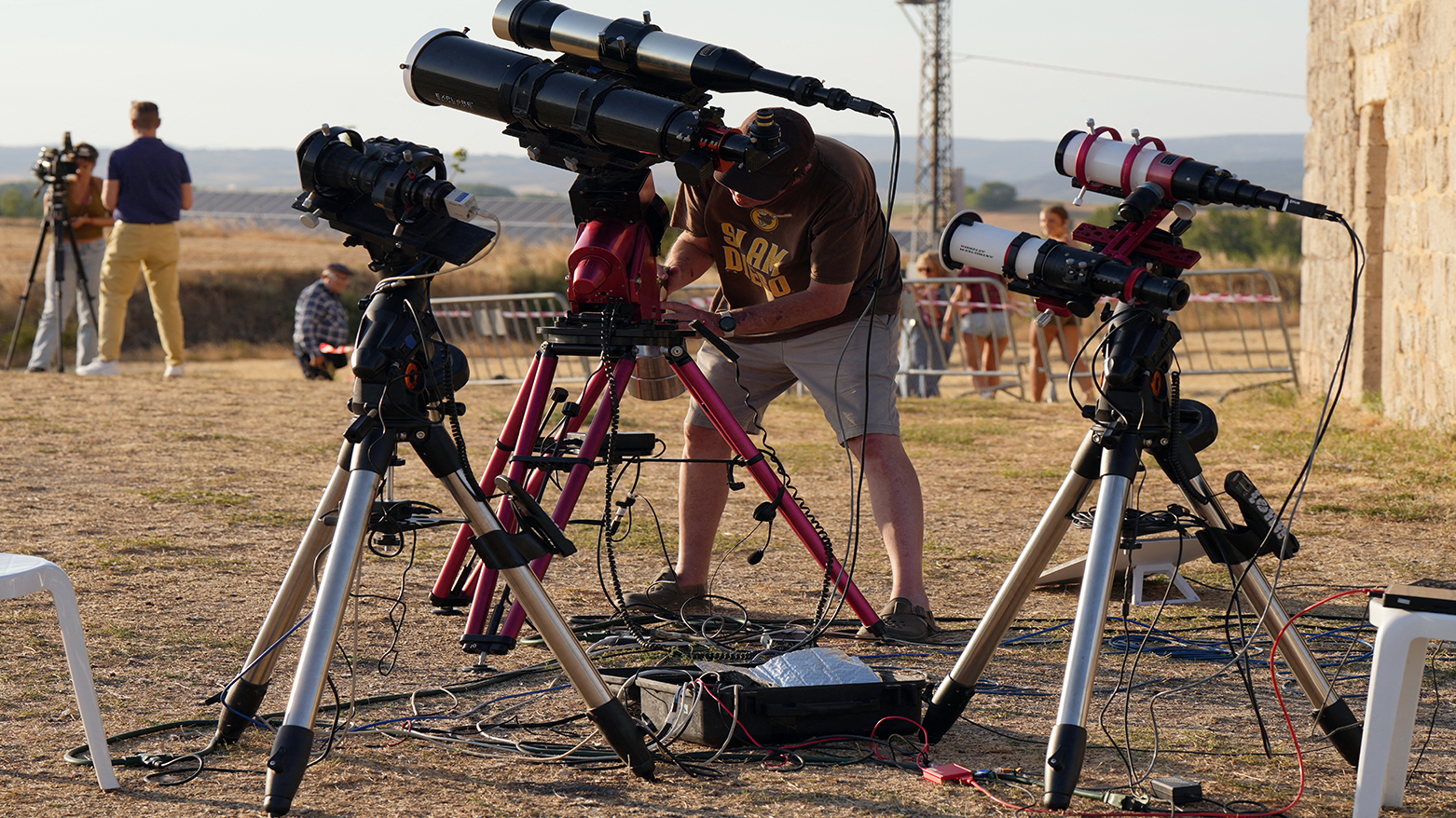
ERBIL (Kurdistan24) — Parts of Europe will go dark in the middle of the day for a few minutes on Wednesday, a rare total solar eclipse crossing the continent, with Spain becoming the main stage for millions of people and hundreds of thousands of visitors.
A Rare Sight Over Spain
Spain is experiencing its first solar eclipse visible from the Iberian Peninsula in more than a century.
According to Spain’s National Geographic Institute (IGN), the eclipse is crossing the country from west to east, with totality visible across much of northern Spain on Wednesday.
The event is taking place close to sunset, making a clear view toward the western horizon important.
A partial eclipse is also visible and can be viewed across most of Europe, while the total eclipse passes through parts of the Arctic, Iceland, Greenland and Spain.
In Spain, the total phase is brief, lasting around a minute in some locations.
A Chance to Study the Sun
While millions will watch the eclipse for the spectacle, scientists will be watching for a different reason.
The quick darkness gives researchers a chance to study the sun’s outer atmosphere, which is usually difficult to view due to the sun’s brightness.
They can also use the event to learn more about solar winds and the sun’s magnetic field.
The sudden change in daylight can also briefly affect temperatures, shadows and animal behavior, creating the unusual feeling of nighttime during the day.
Spain Catches Eclipse Fever
The eclipse is also expected to bring a Major tourism boost.
According to the Spanish Government, around 446,700 additional tourists are expected to visit areas along and near the eclipse’s path between August 10 and 16.
The event is estimated to contribute €347. 6 million to Spain’s economy.
The expected crowds are particularly significant for rural areas, where towns along the eclipse path are preparing for visitors arriving to find the best views.
A Rush with Risks
The large number of visitors is also creating challenges for authorities.
The Spanish government has prepared special security and civil-protection measures covering emergency response, transport, public safety and wildfire prevention.
Officials are also encouraging people to plan their journeys and follow safety guidance while traveling to viewing locations.
More Eclipses Ahead
The eclipse may last only minutes, but its effects will reach for beyond the sky.
From scientific research to tourism, the event on Aug. 12 is bringing people together for a rare moment, with another total eclipse set to cross Spain next year before the country waits until 2053 for the next one.
Raz Zaito Toffiq contributed to this article.