Iraq Faces Worsening Climate Crisis Amid Water and Environmental Failures
Experts warn Iraq’s worsening heat, water shortages, desertification and shrinking green spaces are being amplified by weak environmental management and inadequate adaptation policies.
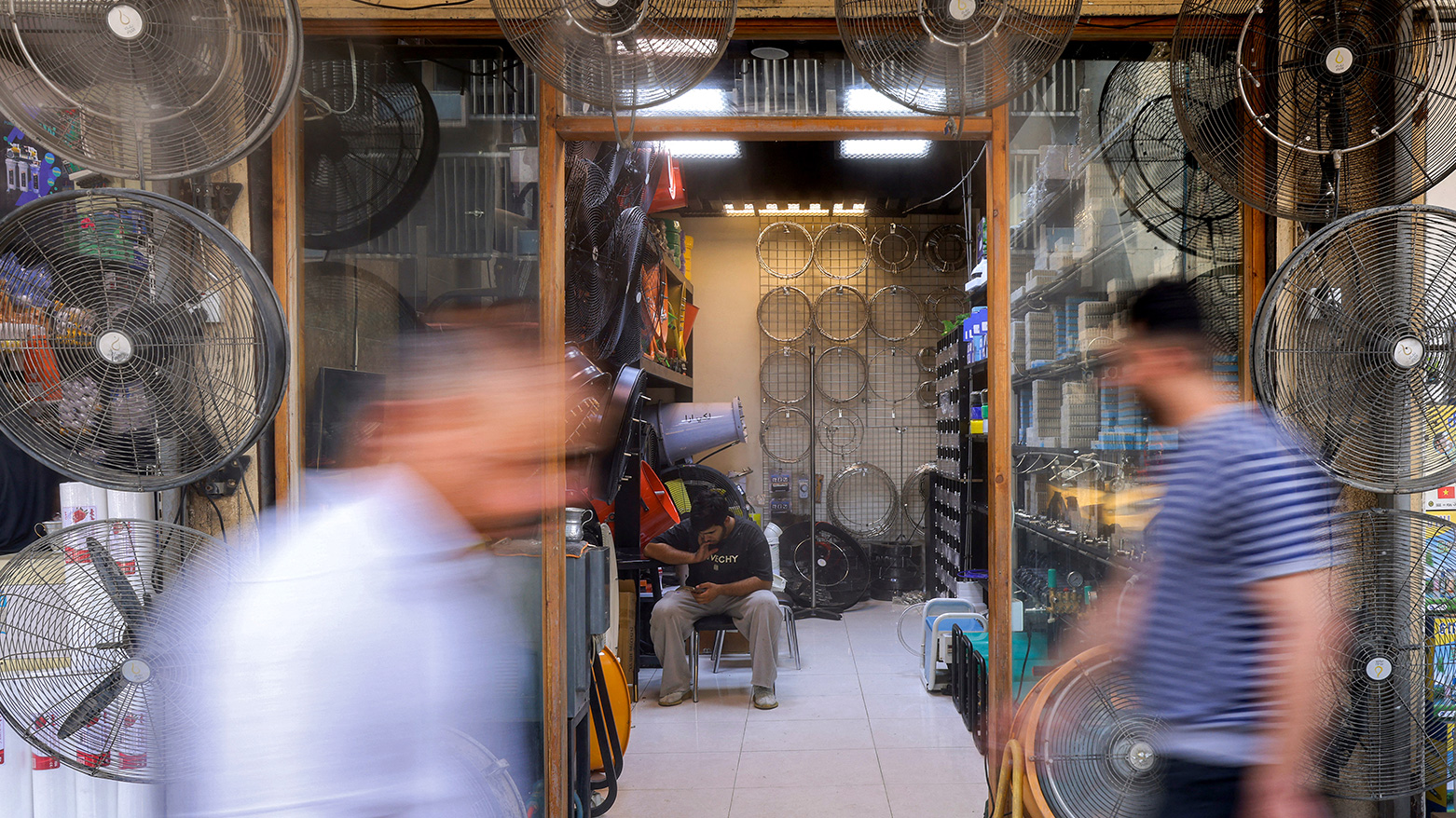
ERBIL (Kurdistan24) - Iraq is confronting a worsening climate crisis as record heat, declining water supplies, desertification and shrinking green spaces combine with what environmental experts describe as years of inadequate government action and weak environmental management.
The warning comes as global temperatures reach new extremes.
According to data from the European Union's Copernicus Climate Change Service cited by Agence France-Presse (AFP), July 2026 was the hottest July ever recorded, exposing hundreds of millions of people across several regions to dangerous heat.
For Iraq, however, rising temperatures are colliding with problems that are not purely climatic.
Environmental experts say poor water management, the loss of agricultural land and inadequate urban planning are making the country's exposure to extreme heat increasingly severe.
Heat Meets a Water Crisis
Environmental expert Iqbal Latif, speaking to Kurdistan24, said Iraq's response has failed to match the scale of the threat.
Among the most visible consequences, she said, is the steady disappearance of orchards and green areas that once provided natural cooling in Iraqi cities.
Latif criticized the emphasis on short-lived landscaping measures rather than expanding permanent tree cover. She pointed to Baghdad's planting efforts as an example, arguing that seasonal flowers cannot provide the shade and temperature reduction offered by mature trees.
The consequences extend beyond city streets.
Latif said desertification, reduced water availability, oil and gas extraction and other human activity are contributing to what she described as a "heat dome," trapping intense heat over already degraded landscapes.
At the same time, Iraq remains heavily dependent on water flowing through the Tigris and Euphrates, with much of that supply originating outside the country. Latif argued that Baghdad needs stronger diplomacy with neighboring states to secure more reliable water flows.
Desertification Spreads
The scale of Iraq's environmental deterioration is reflected in figures cited in the report.
The country is increasingly losing productive land to desertification, soil salinity and sand encroachment. The supplied data, citing UN assessments, estimates that about 92 percent of Iraq's territory is threatened by desertification or is already affected by it.
Around 39 percent of the country is described as having already become desert, while another 54 percent faces a high risk of declining productivity.
Agricultural land is also disappearing. Iraq reportedly loses about 100,000 dunams of farmland each year to desertification, while salinity has damaged roughly 70 percent of agricultural land in central and southern areas.
The impact is increasingly visible in rural communities, where drought and declining water availability are undermining crops and livelihoods.
Kurdistan Feels the Pressure
The Kurdistan Region has not been insulated from these trends.
Latif pointed to declining agricultural productivity in areas including Duhok, Erbil and Sulaymaniyah, where changing weather patterns and water shortages are affecting crops.
The drying of grape crops in Sulaymaniyah was cited as one example of how changing climatic conditions are affecting traditional agriculture.
Water extraction is adding to the pressure. Thousands of unauthorized wells and the expansion of fish ponds have increased competition for groundwater and surface water, according to the report.
The result is a cycle in which declining rainfall and river flows combine with growing demand, leaving farmers increasingly exposed to drought.
Cities Losing Their Natural Defenses
Urban areas face a different but related challenge.
The report estimates that green space in Iraqi cities accounts for only around 1 to 2 percent of urban areas, well below commonly cited international targets of 15 to 20 percent.
The loss of orchards and mature trees has removed an important natural defense against extreme heat, particularly as summer temperatures rise.
The consequences are not limited to comfort. Less vegetation can contribute to higher urban temperatures, poorer air quality and greater dependence on energy-intensive cooling systems.
Meanwhile, increasing heat and declining rainfall are helping intensify dust storms. The report cites warnings that Iraq could experience as many as 300 dust-storm days a year by 2050 without effective intervention.
Water Scarcity Drives Migration
Perhaps the most serious consequence is the growing pressure on communities whose livelihoods depend directly on land and water.
The supplied figures indicate that flows in the Tigris and Euphrates have fallen by between 50 and 70 percent compared with previous decades, while Iraq could face a water deficit of around 11 billion cubic meters by 2035.
The resulting environmental stress is already contributing to displacement. The report cites International Organization for Migration data showing that more than 80,000 people have left drought-affected rural areas and the southern marsh regions in search of more sustainable living conditions.
What Iraq Can Still Do
Experts argue that Iraq's climate response requires a shift from isolated environmental initiatives to a coordinated national strategy.
That includes stronger negotiations over transboundary water, large-scale tree planting, protection of surviving orchards and ancient trees, tighter regulation of groundwater extraction and support for climate-adapted agriculture.
Urban planning is another priority. Expanding permanent green spaces around streets, schools and hospitals could provide both environmental and public-health benefits.
The report also calls for greater investment in cooling technologies designed specifically for Iraq's climate while producing fewer emissions, as well as a stronger media role in explaining climate risks and encouraging conservation.
The central challenge, however, is institutional.
Record temperatures are a global phenomenon, but the extent to which they translate into crop failures, water shortages, dust storms and displacement depends partly on how governments prepare.
For Iraq, environmental deterioration is increasingly exposing the costs of delayed action. The country's climate crisis is no longer a distant forecast; it is becoming an everyday governance challenge involving water, agriculture, cities, public health and migration.