Mam Yusuf's Story: From Al-Qaeda's 2007 Bombings to ISIS Displacement
After losing eight family members in the 2007 Al-Qaeda bombings, Mam Yusuf was displaced again by ISIS in 2014 and has spent more than a decade living away from home.
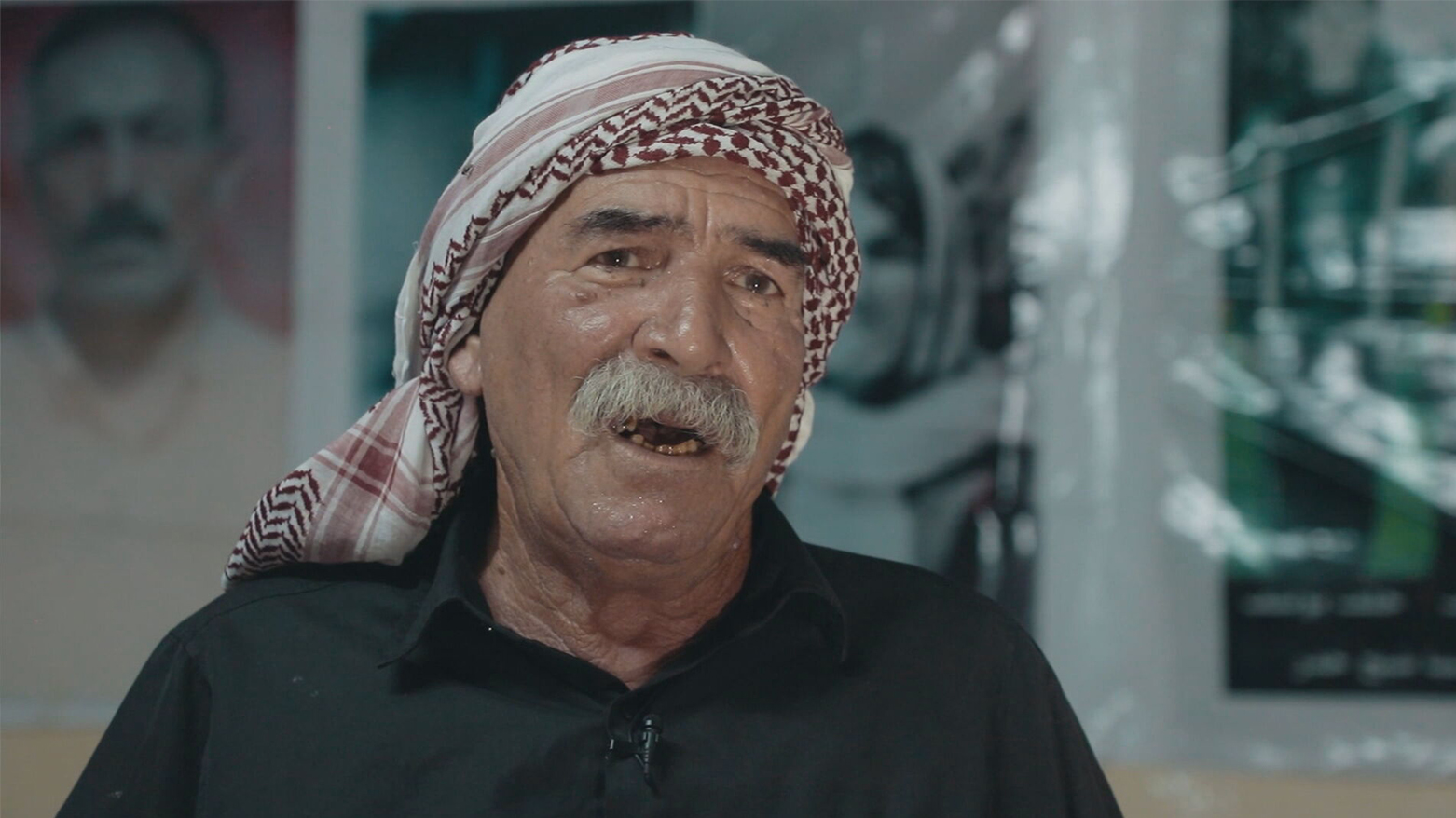
ERBIL (Kurdistan24) - For Mam Yusuf Jazo, displacement did not begin with ISIS.
Long before the extremist group's assault on Sinjar in 2014, his family had already been shattered by one of the deadliest attacks against the Ezidi community in Iraq. Nineteen years later, he remains displaced, carrying memories of two catastrophes that transformed his life and separated him from his home.
Now 68, Mam Yusuf (Mam is a common word that means 'Uncle', but is widely used when referring to an elder) lives in the Esian camp in Shekhan district, where the legacy of the past nearly two decades remains part of his daily life.

A Family Lost in Seconds
In 2007, Al-Qaeda carried out coordinated truck bombings in the Ezidi areas of Giruzer and Siba Sheikh Khidir.
The attacks killed 321 people, according to figures obtained by Kurdistan24, making them among the deadliest acts of violence against the Ezidi community before the rise of ISIS.
Mam Yusuf was among those who survived.
Eight members of his family were killed, most of them children.

Speaking to Kurdistan24's correpondent Mahir Shingali, he recalled how quickly an ordinary day turned into tragedy.
"When the explosion happened, everything changed in a matter of seconds," he said. "May God take our revenge against those who caused us so much pain."
For Mam Yusuf, the bombing was not simply a devastating moment in the past. It became the beginning of a life shaped by loss, insecurity and repeated displacement.
Then Came ISIS
The wounds left by the 2007 attacks had not healed when ISIS launched its assault on Sinjar on Aug. 3, 2014.
The offensive brought killings, abductions, forced displacement and the destruction of Ezidi villages and religious sites. Thousands fled toward Mount Sinjar before many eventually reached the Kurdistan Region.
Mam Yusuf was among those who abandoned his home.
"Since that day, we have abandoned our homes and our land," he said. "We have been displaced and wandering between camps for more than 12 years."
His story illustrates how the 2014 genocide compounded earlier episodes of violence against the Ezidi community, leaving survivors with not only the trauma of ISIS but also the unresolved consequences of previous attacks.

A History of Repeated Persecution
Mam Yusuf sees his experience within a much longer history of Ezidi persecution.
The community's historical memory refers to repeated episodes of mass violence and forced displacement, often described as firmans, or genocidal decrees.
That history has become an important part of commemorations marking the 12th anniversary of the ISIS genocide.
In Duhok, the Lalesh Cultural and Social Center recently organized commemorations focused on the massacres of Kocho, Giruzer and Siba Sheikh Khidir, linking the 2007 attack with the atrocities committed by ISIS.
Saeed Jardo, head of the center, told Kurdistan24 that the annual commemoration should also serve as a demand for accountability.
He called for a permanent legal response to the genocide and urged the Iraqi federal government to cooperate with international judicial bodies to prosecute perpetrators and compensate victims.

Justice Beyond Remembrance
The commemoration comes as large numbers of Ezidis remain displaced and Sinjar continues to struggle with reconstruction, security and governance.
The United Nations has called for accountability, continued support for survivors and the safe, voluntary and dignified return of displaced Ezidis.
Farhan Haq, deputy spokesperson for the UN secretary-general, told Kurdistan24 that lasting recovery requires justice alongside reconstruction and reconciliation in Sinjar.
The figures underscore the scale of the unresolved crisis. Kurdistan24 reporting has cited more than 5,000 Ezidis killed during the 2014 genocide, while thousands were abducted. Around 2,820 people remain missing, according to the latest figures obtained by Kurdistan24, and nearly 97 mass graves have been identified.
For survivors, the passage of time has not removed the consequences.

A Homeland Still Out of Reach
Kurdistan Region officials have repeatedly called for conditions that would allow displaced Ezidis to return to Sinjar.
President Masoud Barzani has called for displaced families to return with dignity and receive compensation for their losses. Prime Minister Masrour Barzani has urged Baghdad to normalize Sinjar, rebuild damaged communities and implement the 2020 Sinjar Agreement. President Nechirvan Barzani has likewise stressed the need to restore security, remove illegal armed groups and advance reconstruction.
Yet for people such as Mam Yusuf, returning home is about more than crossing a road back to Sinjar.

It means recovering a life interrupted first by the 2007 bombings and then shattered again by ISIS.
His story is a reminder that the Ezidi crisis cannot be measured only in casualty figures or displacement statistics. Behind each number is a family, a home and a history carried forward by survivors.
Nearly two decades after the bombing that took eight members of his family, Mam Yusuf remains displaced. His memories have endured through two generations of violence—and so has his determination to see his people survive.
"Despite the continuous efforts to erase our identity," his story suggests, "the Ezidis and Ezidxan will endure and continue to live."
Kurdistan24's correpondent Mahir Shingali conducted the interview with Mam Yusuf.