Iraq's Militia Disarmament Process Hits Deadlock as Armed Groups Refuse to Hand Over Weapons Without US Withdrawal
The 60-day peace framework ends without a deal, Iraq's militia disarmament deadlocks after a tense IRGC meeting, and a predawn Iranian drone strike hits KRG government sites in Erbil as the conflict enters a dangerous new phase
ERBIL (Kurdistan 24) - Monday arrived as one of the most consequential single days of the six-month US-Iran conflict, bringing together three developments that, taken individually, would each constitute a major news event, but taken together paint a portrait of a regional order in deeper crisis than at any point since the memorandum of understanding was signed two months ago.
The 60-day deadline of the US-Iran MOU expired on Sunday without a final deal, an agreed extension, or active negotiations. Hours later, a predawn Iranian drone struck the private office of the Kurdistan Region's Prime Minister and the landing site of the Director of the Kurdistan Protection Agency in Pirmam district, Erbil governorate, at 00:28 a.m. Monday. And across the same period, two Iraqi government sources told Kurdistan 24 exclusively that Baghdad's militia disarmament process has reached a complete deadlock, following a meeting between Prime Minister Ali al-Zaidi and IRGC Quds Force Commander Ismail Qaani that ended with the Iranian delegation leaving in visible anger.
The MOU That Expired Without a Deal
As The National confirmed on Sunday, August 16, 2026, the 60-day deadline of the Islamabad memorandum of understanding expired with both sides at an impasse, leaving the conflict nearly six months old and unresolved. The Strait of Hormuz remains closed to normal commercial traffic. The US naval blockade has been reimposed. Iran's foreign minister Abbas Araghchi denied on Saturday that a ceasefire even existed that required extension, saying what was declared in the MOU was "the end of the war, not a ceasefire," adding that since the US violated the MOU and continued attacks, there was no 60-day ceasefire that needed to be extended.
As Al Jazeera confirmed on Sunday, virtually none of the MOU's core commitments were fulfilled by either side. The agreement collapsed within weeks amid disputes over the Strait, renewed military strikes, and mutual accusations of bad faith. Iran's parliament has advanced legislation to assert permanent Iranian control over the waterway, including a bill that would bar US, Israeli, and other hostile vessels from transiting and impose tolls of up to 7 percent of cargo value. Washington reimposed its naval blockade and redirected at least 55 commercial vessels away from Iranian ports.
Trump said earlier this month he may declare Hormuz "a territory of the United States." Iran's deputy foreign minister replied the strait "was Iran's, is Iran's, and will remain Iran's." The gap between those two positions is the gap inside which every peace framework since February has attempted and failed to survive.
The Qaani-Zaidi Meeting That Ended in Anger
Against that diplomatic backdrop, the meeting between al-Zaidi and Qaani produced a rupture that two Iraqi government sources described to Kurdistan 24 as one of the most significant confrontations yet between Baghdad's new leadership and Tehran's military establishment.
During the meeting, Qaani raised the question of the armed militia groups' weapons. Al-Zaidi, for the first time, spoke directly about Iraqi sovereignty and the importance of strengthening state institutions, remarks that Qaani found surprising. Al-Zaidi pressed the point explicitly, insisting that weapons must be in the hands of the state, and told Qaani that future visits to Iraq should be conducted through proper diplomatic channels with advance notice to Iraqi officials, a pointed signal that Qaani had been arriving without coordinating with Baghdad's leadership. Although the Iranian delegation said nothing publicly, they left the meeting in visible anger once it concluded.
After the encounter with al-Zaidi, Qaani held a separate meeting with senior Coordination Framework leaders, expressing complaints about al-Zaidi's tone and approach. It also emerged in that session that a special committee has been formed within the Coordination Framework to conduct dialogue with the holdout armed groups, and that a request has been made to Tehran for assistance in preventing a confrontation from developing.
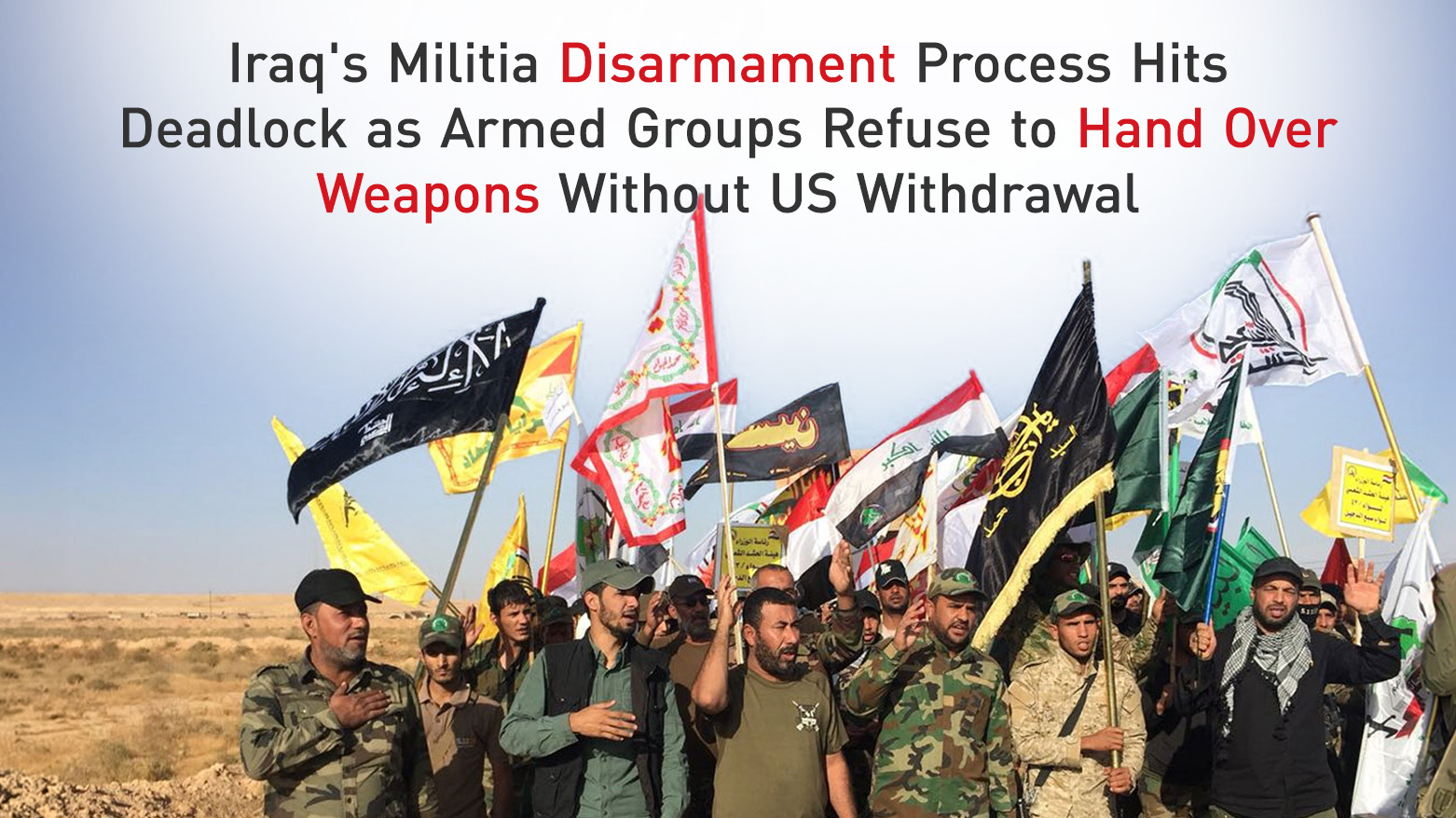
The militia disarmament process has meanwhile reached a complete deadlock. Among the factions that have flatly refused to hand over weapons are the Iraqi Hezbollah Battalions, the Sayyid al-Shuhada Battalions, Saraya Awliya al-Dam, Ashab al-Kahf, the Nujaba Movement, and the Karbala Battalions. All have delivered the same message to the government: do not discuss weapons handover with us until we see the Americans leave Iraq with our own eyes.
Three groups have already surrendered their weapons, Saraya al-Salam, Asaib Ahl al-Haq, and the Imam Ali Battalions, and Baghdad's fallback option, if the deadline passes without broader success, is to request an extension from Washington, arguing that the process has genuinely begun but that weapons in Iraq have taken deep root and cannot be controlled so quickly. As one source put it, the Trump administration understands this situation well.
Iran Strikes Kurdistan While Baghdad Negotiates
At 00:28 a.m. on Monday, as the MOU deadline expired and the Qaani-Zaidi fallout was becoming known, an Iranian drone launched from within Iran's borders struck the private office of the Kurdistan Region's Council of Ministers President and the landing site of the Director of the Kurdistan Protection Agency in Pirmam district, Erbil governorate. No casualties were reported, but the symbolism of the target and the timing were unmistakable.
The Independent Human Rights Commission of the Kurdistan Region issued a strong condemnation, calling the attack a flagrant and dangerous violation of the sovereignty of Iraq and the Kurdistan Region, as well as a violation of all international norms and the principles of human rights. The commission called on the Iraqi federal government and the international community to take a clear and serious stance against this type of continued Iranian aggression, and to act to protect Iraq's territorial sovereignty.
The attack on the Prime Minister's office site and a security agency landing zone in Pirmam underlines the persistent exposure of the Kurdistan Region to Iranian military action despite the KRG's consistently maintained policy of neutrality throughout the conflict, a neutrality that Axios revealed on Sunday was exploited by Washington itself, with Kurdistan Region President Nechirvan Barzani serving as a secret US backchannel to IRGC Commander General Ahmad Vahidi in May 2026.
Taken together, the expiry of the MOU without resolution, the collapse of the Qaani-Zaidi meeting, and the drone strike on KRG government sites in Erbil define a single day that makes the conflict's trajectory look considerably more dangerous at the start of its seventh month than it did at the beginning of its sixth.