Beijing University to Launch First Formal Kurdish Language Programme This September
Beijing Foreign Studies University will begin accepting students online this year, teaching Sorani in the first three years and Kurmanji in the fourth, as the Kurdistan Region and China deepen academic ties
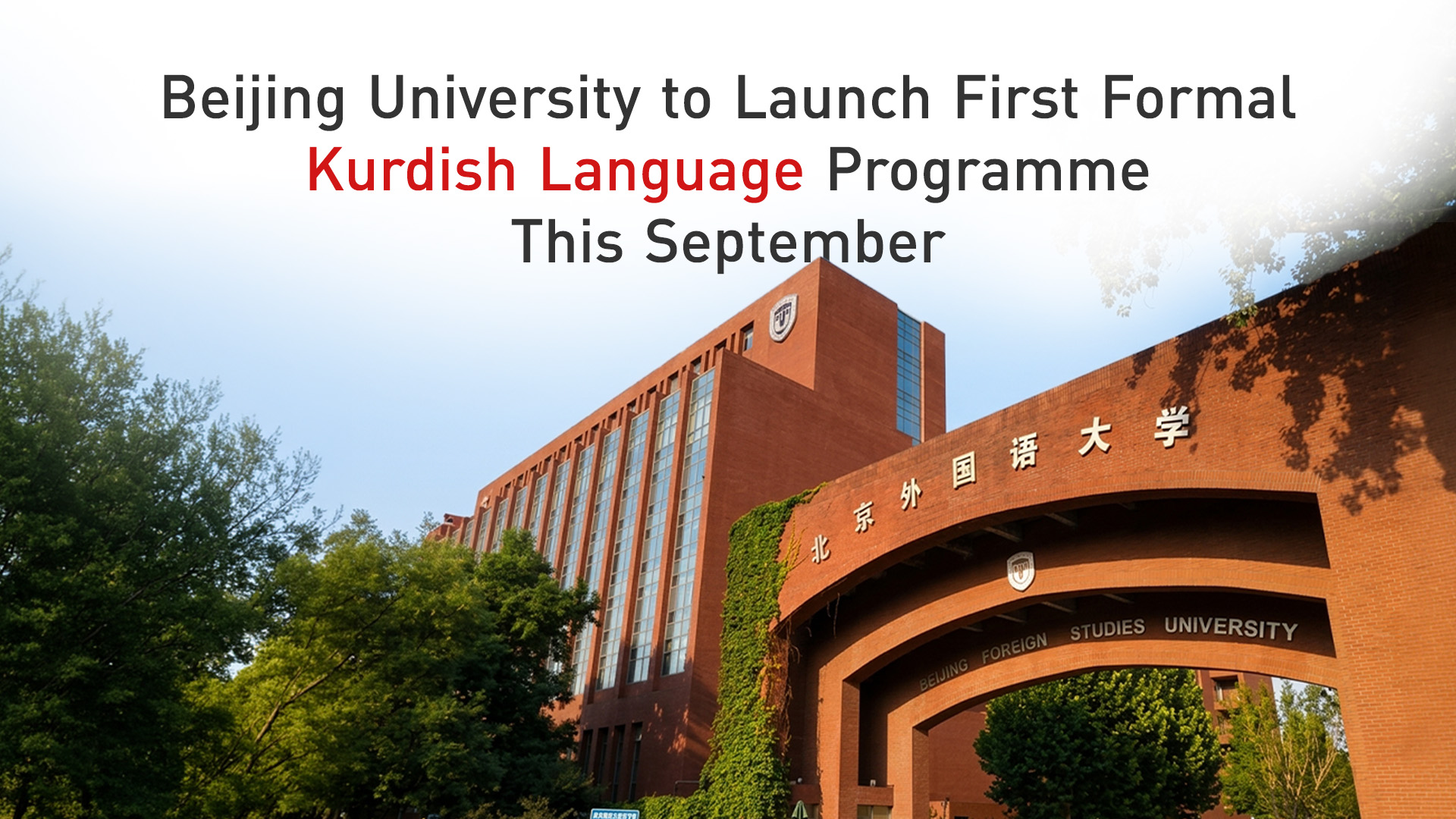
ERBIL (Kurdistan 24) - A Chinese university is set to open its doors to Kurdish language students for the first time on a formal academic basis this September, in a development that an expert described to Kurdistan 24 as an important academic bridge between the Kurdistan Region and China.
Dr. Barzan Jaafar, a specialist in the Chinese language and lecturer in the Chinese Department at Salahaddin University in Erbil, revealed the details of the programme in an exclusive interview with Kurdistan 24 correspondent Sangar Akrayi on Monday, confirming that the Kurdish Language and Literature Department at Beijing Foreign Studies University was established in 2017 for international studies. After several years of preparation, China's Ministry of Education has granted formal approval for the programme, with the first cohort of students set to begin their studies officially in September 2026.
According to Dr. Barzan, the university will accept between 10 and 20 students annually into the Kurdish language department. The programme has been designed so that students study the Sorani dialect in the first three years, with Kurmanji added in the fourth year, ensuring graduates develop comprehensive familiarity with both major dialects of the Kurdish language.
The launch of the programme through an online system marks a significant step in formalizing what has until now been a preparatory and informal academic relationship between Beijing Foreign Studies University and Kurdish studies. The Chinese Ministry of Education's approval represents institutional recognition of Kurdish as a language worthy of dedicated academic study within one of the world's most prestigious foreign languages universities.
Dr. Barzan also highlighted a parallel development at Salahaddin University in Erbil, where a Chinese language examination center has been operating since 2022. This center serves as a gateway for students who wish to travel to China for one-month, three-month, or six-month language and cultural immersion programmes, with examinations conducted in Erbil and results transmitted directly to China, streamlining the process for Kurdistan Region students seeking access to Chinese academic institutions.
The academic objective behind both programmes, Dr. Barzan emphasized, is the creation of a genuine two-way relationship. Just as Kurdish students travel to China for study, the plan envisions Chinese students currently studying Kurdish at Beijing Foreign Studies University traveling to the Kurdistan Region to strengthen their language skills within a Kurdish social and academic environment, deepening their immersion in a way that classroom study alone cannot achieve.
The Chinese language department at Salahaddin University currently has more than 100 students enrolled, with two graduating cohorts having already completed their studies and a third cohort set to finish in the near future. This growing body of Kurdish graduates with Chinese language proficiency is increasingly viewed as a foundation for strengthening commercial and cultural ties between the Kurdistan Region and China, a relationship that carries growing strategic significance as China's economic and diplomatic footprint across the Middle East continues to expand.
Dr. Barzan described the formal launch of the Kurdish programme at Beijing Foreign Studies University as more than an academic milestone, framing it as a signal of China's recognition of the Kurdistan Region as a distinct cultural and linguistic entity with its own rich intellectual heritage worthy of dedicated study at one of the world's most respected institutions for foreign language education.