Federal Judge Strikes Down Trump's Immigrant Visa Ban, Iraq Among 75 Affected Countries
Manhattan court rules the State Department policy exceeded Secretary Rubio's statutory authority and conflicted with federal immigration law, in a major legal defeat for the administration's immigration crackdown
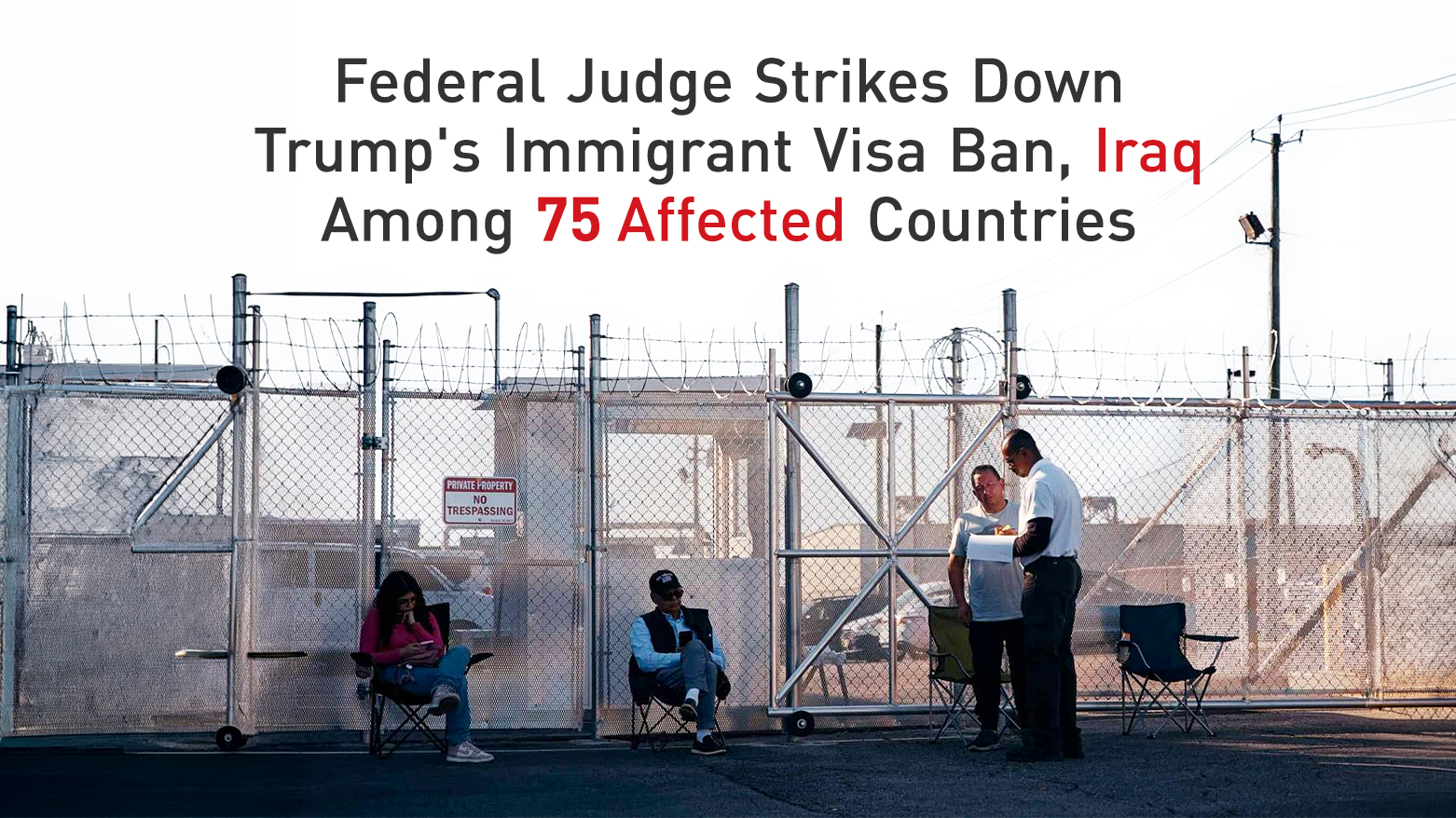
ERBIL (Kurdistan 24) - A federal judge in Manhattan struck down the Trump administration's suspension of immigrant visa processing for nationals of 75 countries on Friday, ruling the policy was "patently unlawful" and exceeded Secretary of State Marco Rubio's statutory authority, in one of the most significant judicial setbacks to the administration's sweeping immigration crackdown.
Judge Jeannette Vargas of the Southern District of New York ruled that the State Department policy conflicted with federal immigration law, which explicitly stripped the Secretary of State of authority over the adjudication of immigrant visas by consular officers. "The Policy, which categorically prohibits the issuance of immigrant visas based upon the nationality of the applicant, represents a direct abrogation of this statutory scheme," Vargas wrote in her ruling.
The suspension, which took effect in January 2026, impacted applicants from Latin American countries including Brazil, Colombia, and Uruguay; Balkan nations such as Bosnia and Albania; South Asian countries Pakistan and Bangladesh; and those from many nations in Africa, the Middle East, and the Caribbean. The State Department said applicants from those countries were "at a high risk for becoming a public charge and recourse to local, state and federal government resources in the United States."
Judge Vargas ruled that federal law expressly prohibits nationality discrimination in issuing immigrant visas. She distinguished Trump v. Hawaii, which allowed nationality-based restrictions on entry, because the State Department policy directly restricts visa issuance rather than entry.
The ruling came in a lawsuit filed by immigrant rights groups Catholic Legal Immigration Network and African Communities Together, along with applicants for immigrant visas and US citizens sponsoring family members from the designated countries.
The Trump administration first imposed these immigration policies in December 2025, days after the tragic shooting of two National Guard members in Washington by a troubled Afghan special forces soldier who had previously worked for a CIA-backed unit of the Afghan army and entered the United States in 2022 before being granted asylum in March 2025.
The ruling does not affect a separate 39-country travel and entry ban that Trump imposed by executive order, nor does it impact other immigration restrictions the administration has put in place across its second term. Should the Trump administration fail to obtain quick relief from an appeals court, the State Department will be required to return to treating all nationalities equally, imposing the same vetting standards to each person and granting all applications that meet federal requirements.
The State Department did not immediately respond to requests for comment on the ruling. The Trump administration is widely expected to appeal the decision, potentially seeking an emergency stay from the Second Circuit Court of Appeals while the broader legal challenge proceeds.
The ruling arrives as the administration is managing simultaneous legal battles across multiple fronts of its immigration agenda. Trump has pursued one of the most aggressive immigration crackdowns in modern American history during his second term, combining executive orders, State Department directives, and congressional legislation to reduce both legal and illegal immigration flows, with courts acting as the primary check on the pace and scope of those restrictions.