Canada Hits Back at US With Retaliatory Tariffs After Carney Rejects ‘Unfair’ Trade Deal
Ottawa says Washington introduced last-minute demands that threatened Canada’s trade ties with other countries and challenged protections for Quebec’s French language and culture
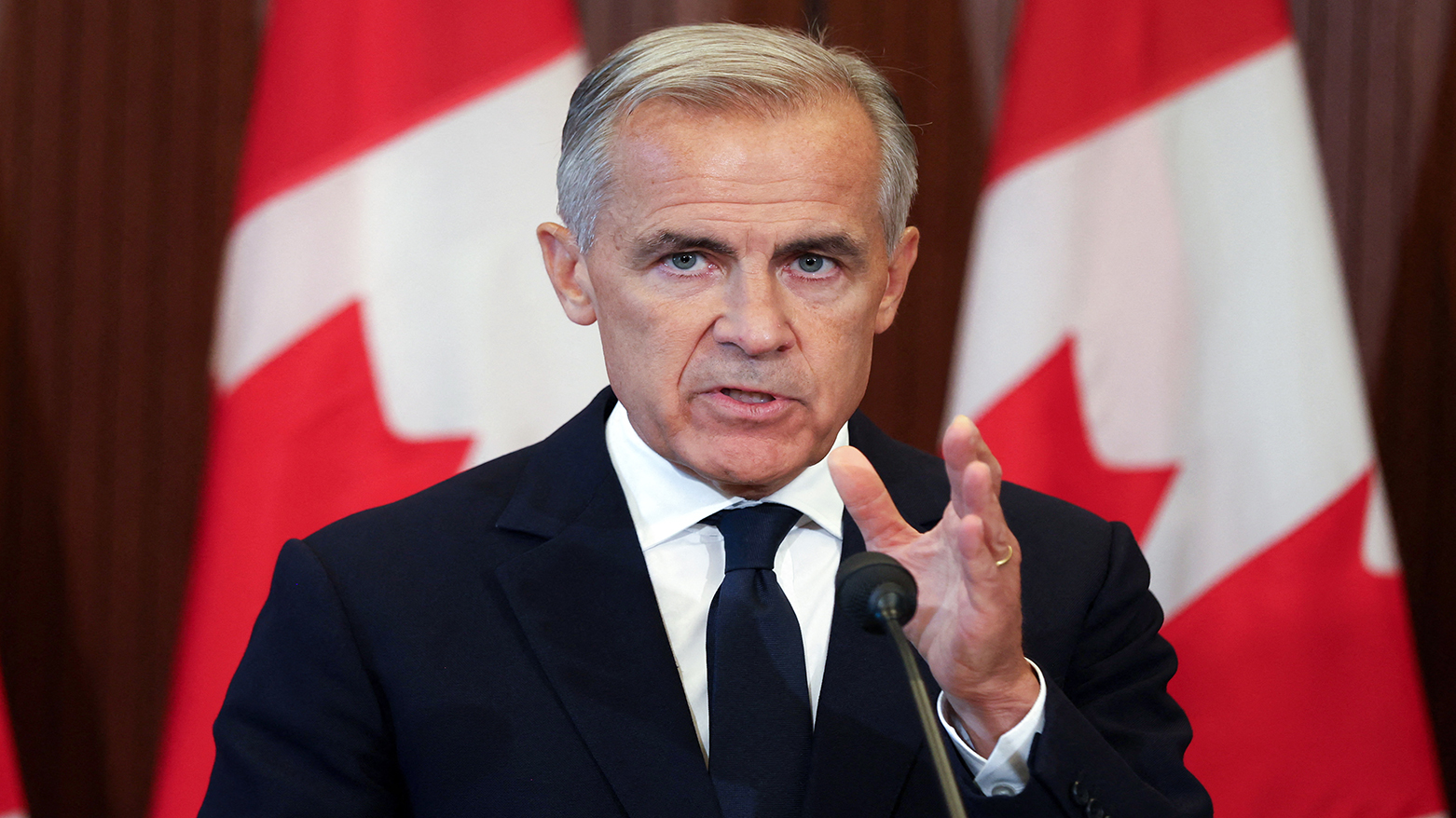
ERBIL (Kurdistan24) — Canadian Prime Minister Mark Carney announced retaliatory tariffs on US goods after abandoning what he described as an “uneconomic” and “unfair” trade proposal from Washington, deepening a growing trade rift between the two longtime allies.
Negotiations between Canada and the United States broke down Friday in Washington, triggering new 50-percent US tariffs on about $20 billion worth of Canadian goods, equivalent to roughly 5.5 percent of Canada’s exports to its southern neighbor.
The affected products range from hockey sticks to cement.
“You’re at war when you get attacked. We got attacked,” Carney said Saturday.
Carney said US negotiators had introduced new conditions in recent days that Canada could not accept, despite what he described as positive progress in earlier discussions.
“In recent days, the United States proposed new terms that were uneconomic, unfair and undermined the net benefits for Canada, and called into question the reliability of any deal,” Carney said in Ottawa.
“We cannot accept what they’ve offered, and we will not give what they’ve asked.”
Canada’s new retaliatory tariffs will primarily target US steel and dairy products and are scheduled to take effect on September 8. Carney said further details would be announced next week.
US Trade Representative Jamieson Greer, meanwhile, said Washington was moving ahead with measures in response to Canada’s retaliation and indicated that no new negotiations were currently planned.
The White House had previously said the two countries should be able to reach an agreement, with US President Donald Trump pointing to his “good relationship” with Carney.
Carney takes a hard line
The breakdown follows weeks of negotiations in which Ottawa sought relief from Trump’s tariffs on Canadian automobiles, steel and aluminum, measures that have weighed on key Canadian industries, contributed to job losses and strained one of North America’s most deeply integrated economic relationships.
Carney said the latest talks collapsed partly because US negotiators sought restrictions on Canada’s ability to conclude trade agreements with other countries.
He also accused Washington of making unacceptable demands concerning the French language and Quebec culture, further complicating the negotiations.
The dispute has generated criticism inside the United States, particularly among Democratic lawmakers and governors in border states, who have warned that the tariffs will increase costs for American businesses and consumers.
“Needlessly picking fights with our allies and raising prices here at home. That’s Trump’s economic policy in a nutshell,” New York Governor Kathy Hochul said on X.
The two countries must also eventually reach agreement on revisions to the United States-Mexico-Canada Agreement, or USMCA, the North American trade pact Trump has declined to renew in its current form.
Trump’s repeated suggestions that Canada could become the 51st US state have further antagonized Canadians and contributed to a deterioration in public sentiment toward Washington.
Canada seeks to reduce US dependence
Carney has repeatedly warned that the relationship between the two countries has been permanently altered and that Canada needs to diversify its economy and reduce its dependence on the United States.
“We’ve been under no illusions. We recognized from the start that America has changed,” Carney said Saturday. “We recognize that sometimes, its signature was written in pencil.”
The United States accounts for roughly 70 percent of Canadian exports, making the decision to confront Washington economically a significant risk for Ottawa.
Carney said, however, that Canada was prepared to respond to US tariffs “dollar for dollar” to protect Canadian workers and businesses.
“We will not allow any nation to determine our future. We will set our own course to keep building Canada strong for all,” he said Friday as the negotiations began to collapse.
Carney also highlighted Canada’s importance to the US energy sector, saying Canada supplies about 99 percent of US natural gas imports, 85 percent of its electricity imports and 60 percent of its crude oil imports.
“I don’t think they want us to stop sending any of that energy,” he said.
Ontario Premier Doug Ford, one of Canada’s most influential provincial leaders, urged Canadians to remain united in the face of the dispute.
“Trump can’t be trusted, simple as that,” Ford told reporters, describing the US president as someone who “would steal your lunch money.”
Canada’s opposition leader, Pierre Poilievre, also backed Carney’s position, calling on Canadians to “stand united” against what he described as unfair US attacks on Canadian jobs and businesses.
A poll published earlier this week found that 56 percent of Canadians surveyed wanted Ottawa to take a “hard line” and make no further trade concessions to Washington.
Economic risks remain
Despite growing domestic support for a tougher stance toward Trump, the economic consequences for Canada could be significant.
The United States remains overwhelmingly Canada’s largest trading partner, while industries such as automobiles, steel and manufacturing are already feeling the effects of the broader tariff dispute.
Analysts at the Royal Bank of Canada said that although the latest US tariffs affect only about 5.5 percent of Canadian exports to the United States, “the economic cost of the increase is real nonetheless.”
Ontario and Quebec, Canada’s two economic powerhouses, are expected to face particular pressure, while uncertainty surrounding US trade policy could further weaken business confidence across industries dependent on international trade.
Trevor Tombe, an economics professor at the University of Calgary, warned that if the tariffs remain in place over the long term, Canada could lose as many as 90,000 jobs.
Carney’s decision therefore represents both a political challenge to Trump and a calculated economic gamble. Ottawa hopes that expanding trade relationships beyond the United States will gradually reduce its vulnerability to Washington’s tariff policy.
For now, however, Canada and the United States remain deeply economically intertwined, leaving both governments with strong incentives to eventually return to the negotiating table despite the latest escalation.