Ahmet Türk: Demirtaş, Yüksekdağ Jailed for Political Views
Ahmet Türk says Türkiye's peace process lacks concrete steps and argues that Selahattin Demirtaş and Figen Yüksekdağ remain imprisoned over political activity, not weapons.
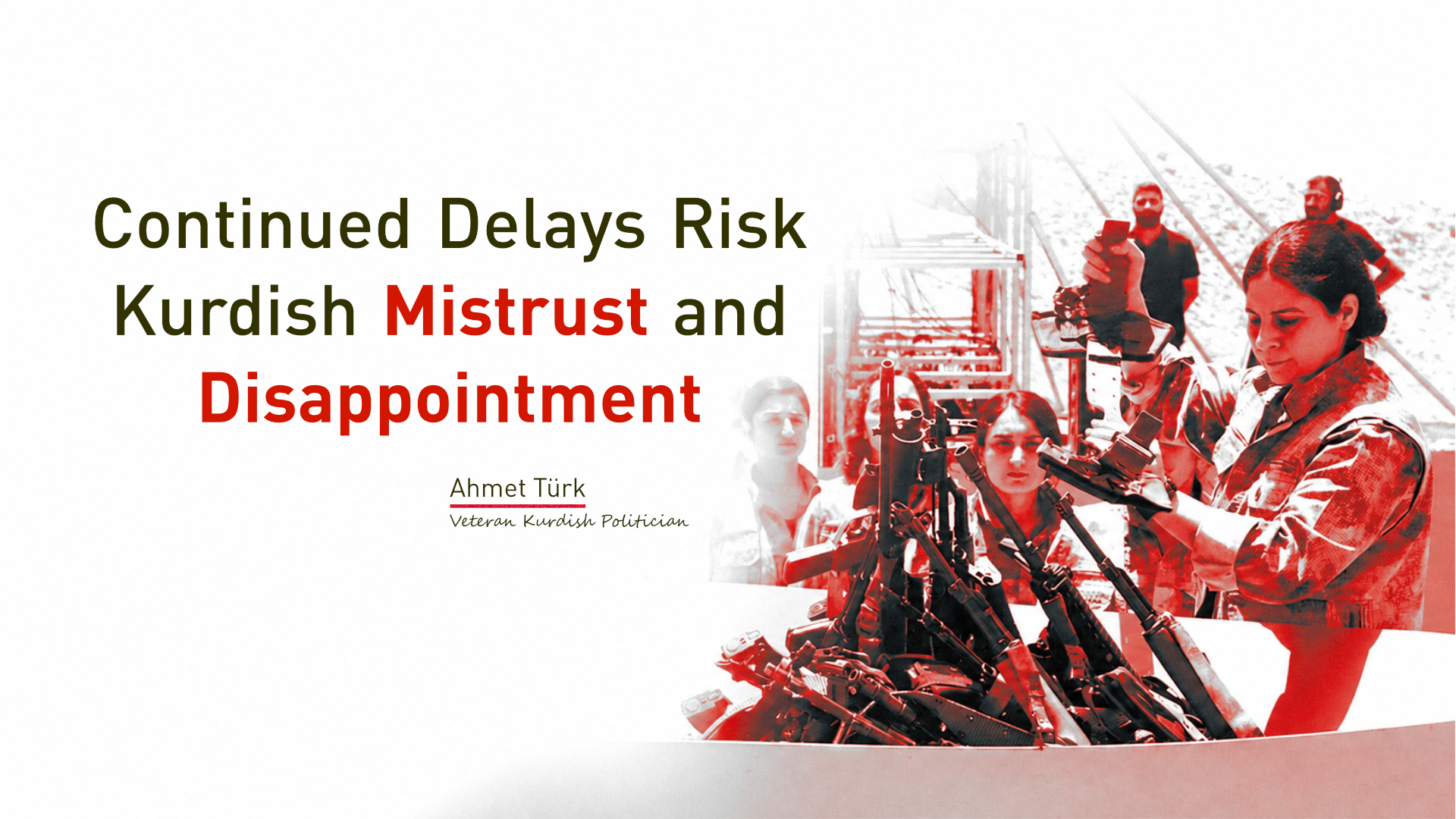
ERBIL (Kurdistan24) - Veteran Kurdish politician Ahmet Türk has criticized the pace of Türkiye's peace process, saying Ankara has yet to take concrete political and legal steps and warning that continued delays are creating growing mistrust among Kurds.
Türk, the ousted co-mayor of Mardin Metropolitan Municipality, said in an interview that expectations surrounding the process have not been matched by action, particularly regarding imprisoned Kurdish political figures and the appointment of state trustees in place of elected officials.
He said the continued detention of former Peoples' Democratic Party leaders Selahattin Demirtaş and Figen Yüksekdağ remained among the issues contributing to disappointment.
"Politicians such as Selahattin Demirtaş and Figen Yüksekdağ are in prison because of their ideas and political activities, and their imprisonment has nothing to do with weapons," Türk said.
He argued that the government should take practical steps to strengthen democratic rights if the current process is to produce a lasting political settlement.
Türk also questioned earlier expectations surrounding Demirtaş's possible release.
"They previously said Selahattin Demirtaş would be released in March or April, but two years have passed since those statements and nothing has happened," he said.
"A policy of delay is still being pursued. If legal steps are not taken quickly, this will create deep mistrust and disappointment among the Kurdish people."
His remarks reflect his own assessment of the legal and political circumstances surrounding Demirtaş and Yüksekdağ, as well as the broader peace process.
Türk also addressed the continued use of government-appointed trustees to replace elected municipal officials.
He described the practice as a direct violation of voters' will and argued that ending the trustee system would not require new legislation from parliament.
According to Türk, the Interior Ministry already has the authority to revoke the appointments.
He claimed, however, that there remains a political approach aimed at controlling the process and using the trustee issue as leverage.
Türk himself was removed from his position as co-mayor of Mardin Metropolitan Municipality and replaced by a trustee.
His comments therefore focused both on national political developments and on a system that has directly affected elected Kurdish municipal administrations.
At the same time, Türk said Kurds support peace and the ending of armed conflict.
He stressed, however, that disarmament by itself would not be sufficient to resolve the broader political problems.
For Türk, the process must also address political participation, democratic rights and the status of politicians who remain imprisoned.
His comments come amid continuing debate in Türkiye over what practical steps should follow efforts to revive a political resolution process.
Türk's position is that progress cannot be measured solely through developments related to weapons or armed actors.
Instead, he argues that the credibility of the process will also depend on whether authorities make changes affecting elected officials, political prisoners and democratic participation.
The veteran politician warned that prolonged uncertainty could damage public confidence in the process.
He said Kurds remain prepared to support peace, but that confidence requires reciprocal action from the state.
Türk therefore called for concrete legal and political measures rather than further delay.
His central argument was that a lasting settlement cannot be achieved through disarmament alone, and must instead include guarantees for democratic rights and a political environment in which disputes can be addressed through civilian institutions.
Without such steps, he warned, disappointment could deepen among Kurds who had expected the renewed process to bring tangible political change.
Ebidulselam Tutinçî, Kurdistan24 correspondent, contributed to this report.