Iraqi Crude Oil Exports to the United States Resume After Seven Consecutive Weeks at Zero
US Energy Information Administration confirms 6,000 barrels per day of Iraqi crude reached American refineries last week, marking the first Iraqi oil shipment to the US since the conflict disrupted Gulf energy flows
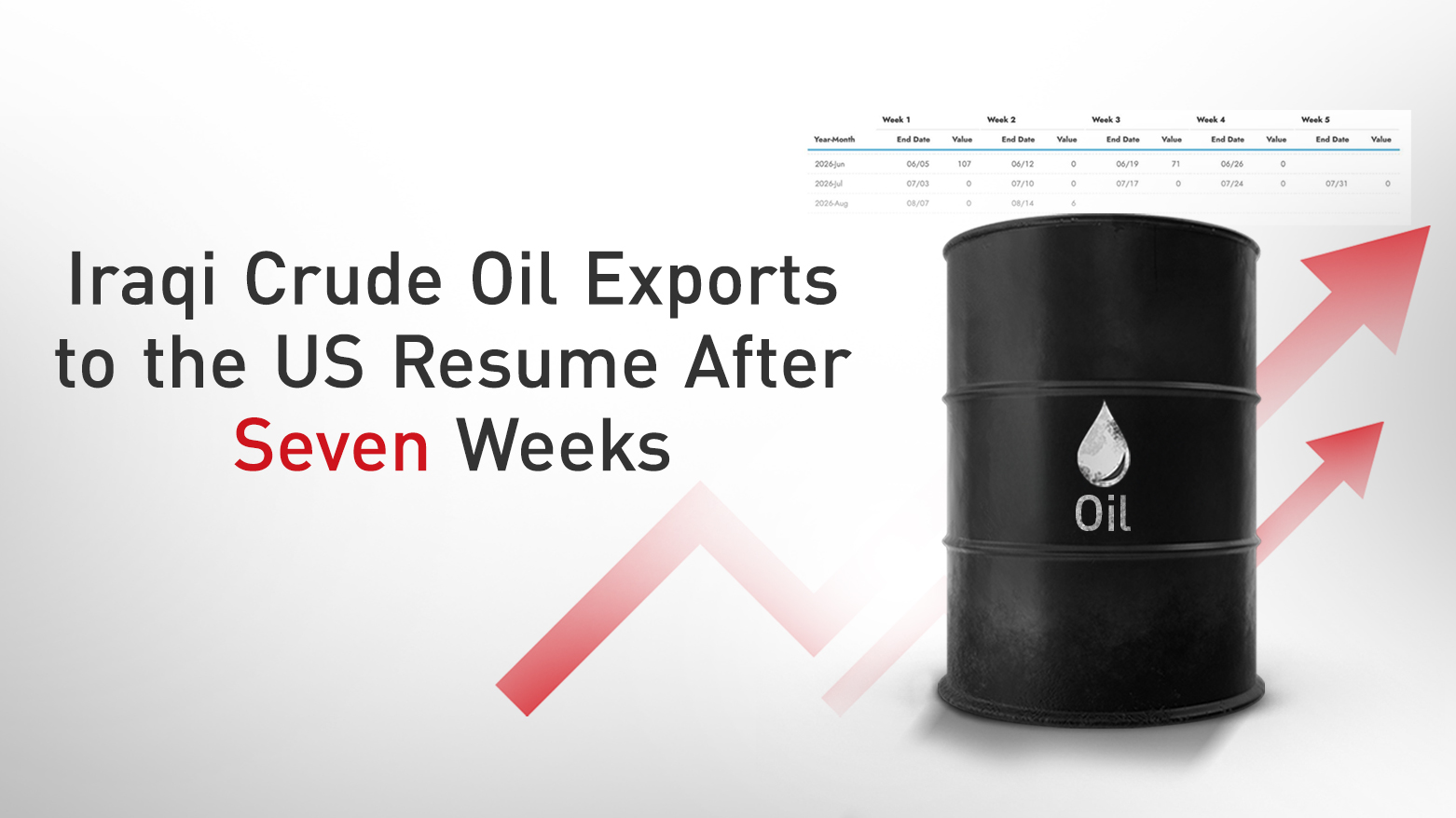
ERBIL (Kurdistan 24) - The United States Energy Information Administration announced on Sunday, August 23, 2026, that Iraqi crude oil imports to the United States have resumed, with 6,000 barrels per day of Iraqi crude recorded in the previous week, ending seven consecutive weeks during which Iraqi oil exports to the US had registered at zero.
The EIA's disclosure marks a significant milestone in the slow and partial recovery of Gulf energy flows following nearly six months of disruption caused by the US-Iran conflict. The resumption of Iraqi crude shipments to American refineries, however modest at 6,000 barrels per day, signals that at least some of the commercial shipping infrastructure connecting Iraq's oil export terminals to the United States is beginning to function again after an extended period of complete stoppage.

The figure of 6,000 barrels per day stands in stark contrast to the volumes Iraq was exporting before the conflict began on February 28, 2026. Iraqi Foreign Minister Fuad Hussein warned on Saturday, June 6, 2026, that Iraq's oil exports had collapsed from nearly 100 million barrels in February, generating approximately six billion dollars in revenue, to below 10 million barrels in April, producing just over one billion dollars, as Iranian attacks disrupted tanker traffic through the Strait of Hormuz. The fiscal shortfall forced Baghdad to raise its money-printing ceiling from 100 trillion to 125 trillion Iraqi dinars to cover government obligations.
The resumption of Iraqi crude flows to the United States coincides with the broader, if still partial, recovery of Strait of Hormuz traffic. UK Maritime Trade Operations Center data published on Friday, August 21, 2026, showed nearly 200 ships navigating the strait last week, up from just 40 two weeks earlier, a nearly 400 percent surge that maritime intelligence firm Kpler attributed in part to vessels increasingly using the US-backed Omani corridor rather than waiting for Iran to formally authorize transit. Total Hormuz traffic remains at approximately 20 percent of pre-war levels, however, meaning that the vast majority of the oil and gas that normally flows through the waterway is still not moving normally.
The resumption also comes as Washington prepares what President Trump described as the "most crushing economic operation ever undertaken" against Iran, with Treasury Secretary Scott Bessent warning that unprecedented new sanctions measures are expected imminently, targeting the financial networks that have sustained Tehran's economy throughout the conflict. Whether the resumption of Iraqi crude shipments to the US represents the beginning of a durable recovery in Gulf energy trade or a fragile and temporary opening that could be reversed by renewed Iranian attacks on commercial shipping will depend heavily on how Iran responds to the incoming sanctions package.
Iraq's government under Prime Minister Ali al-Zaidi has been one of the voices most directly affected by and most vocal about the economic consequences of the conflict, with al-Zaidi's US visit this month producing the Starlink licensing agreement and strengthened economic ties with Washington, even as Baghdad manages the delicate political challenge of maintaining working relations with both the United States and Iran simultaneously.