40 Percent of Bestana–Khalakan–Dukan Dual Carriageway Completed
The strategic infrastructure project aims to transform a hazardous single-carriageway road connecting Sulaimani province with the Raparin Independent Administration into a modern dual carriageway, reducing traffic accidents and improving road safety and travel conditions for residents.
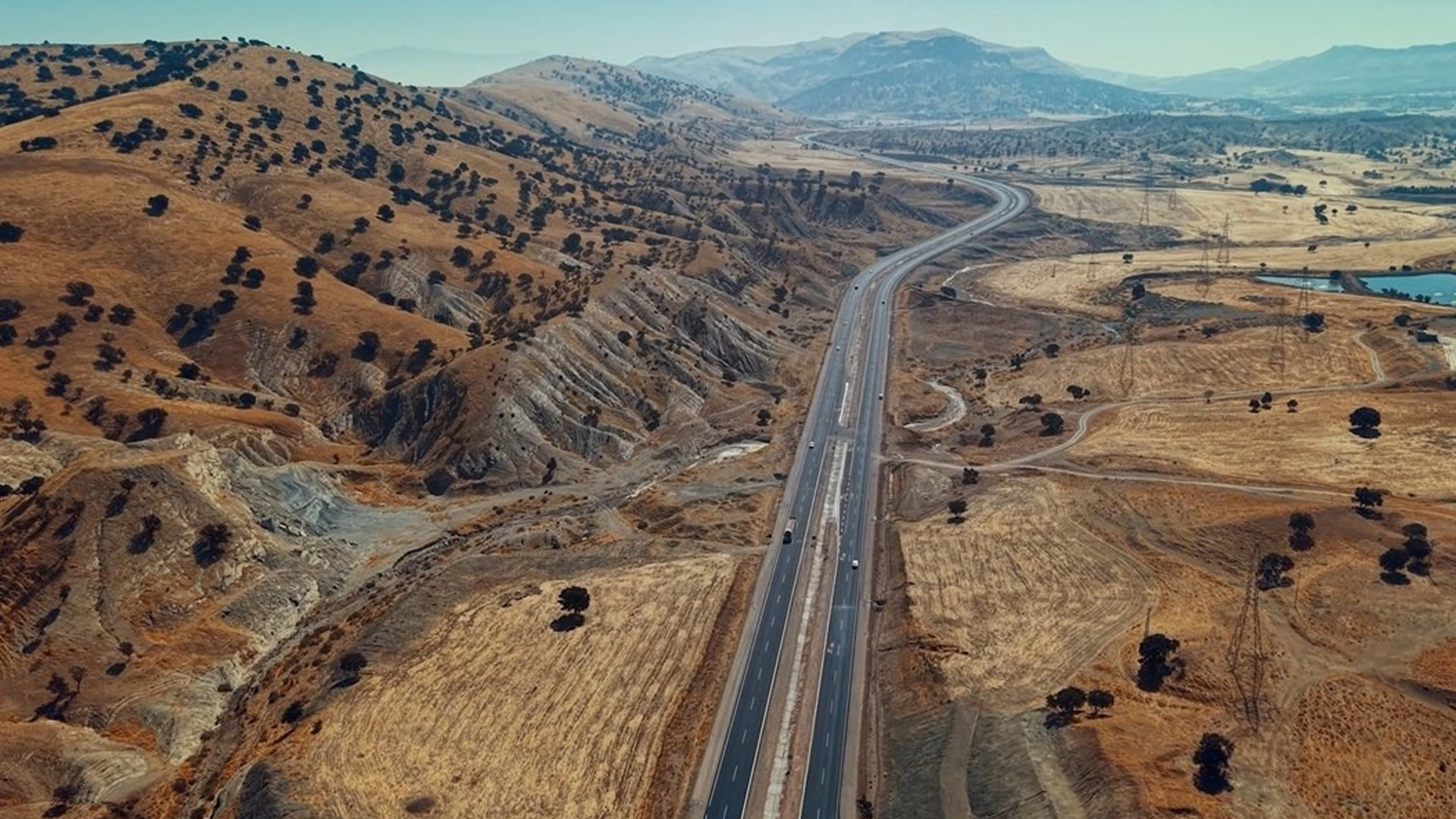
ERBIL (Kurdistan24) – Approximately 40 percent of the Bestana–Khalakan–Dukan dual carriageway project has been completed, with an 11-kilometer stretch between Bestana and Khalakan fully asphalted and open to traffic, the Kurdistan Regional Government (KRG) Department of Media and Information announced on Sunday.
The strategic infrastructure project aims to transform a hazardous single-carriageway road connecting Sulaimani province with the Raparin Independent Administration into a modern dual carriageway, reducing traffic accidents and improving road safety and travel conditions for residents.
The project also includes the construction of the Frizalla Village Bridge, which measures 380 meters in length and 15 meters in width. The bridge is expected to improve road access and provide safer and more convenient travel for drivers and local residents.
According to the project plans, construction will involve excavating approximately 2.5 million square meters of earth, laying 800,000 square meters of sub-base material, paving 840,000 square meters of asphalt, and installing 300,000 square meters of crushed-stone filling, alongside the construction of two-meter culverts.
Work is progressing at an intensive pace, with hundreds of pieces of machinery and local workers involved in construction activities, the department said.
The 15-kilometer stretch in the Khalakan area is scheduled for completion by the end of 2026, while excavation and earthworks are continuing along the 12-kilometer Khalakan–Dukan section.
The project is part of the KRG’s broader infrastructure development efforts to improve road connectivity, enhance transportation safety, and facilitate travel between areas of the Kurdistan Region.
The project is part of the KRG Ninth Cabinet's broader infrastructure campaign, which has allocated more than 5.3 trillion Iraqi dinars — approximately $4 billion — to the construction and modernization of major highways, urban ring roads, and regional corridors.
The campaign includes efforts to transform dangerous single-carriageway roads into modern dual carriageways, improve connectivity between urban areas, and upgrade road designs using local engineering expertise and workforce.