Duhok's Nizarke Fortress to Become Genocide Museum
Duhok plans to transform the Baath-era Nizarke Fortress into a genocide museum documenting Anfal and atrocities against Kurdish, Ezidi Kurds, and Christian communities.
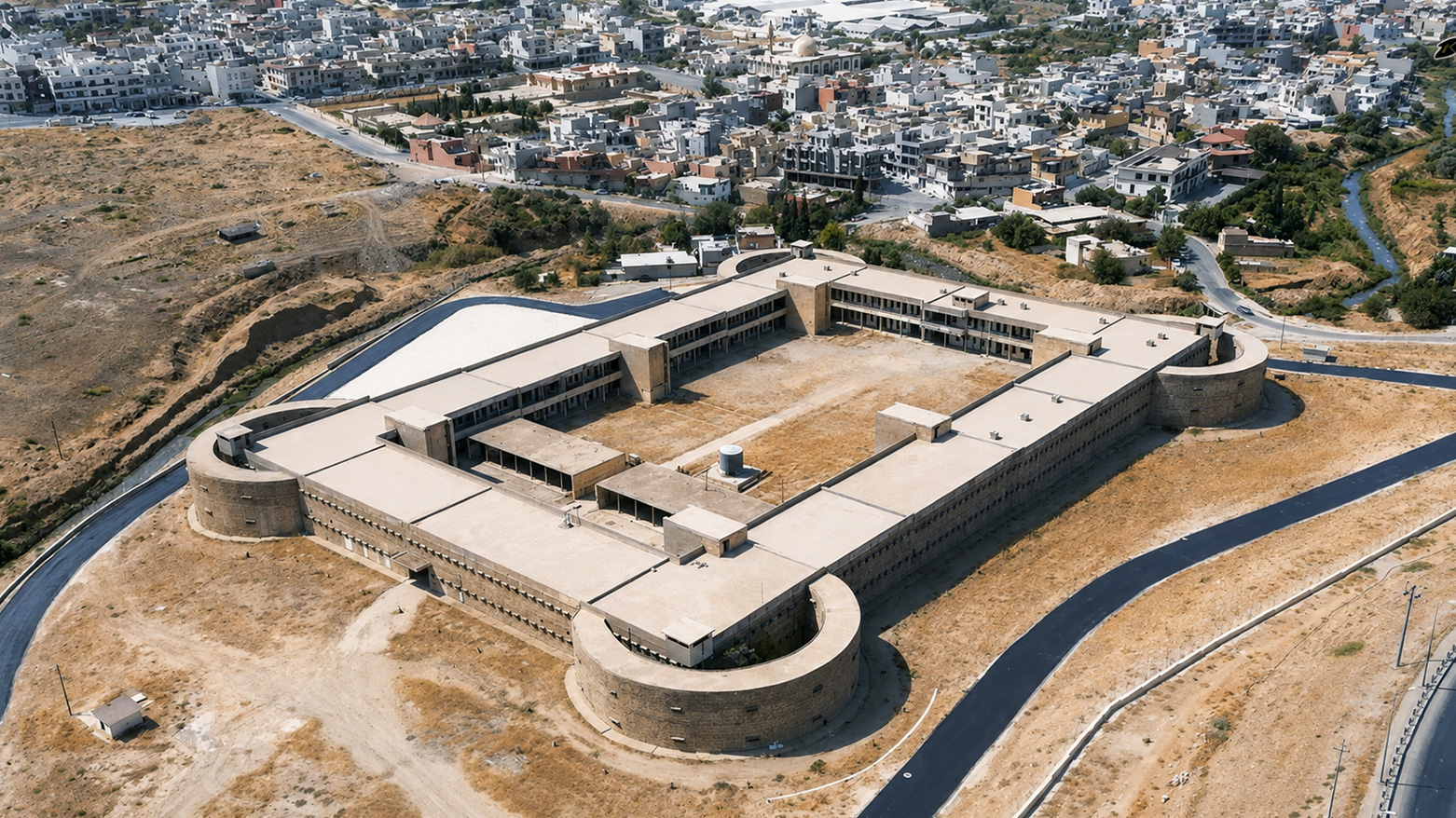
ERBIL (Kurdistan24) - Duhok authorities are moving to transform Nizarke Fortress, a former Baath-era military and detention complex associated with the Anfal campaign, into a broader genocide museum documenting atrocities committed against Kurds, Ezidi Kurds, Christians and other communities, Governor Ali Tatar said Monday.
Tatar announced the plan during a ceremony organized by Duhok's Directorate of Youth to commemorate five young men from the city who were killed by the Baathist regime in 1983.
According to Tatar, the five were forcibly removed from their school on Dec. 28, 1983, and executed by firing squad at the site now occupied by the Sports and Youth Center.
All five were under the age of 25, he said, while two had not yet turned 18.
Tatar said the authorities at the time also forced their families to pay for the bullets used in the executions and prohibited them from holding mourning ceremonies.
The governor said the planned transformation of Nizarke would preserve the fortress's original architectural character while expanding its memorial purpose beyond the Anfal campaign.
"We are now working to transform the Nizarke Fortress Museum into a genocide museum that will not be limited to the Anfal campaign," Tatar said.
"Its rooms will be dedicated to all the genocides committed against Christian and Ezidi Kurd communities, as well as different villages and areas, from the events of 1933 to Dekan Cave and Suryan village."

From detention center to site of memory
Nizarke, also transliterated as Nazarke, Nizarki and Nizarkeh, stands on Duhok's eastern approach near the routes connecting the city with Erbil, Amedi and other northeastern districts.
Despite its name, it is not an ancient citadel but a fortified Baath-era military complex that later became a detention and interrogation center.
Published accounts differ over when the structure was built.
Human Rights Watch has said the Soviet-designed fort was constructed in the 1970s, while other reporting dates the original military base to 1976. The Kurdistan Regional Government has said the present fortress was built in 1985. The discrepancy has not been definitively resolved.
Nizarke's most extensively documented role came during the Final Anfal campaign in Badinan between Aug. 25 and Sept. 6, 1988.
Drawing on captured Iraqi government documents and survivor testimony, Human Rights Watch reported that the Iraqi Fifth Corps registered 13,395 people captured during the Badinan operation and routed most of them through Nizarke.
The KRG has cited a narrower figure of more than 3,000 people imprisoned at the fortress itself.
Survivor accounts describe men and military-age boys being separated from women, children and elderly detainees amid severe overcrowding, beatings and deprivation of food and water.
Several hundred Ezidi Kurds and Assyrian Christian villagers were also among those detained, according to the documented accounts.
Women and children were later transported to Salamiyeh, south of Mosul, while many of the younger men removed from Nizarke disappeared and were never seen again.

Preserving evidence for future generations
Since the fall of the Baathist regime, Nizarke has increasingly been treated both as a crime scene and as a place of collective memory.
Earlier museum proposals called for preserving the fortress exterior, prisoner inscriptions and locations associated with executions.
The University of Duhok's Center for Genocide Studies carried out a heritage campaign at the site in 2022, while Duhok authorities laid the foundation stone for a national Anfal museum there in April 2024.
In October 2025, the KRG announced a $5-million, multiphase restoration project intended to improve access and provide facilities for visitors, researchers and educators.
Kurdistan24 subsequently reported that original inscriptions left by prisoners were being protected and exhibition halls prepared.
Tatar's latest announcement broadens that concept, presenting Nizarke as a museum intended to document multiple episodes of genocide and persecution affecting the area's different communities rather than focusing exclusively on one campaign.
The approach would give Duhok a memorial institution rooted directly in a place where detention, abuse and disappearance occurred, bringing physical evidence together with survivor testimony, historical documentation and public education.
Tatar also said proposals submitted by victims' families were receiving serious consideration.
Among them is a request to rename Pirs Stadium as Martyrs Stadium. He said the relevant authorities were reviewing the proposal before reaching a final decision.
For the five young men commemorated Monday, their killings preceded the Final Anfal by several years, but their story forms part of the broader history of Baath-era repression that officials now want Nizarke to preserve.
The planned museum would therefore transform a former instrument of state repression into a permanent place of remembrance, documenting not only Anfal, but the experiences of Kurdish, Ezidi Kurds, Christian and other communities subjected to persecution and mass violence.