Istanbul 'Yellow Bags' Spark Kurdophobia Concerns After Amedspor Match
Yellow bags associated with anti-Kurdish threats appeared in Istanbul days after five Kocaelispor fans were punished for targeting Amedspor supporters.
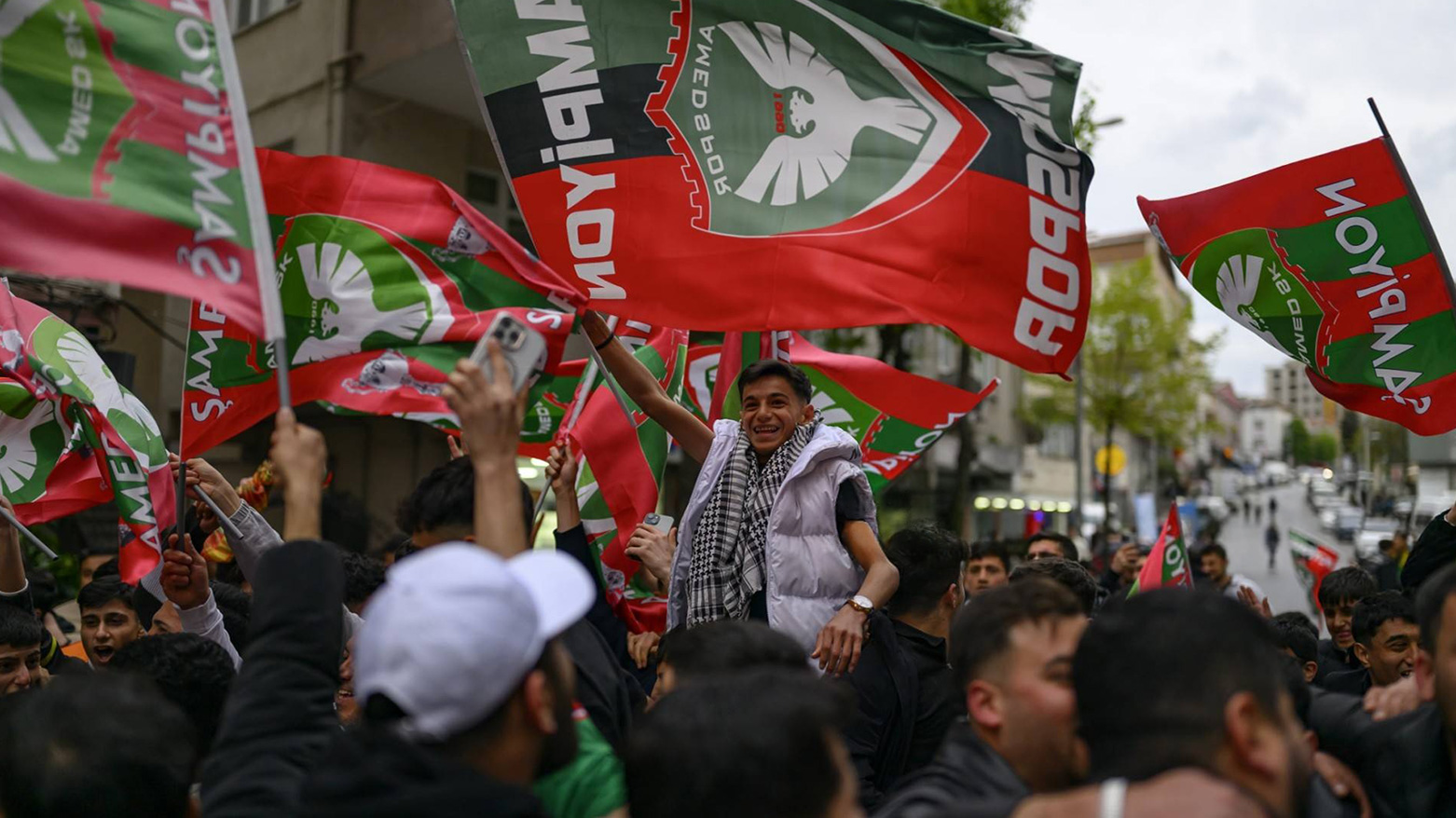
ERBIL (Kurdistan24) - The appearance of yellow plastic bags hanging from a building in Istanbul has triggered accusations of Kurdophobia and anti-Kurdish intimidation, days after five football supporters were placed under house arrest for displaying the same imagery toward fans of Kurdish club Amedspor.
Video footage from Istanbul's Başakşehir district showed several yellow bags suspended from a balcony, Kurdistan24 correspondent Abdulsalam Turunci reported. Construction workers in the area photographed the display, which quickly prompted anger on social media.
Kurdish groups, commentators and social-media users described the incident as a deliberate provocation at a particularly sensitive moment, as Türkiye pursues efforts aimed at ending decades of armed conflict and addressing the Kurdish question.
The symbolism carries an explicitly violent association.
Yellow bags have been used by some Turkish nationalist circles as references to body bags containing the remains of Kurdistan Workers' Party, or PKK, fighters killed during clashes with Turkish security forces.
The imagery has consequently also been used as a threat against Kurds, Kurdish political figures and others associated with the Kurdish cause.

Amedspor again at center of controversy
The Istanbul incident followed a similar display during Monday's Süper Lig match between Kocaelispor and Amedspor.
Several Kocaelispor supporters waved yellow bags toward the section occupied by Amedspor fans before the match, which Kocaelispor won 2-0.
Amedspor supporters reportedly responded by chanting "Jin, Jiyan, Azadî" - "Woman, Life, Freedom."
The Kocaeli Chief Public Prosecutor's Office subsequently launched an investigation into what it called "provocative acts" directed at opposing supporters.
Five suspects were detained and later placed under house arrest, according to Bianet. They are being investigated under provisions concerning incitement to hatred and hostility and threatening or insulting conduct at sporting events.
The Diyarbakır Bar Association's Human Rights Center also filed a criminal complaint, arguing that the display evoked conflict and death, amounted to intimidation and threatened social peace.
Amedspor, based in Diyarbakır, known as Amed in Kurdish, has repeatedly faced racist and nationalist hostility at away matches.
In March 2023, its players were attacked during a match against Bursaspor, while supporters displayed images associated with extrajudicial killings and enforced disappearances of Kurds during the 1990s.
Hate speech amid a peace process
The latest incidents carry added significance because Türkiye is undergoing a renewed political process aimed at ending the Kurdish conflict.
Jailed PKK leader Abdullah Öcalan called on the organization in February 2025 to disarm and dissolve, and the PKK subsequently announced its dissolution.
Against that backdrop, Kurdish commentators argue that threatening imagery directed indiscriminately at Kurdish football supporters risks reproducing hostility precisely when political actors are calling for reconciliation and social peace.
The Istanbul display has therefore become about more than several plastic bags.
For critics, it reflects the persistence of Kurdophobia, the stigmatization of Kurdish identity through language and symbols that associate Kurds collectively with violence or terrorism.
The legal action following the Kocaelispor match also signals increasing recognition that such imagery cannot simply be dismissed as football rivalry.
As Amedspor competes in Türkiye's top division for the first time, the club has become an especially visible test of whether Kurdish identity can be expressed within Turkish public life without being met by racist abuse, threats or political suspicion.
At a moment when Türkiye's political leadership is speaking of peace and reconciliation, curbing anti-Kurdish hate speech may prove as important to that atmosphere as negotiations themselves.