Mazloum Abdi Shifts from Kurdish Military Leader to Presidential Adviser
Abdi led the SDF for more than a decade, overseeing the Kurdish-led force that became the de facto military of the autonomous administration established across Western Kurdistan (northern and northeastern Syria).
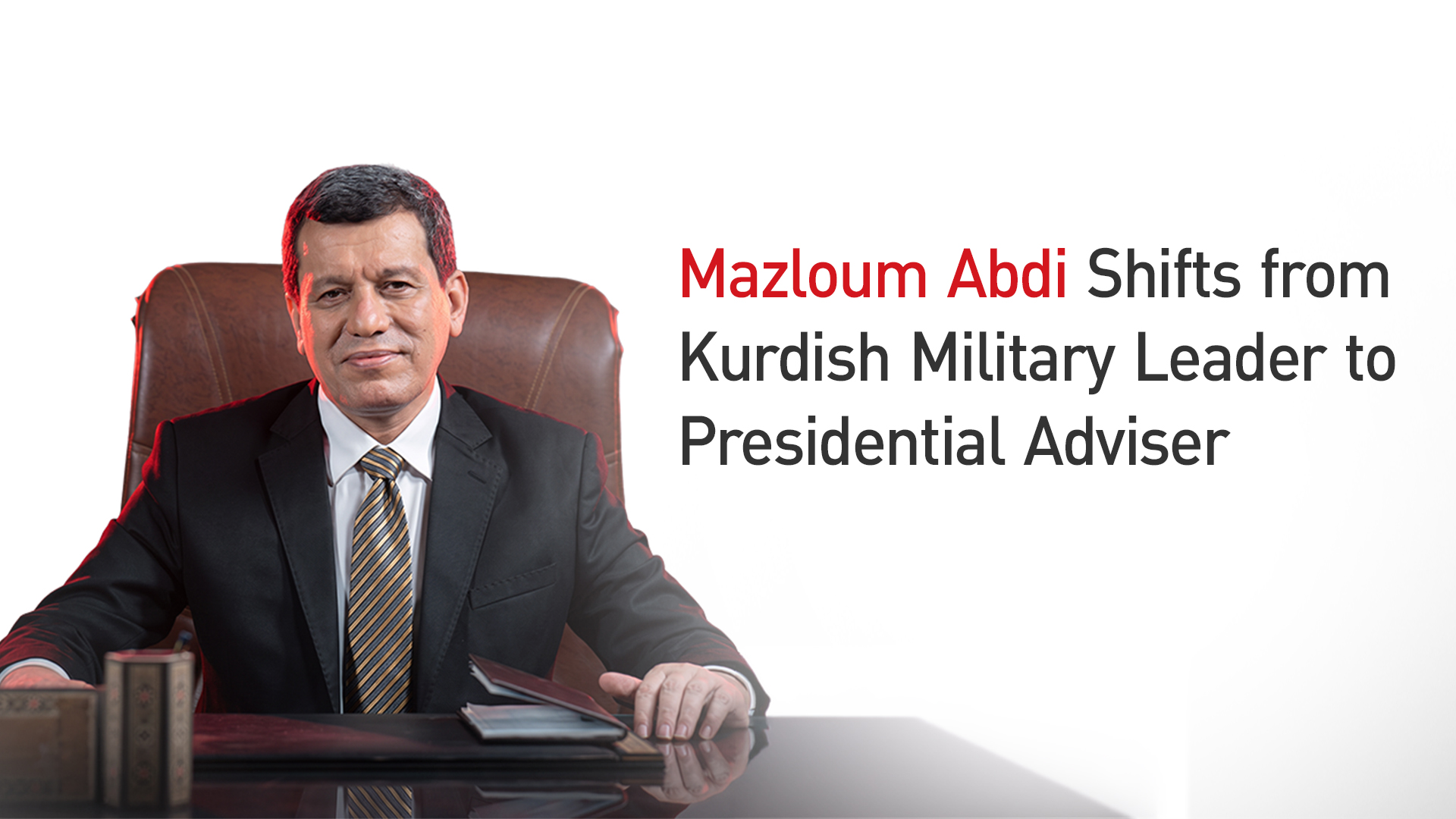
ERBIL (Kurdistan24) – Mazloum Abdi, a longtime Kurdish military commander who led the US-backed Syrian Democratic Forces (SDF) in the fight against Islamic State (ISIS) jihadists, is moving into politics after being appointed as an adviser to Syria’s presidency.
Abdi, who joined the Kurdistan Workers’ Party (PKK) in 1990, has for decades been a prominent figure in the Kurdish movement. He led the SDF for more than a decade, overseeing the Kurdish-led force that became the de facto military of the autonomous administration established across Western Kurdistan (northern and northeastern Syria).
The SDF, with extensive support from the United States and other members of the international coalition, played a central role in defeating ISIS’s territorial control in Syria.
Born in 1967 in Kobani city near the Turkish border, Abdi became internationally known during the battle for Kobani, where Kurdish-led forces defeated ISIS in 2015 after months of intense fighting.
For years, Abdi was typically seen in military fatigues and was known as a relatively reserved but politically astute commander. He was more comfortable speaking Kurdish than Arabic and built close relationships with several countries during his years leading the SDF, particularly the United States.
However, Syria’s political transformation following the fall of longtime President Bashar al-Assad in 2024 forced Abdi and the Kurdish-led administration to reconsider their ambitions.
After months of difficult negotiations with Syria’s new President Ahmed al-Sharaa, sometimes taking place amid renewed fighting, Abdi agreed in January to a deal providing for the integration of the SDF and Kurdish-administered areas into the Syrian state. The agreement effectively ended long-standing Kurdish aspirations for formal autonomy.
Abdi’s transition into a political role marks a significant shift for a commander who became one of the most influential Kurdish figures in Syria through more than a decade of war and negotiations.
His new position comes as Damascus seeks to consolidate state authority across the country while integrating former Kurdish-led institutions and forces into the Syrian state.