Türkiye Waives Visas for Syrian Diplomats as Ties Normalize
Türkiye waived visas for Syrian diplomatic passport holders, marking another step in normalization as Syria integrates Kurdish-led institutions and deepens regional ties.
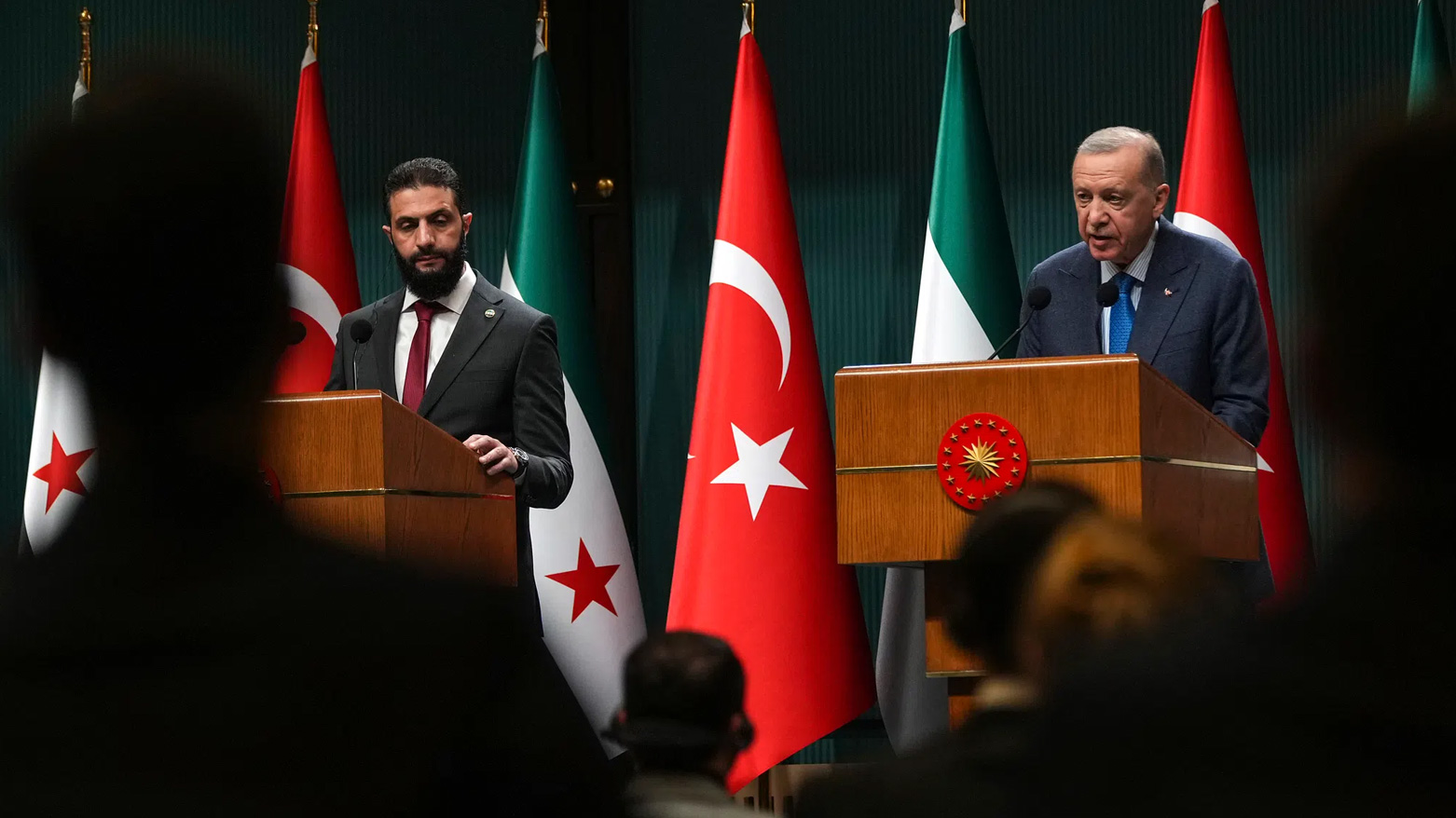
ERBIL (Kurdistan24) - Türkiye has waived visa requirements for holders of Syrian diplomatic passports, marking another concrete step in the normalization of relations between Ankara and Damascus as Syria undergoes a wider political and security transition.
The measure was approved through a presidential decree signed by Turkish President Recep Tayyip Erdoğan and published Friday, Aug. 28, in Türkiye's Official Gazette.
Under the decision, Syrian diplomatic passport holders may enter Türkiye without a visa while carrying out official duties, transiting through the country or making private visits of up to 90 days within any 180-day period.
The decision entered into force under Article 18 of Türkiye's Law on Foreigners and International Protection.
Although limited to diplomatic passport holders, the measure carries broader political significance because it reflects a continued institutional normalization between the two countries after years of hostility and rupture during the Syrian conflict.
A wider Syrian transition
The visa decision comes amid rapid political developments inside Syria, particularly concerning the future of Kurdish-led institutions in the northeast.
Earlier this week, Mazloum Abdi announced the dissolution of the Syrian Democratic Forces as an independent military structure, formally ending the organization's separate military role after more than a decade.
The SDF, backed extensively by the United States and the international coalition, had been the principal ground force fighting ISIS across large parts of northern and eastern Syria.
Abdi said the dissolution marked a transition "from the battlefield to the field of construction" and from "the era of arms to the era of peace."
The announcement followed months of negotiations between Kurdish-led authorities and the government of Syrian President Ahmed al-Sharaa over integrating military, security and administrative institutions into the Syrian state.
That process has already led to the absorption of several former SDF brigades into national defense structures and negotiations over the integration of internal security forces.
Abdi himself has now moved directly into the political structure of the new Syrian state.
On Thursday night, al-Sharaa issued Presidential Decree No. 164 of 2026 appointing Mustafa Khalil Abdi, better known as Mazloum Abdi, as an adviser to the Syrian presidency.
The appointment represents a major transformation for a figure who spent more than a decade leading the Kurdish-led military force that controlled much of northern and northeastern Syria.
His new role indicates that Damascus is attempting to incorporate former Kurdish military and political leadership into state institutions rather than leaving those structures outside central authority.
Kurdish-language education guaranteed
The same political transition has also produced movement on Kurdish cultural rights.
Syria's education minister issued an official decision Thursday guaranteeing the teaching of Kurdish as a national language in public and private schools in areas with significant Kurdish populations.
Under the decision, Kurdish is to be taught at all levels of education and incorporated as a core component of the approved curriculum.
The measure addresses one of the longstanding demands of Syria's Kurdish population, whose language and cultural expression were heavily restricted under previous governments.
Abdi had previously emphasized mother-tongue education as one of the key rights pursued by Syrian Kurds and said the issue formed part of negotiations with Damascus.
Together, the dissolution of the SDF, Abdi's appointment to the presidency and the Kurdish-language education decision illustrate the broader bargain emerging between Damascus and Kurdish leaders: reintegration into a unified Syrian state alongside formal recognition of certain cultural and political rights.
Türkiye and Damascus move closer
For Ankara, these developments are particularly important.
Türkiye has long viewed the SDF with suspicion because of the dominant role played within it by the Kurdish People's Protection Units, or YPG, which Ankara links to the Kurdistan Workers' Party.
The end of the SDF as an independent armed force therefore removes one of the most persistent security disputes affecting Türkiye's relationship with developments inside Syria.
The new visa waiver for Syrian diplomats comes against that changing strategic backdrop.
While the measure itself concerns diplomatic travel, it signals that institutional relations between Ankara and Damascus are moving beyond ad hoc contact toward more routine forms of state-to-state engagement.
It also follows Syria's broader reintegration into regional and international diplomacy after the fall of Bashar al-Assad's government in 2024.
Earlier this week, Damascus welcomed Washington's decision to remove Syria from the US list of state sponsors of terrorism, describing the move as a historic step toward ending years of isolation.
Syrian officials said the decision could support foreign investment, international financial integration and reconstruction.
For al-Sharaa's government, the challenge is now to consolidate authority across the country while managing relations with neighboring states and integrating former military and political rivals.
Türkiye's decision to ease travel restrictions for Syrian diplomats therefore fits into a larger pattern in which Syria is gradually re-establishing formal diplomatic and economic relationships with regional powers.
The visa waiver does not amount to full normalization on its own, nor does it resolve the many outstanding political and security issues between Ankara and Damascus.
But combined with the ongoing restructuring of Kurdish-led institutions, the dissolution of the SDF and Syria's renewed international engagement, the decision points to a broader regional shift.
After years in which Türkiye-Syria relations were defined largely by war, border security and rival armed actors, the two countries are increasingly returning to formal diplomatic mechanisms.
Friday's decree is one of the clearest administrative signs yet of that transition.