Hezbollah Refuses Disarmament Deal as Iran Threatens Strait of Hormuz Closure
Hezbollah Secretary-General Qassem rejects a framework agreement with Israel and says the group will not surrender, as IRGCreaten to restrict passage through the Strait of Hormuz.
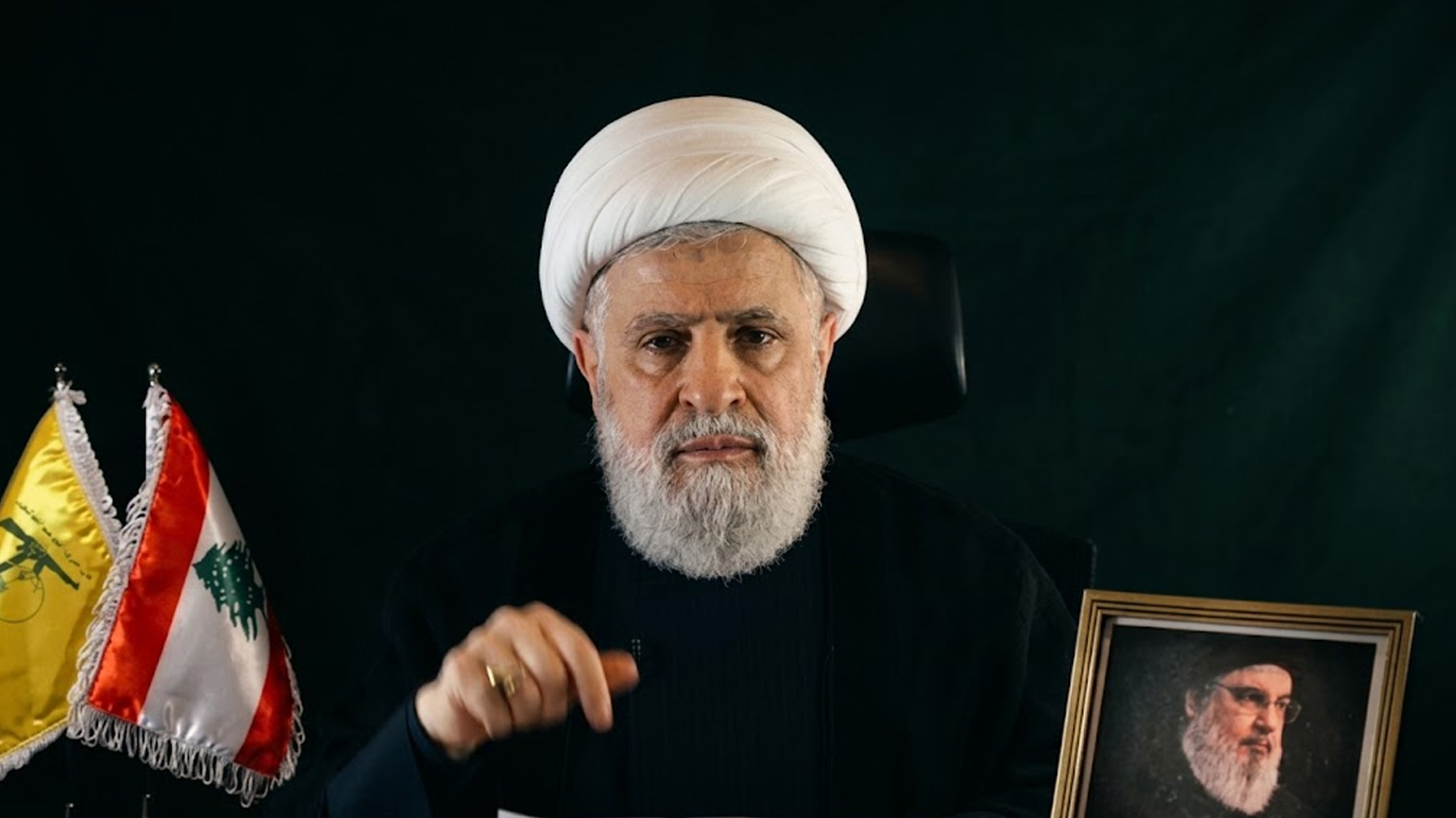
ERBIL (Kurdistan24) - Hezbollah has rejected a framework agreement between Lebanon and Israel, with Secretary-General Naim Qassem saying the group will not surrender or submit to Israel, while Iran’s Islamic Revolutionary Guard Corps has threatened to close the Strait of Hormuz to vessels seeking passage without coordination with Tehran.
On Saturday, Naim Qassem said Hezbollah opposed the framework agreement and called for its cancellation.
“We are against the framework agreement and demand its cancellation,” Qassem said, adding that Hezbollah would under no circumstances surrender or submit to Israel.
The framework agreement, signed on June 26 after five rounds of US-supervised negotiations between Lebanon and Israel, includes provisions for Hezbollah’s disarmament, the phased withdrawal of Israeli forces from areas they occupied in southern Lebanon, and the deployment of the Lebanese army in designated areas.
Qassem described the agreement as “illegal, baseless and insulting,” saying it undermines Lebanon’s sovereignty and fails to restore its rights.
“We do not agree on the designated areas or its outcomes, meaning neither the inspection committee nor those participating in the inspection committee,” he said, arguing that the mechanism falls outside Lebanese law, Lebanese consensus and the agreement itself.
According to a source in the Lebanese presidency, during the latest round of Lebanon-Israel negotiations held in Rome in early August, the two sides discussed countries that could participate in a committee tasked with inspecting the deployment of the Lebanese army in designated areas, dismantling infrastructure and disarming Hezbollah.
Another round of negotiations is scheduled for September, although no date has been set.
The conflict in the Middle East expanded toward Lebanon on March 2 after Hezbollah launched missiles toward Israel in response to the killing of Ali Khamenei, Iran’s leader, during the first US and Israeli attacks on Iran.
According to Lebanese authorities, Israeli airstrikes and ground attacks have killed more than 4,300 people.
Tensions have eased following the signing of a memorandum of understanding between the United States and Iran in mid-June, which was followed by the US-supervised framework agreement between Lebanon and Israel.
However, Israeli forces have recently increased attacks on areas of southern Lebanon, particularly in the Nabatieh area, where the strategic Ali Taheri Heights are located. According to Lebanese authorities, an Israeli strike there on Friday killed a woman.
Israel has established what it calls a security zone in southern Lebanon, where its forces remain deployed.
Hezbollah, which has received funding and weapons from Tehran since its establishment, has not announced any attacks targeting Israeli forces for more than two months.
Addressing the future of the situation, Qassem said: “We must wait a little until the signs emerge showing who has lost. God willing, everything has a solution, but what has no solution is that we remain proud and do not surrender.”
Separately, Iran’s Islamic Revolutionary Guard Corps has threatened to close the Strait of Hormuz, while the United States says the waterway remains fully open.
On Saturday, the IRGC said it had full control of the Strait of Hormuz and had closed the route to vessels attempting to pass without coordination with Tehran. Its naval forces also described US statements about the waterway remaining open to shipping as an “obvious lie.”
On Friday, Iranian President Masoud Pezeshkian acknowledged that sanctions and the blockade had reduced the country’s exports and imports by 35%.
Meanwhile, Iran’s leader, Mojtaba Khamenei, said the country would rely on domestic production and prudent spending to confront US sanctions.
Axios, citing US officials, reported that Iran had lost part of its control over the Strait of Hormuz and that US forces were now effectively controlling much of the waterway.
US Central Command commander Brad Cooper said US forces had managed to neutralize naval mines that the IRGC had placed along international shipping routes in the Strait of Hormuz.
CENTCOM said Thursday that since the US naval blockade of Iran resumed on July 14, the routes of 75 commercial vessels had been altered. In mid-June, the United States had redirected 194 vessels and disabled nine others during the first phase of the blockade.
On Aug. 24, the US Treasury Department announced an operation dubbed “Operation Economic Mongoose” against Iran, targeting oil-smuggling and sanctions-evasion networks as well as activities Washington describes as terrorist.
US Treasury Secretary Scott Bessent said Washington would continue cutting off remaining economic routes available to Tehran and warned those assisting Iran that they would face restrictions on access to the US dollar and financial system.
Control of the Strait of Hormuz, a route through which nearly one-fifth of the world’s oil passes, has become a central point of contention in negotiations aimed at reducing tensions with Iran.
As talks toward an agreement to reopen the waterway have stalled, US President Donald Trump has returned to economic pressure, including sanctions and a blockade against Iran.