Mazloum Abdi: Kurdish Rights Must Be Guaranteed in Syria’s Constitution
Abdi said progress had been made in negotiations over the recognition of the Kurdish language and the inclusion of Kurdish-language curricula in Syria’s general education system alongside Arabic.
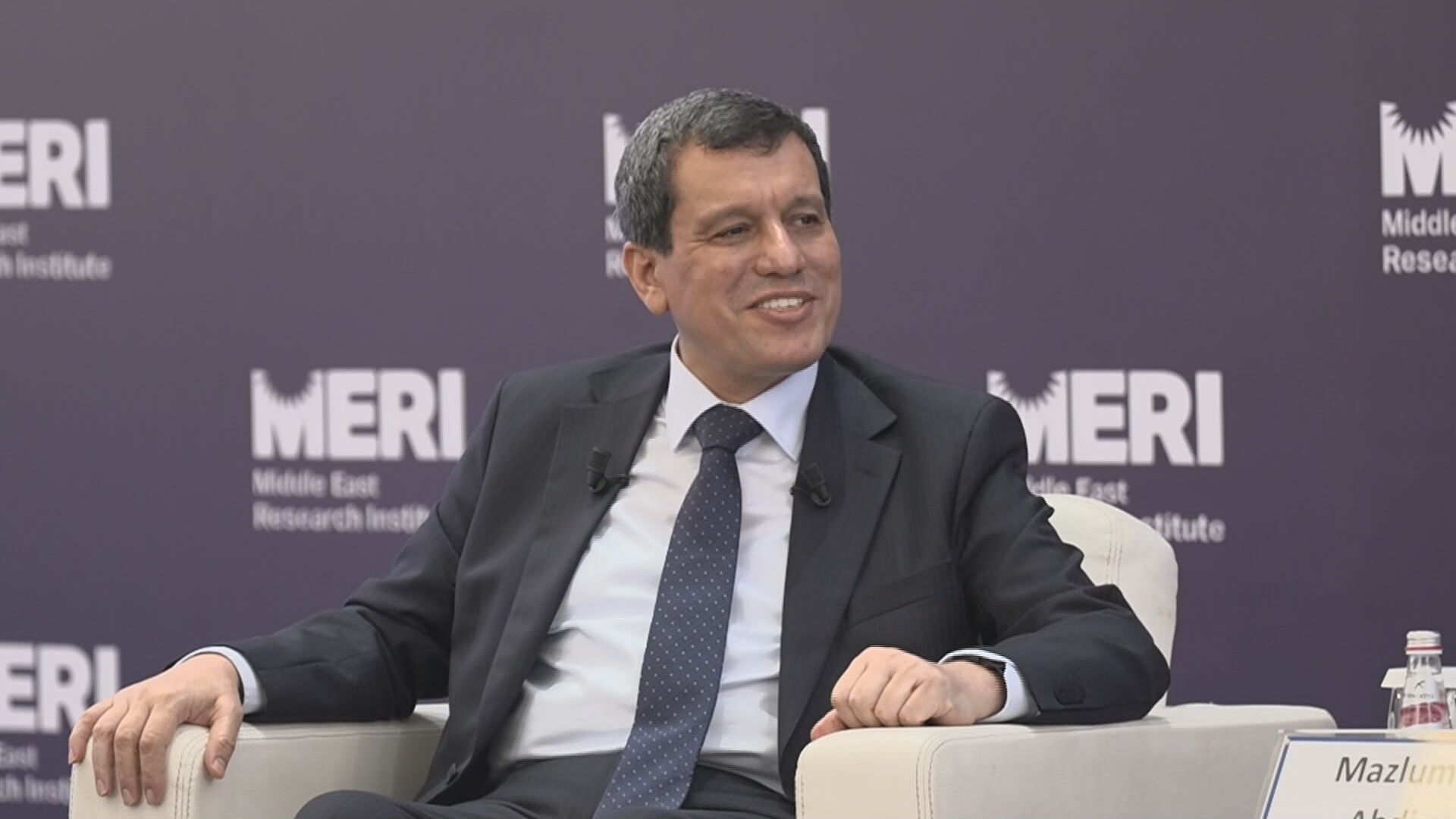
ERBIL (Kurdistan24) — Mazloum Abdi, an adviser to the Syrian president, said Tuesday that a new phase and a historic opportunity had emerged for Syria’s peoples, particularly the Kurds, stressing that integrating Kurdish forces and administrative institutions into state institutions must be accompanied by constitutional guarantees for Kurdish rights.
Speaking at a panel at the MERI Forum in Erbil, Abdi discussed the future of Western Kurdistan (northeastern Syria), the integration of military and civilian institutions, Kurdish-language education, the Kurdistan Region’s role, and the potential impact of the peace process in Northern Kurdistan (southeastern Turkey) and Turkey.
Abdi said Syria was at a critical juncture despite the challenges facing the country, offering an opportunity to reach a positive resolution for its diverse communities. He identified the integration of civilian, administrative, and military institutions as a key priority.
On military integration, Abdi said significant progress had been made and that both sides were prepared to move forward with international support.
“On the military front, good steps have been taken, and there is full readiness. We have demonstrated our will, and the same willingness is evident on the Syrian state's side, with international support, to integrate a large and significant part of our forces into Syria's official defense institutions,” he said.
However, Abdi stressed that the integration process should not reproduce the centralized system associated with the former Baathist and Assad regimes. Instead, he called for an arrangement based on decentralization and democratic partnership, taking into account the particular circumstances of Kobani and its surrounding areas.
On education, Abdi said progress had been made in negotiations over the recognition of the Kurdish language and the inclusion of Kurdish-language curricula in Syria’s general education system alongside Arabic.
He emphasized that a lasting political settlement and stability would depend on constitutional protections for the country’s diverse communities.
“Real progress and lasting stability will be achieved when the rights of the Kurdish people and all other components of Syria are enshrined in a new and enduring constitution,” Abdi said.
Abdi also praised the Kurdistan Region for its continued support for Western Kurdistan, commending its leadership for its diplomatic efforts and role in seeking a resolution to the Kurdish issue.
He further said that progress in the peace process in Northern Kurdistan and Turkey could positively influence developments in Western Kurdistan and Syria more broadly.
According to Abdi, a successful peace process could help ease regional tensions and create conditions for greater stability and peaceful coexistence across the region.