KDP Says Dialogue With PUK Could Open Path to Kurdistan's 10th Cabinet
KDP spokesman Mahmoud Mohammed says the KDP and PUK will meet soon as pressure grows to reactivate the Kurdistan Parliament and form the 10th cabinet.
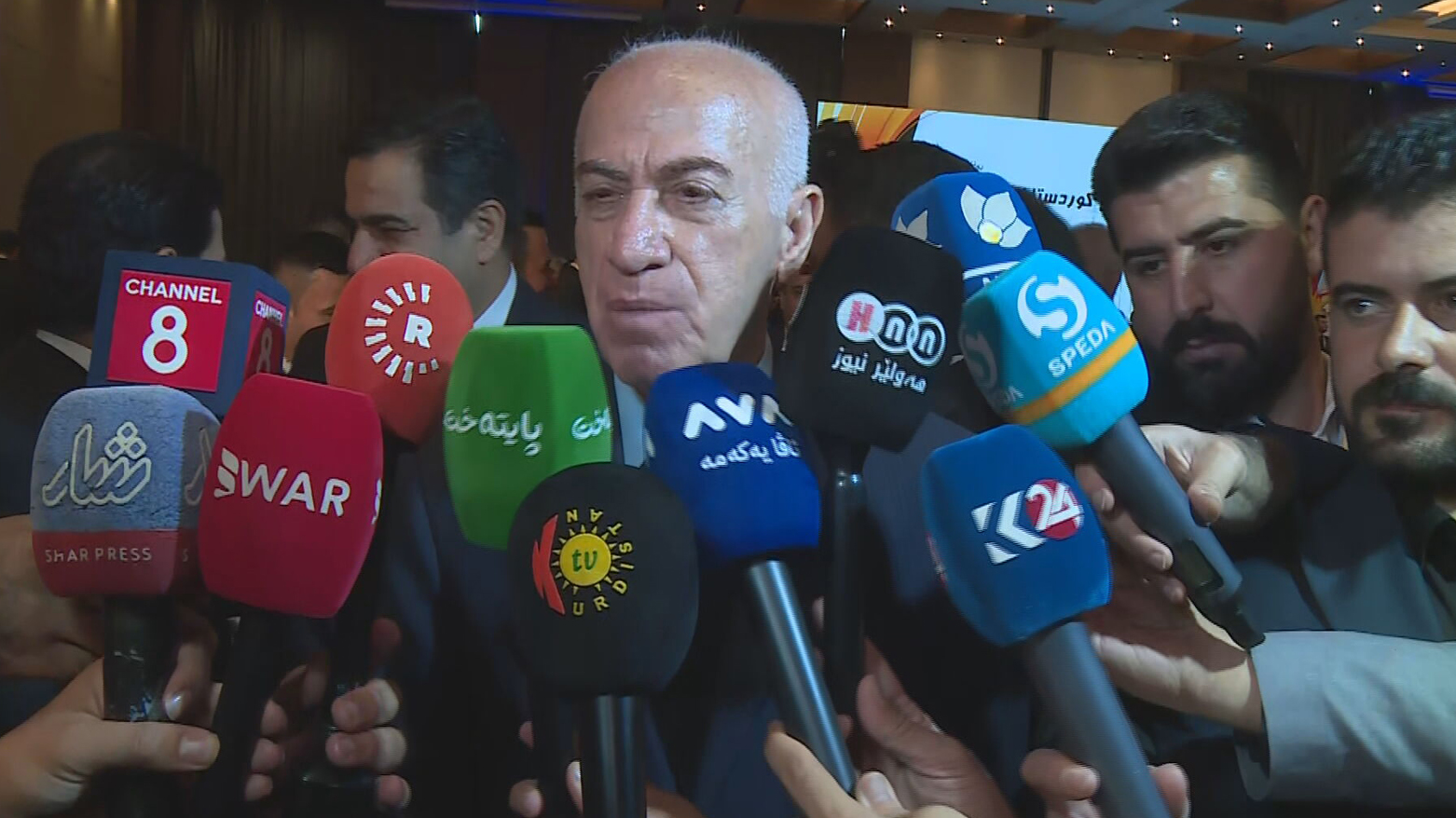
ERBIL (Kurdistan24) - The Kurdistan Democratic Party and Patriotic Union of Kurdistan are expected to resume high-level talks soon, KDP spokesperson Mahmoud Mohammed said Saturday, raising the prospect of renewed movement toward reactivating the Kurdistan Parliament and forming the Kurdistan Regional Government's long-delayed 10th cabinet.
Speaking at a press conference on Saturday, Mohammed said the immediate priority should be restoring the legislature and beginning the formal process required to establish a new regional government.
He said the political bureaus of the KDP and PUK would meet in the near future, with meetings between delegations from the two parties expected to pave the way for a subsequent summit between their leaderships.
The announcement is significant because cooperation between the KDP and PUK remains central to resolving the institutional deadlock that has prevented parliament from returning to normal activity and delayed the formation of a new cabinet following the Kurdistan Region's 2024 parliamentary elections.
Mohammed, however, cautioned against assuming that the planned meetings would automatically produce an agreement.
"We will not get ahead of events," he said. "Once the meetings have taken place, we will be able to speak clearly about their outcomes."
He emphasized that dialogue remained the only viable mechanism for resolving outstanding disputes.
Parliament emerges as immediate priority
Mohammed's remarks reinforce a position increasingly voiced across the Kurdistan Region's political and legal institutions: parliament must return before the wider process of government formation can advance normally.
Kurdistan Region Prime Minister Masrour Barzani has repeatedly described parliamentary reactivation as the necessary first step toward establishing the 10th cabinet.
During talks with U.S. presidential envoy Tom Barrack in June, Prime Minister Barzani said parliament belonged to the people rather than any particular party and argued that no political faction should obstruct its return.
"The first step in forming the government is the reactivation of the Parliament," he said at the time.
He made a similar appeal during discussions with French Ambassador to Iraq Patrick Durel, calling on political parties to approach the deadlock with a sense of responsibility and restore the legislature as the constitutional venue for resolving political differences.
The Presidency of the Public Prosecutor in the Kurdistan Region also intervened in July, warning that the prolonged absence of a functioning legislature was creating legal and institutional difficulties.
It called for parliament to reconvene and for the 10th cabinet to be formed without further delay, arguing that the impasse was affecting public administration, citizens' rights and the functioning of constitutional institutions.
The Public Prosecutor also stressed that the existing Ninth Cabinet should continue carrying out its responsibilities until a successor government is legally established, preventing an administrative vacuum during the political transition.
KDP-PUK relationship remains decisive
Although Kurdistan Region politics have become increasingly competitive and new alliances have emerged, the KDP and PUK remain the two largest and most institutionally entrenched political parties.
That makes their ability to reach an understanding particularly important to both parliamentary reactivation and cabinet formation.
KDP officials have repeatedly argued that political disputes should be taken back into parliament rather than allowed to prolong institutional paralysis.
Dr. Hemn Hawrami, a member of the KDP Politburo and former deputy speaker of parliament, said in July that electoral legitimacy ultimately derives from votes and challenged rival parties to return to the legislature and negotiate there.
His comments came amid debate over cooperation between the PUK and the New Generation Movement and claims that new political alignments could change the balance of negotiating power.
Hawrami rejected the idea that post-election alliances alone could redefine the electoral mandate, arguing that any change in political influence should be translated through constitutional and parliamentary mechanisms.
Former Kurdistan Parliament Speaker and KDP Politburo member Dr. Kamal Karkuki has similarly said the KDP is prepared to reactivate the legislature.
Karkuki argued that parliament is indispensable for passing laws, exercising oversight and formally establishing the executive branch.
PUK officials have also rejected scenarios that could revive separate administrations or further divide the Kurdistan Region, while saying political processes should be restored.
The continuing difficulty has therefore been less about whether dialogue is necessary than about reaching agreement over how institutions and executive responsibilities will be shared.
Political parties thanked for mediation
Mohammed on Saturday also thanked other Kurdistan Region political parties that have attempted to mediate between the KDP and PUK or otherwise help end the stalemate.
"The political parties are part of this process and bear a national responsibility," he said.
The remark reflects growing pressure from outside the two largest parties for an end to a political dispute that has increasingly affected issues beyond coalition negotiations.
Political figures, legal institutions, business owners and members of the public have warned that prolonged uncertainty has weakened confidence, slowed decision-making and prevented the legislature from carrying out its normal oversight and lawmaking functions.
Previous Kurdistan24 reporting has documented concerns among traders and residents that political uncertainty has contributed to market stagnation and discouraged investment.
Election experts have also pointed to the legislative work lost during parliament's prolonged inactivity, arguing that necessary laws and reforms have effectively been placed on hold.
Those concerns have become more pronounced as Iraq and the wider Middle East face major political, economic and security changes, increasing calls for the Kurdistan Region to restore fully functioning institutions and present a more cohesive political position.
Election timing left open
Mohammed also addressed questions surrounding the legal term of parliament and when future elections should be held.
He suggested that those questions should not be settled prematurely if the parties can first establish a credible path toward restoring parliament and forming the new government.
"If we conclude that there is a path toward reactivating parliament and forming a new cabinet, there will be no need to decide in advance whether elections should be held after three or four years," Mohammed said. "That matter can be decided at the appropriate time."
The comments indicate that the KDP currently sees institutional reactivation and government formation as more urgent than fixing the political calendar for a future election.
For now, attention will turn to whether the expected KDP-PUK political bureau meeting takes place and whether it is followed by the leadership-level summit Mohammed described.
After repeated calls for compromise and months of institutional paralysis, the significance of the next round of talks will be measured less by the fact that the parties meet than by whether they can convert dialogue into concrete steps: reopening parliament, establishing its leadership and beginning the constitutional process of forming the Kurdistan Region's 10th cabinet.