ICRC: Families of Iraq’s Missing Have ‘Right to Ask, Right to Know’
ICRC official tells Kurdistan24 English that more than 1,200 missing-person cases were reported in Iraq in 2025, while 517 were clarified
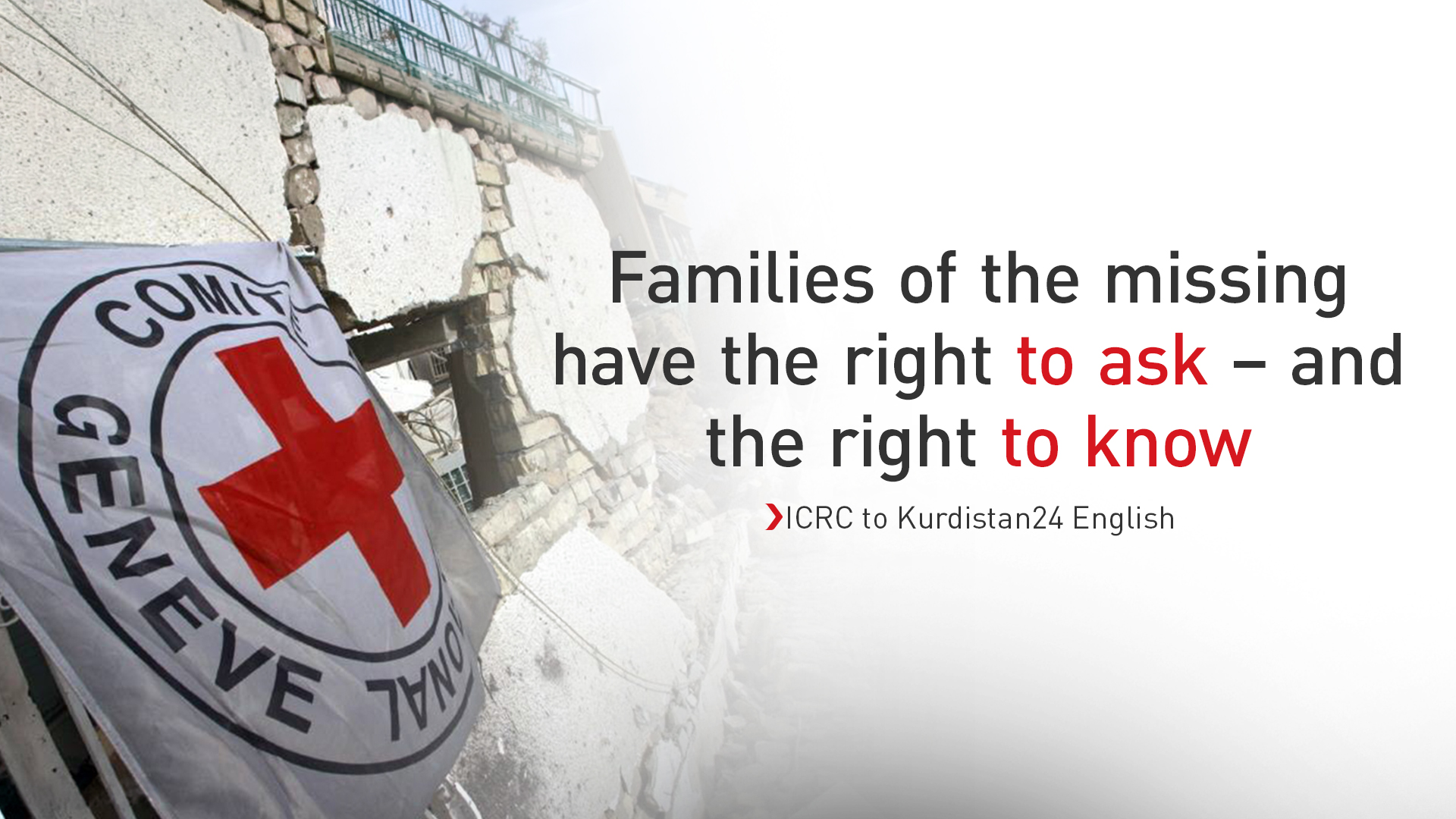
ERBIL (Kurdistan24) — Families of people who have disappeared during decades of conflict and violence in Iraq continue to face profound psychological, economic, legal and administrative challenges, the International Committee of the Red Cross (ICRC) told Kurdistan24 English ahead of the International Day of the Disappeared.
Chiya Ali Aziz, Deputy Head of the ICRC Sub-delegation in Erbil, said the disappearance of a loved one can fundamentally alter the lives of those left behind, with families often forced to cope with years of uncertainty while simultaneously dealing with practical difficulties.
“Beyond the pain and uncertainty of not knowing the fate and whereabouts of a loved one, disappearance can profoundly affect almost every aspect of a family’s daily life,” Aziz said.
He noted that many women whose husbands have gone missing become heads of household and breadwinners while continuing to raise their children and support their immediate and extended families.
Families can also encounter difficulties obtaining civil documentation and completing legal and administrative procedures needed to access their rights and essential services, while the psychological consequences of living with uncertainty can persist for years.
“It goes without saying that the needs are so immense that require efforts on all levels to respond to them,” Aziz said.
Progress in tracing the missing
The ICRC has continued to support efforts by Iraqi authorities to clarify the fate and whereabouts of missing people, an issue the organization describes as one of the country’s most painful and unresolved humanitarian problems.
Aziz stressed that the ICRC’s role is strictly humanitarian and that it supports authorities in searching for missing persons when families request its assistance.
In 2025, more than 1,200 cases of missing persons were reported to the ICRC in Iraq. During the same year, 517 cases were clarified, providing long-awaited answers and closure for relatives.
However, Aziz cautioned that resolving missing-person cases can be complicated and time-consuming, particularly in a country where disappearances have occurred across decades of conflict.
“For the past 20 years in Iraq, the Forensic unit of the ICRC has been engaged with the parties involved to strengthen the existing medico-legal system — judiciary, law enforcement and forensic actors — for the clarification of the fate and whereabouts of the high number of missing persons in Iraq,” he said.
He added that continuous and increased efforts are required to search for missing people and provide families with individualized answers concerning their fate and whereabouts.
Psychological and socioeconomic burden
The consequences of disappearance extend far beyond the search for a missing relative.
According to ICRC family needs assessments, 93 percent of families interviewed reported psychological difficulties affecting their well-being and daily functioning.
In response, the ICRC has implemented an Accompaniment Program in Iraq designed to address the long-term humanitarian consequences experienced by families of missing persons.
The program takes a multidisciplinary approach, addressing psychosocial needs alongside legal, administrative, and economic challenges. It also seeks to strengthen families’ resilience through community-based support networks.
In 2025, 794 families received assistance through the ICRC’s extended multidisciplinary accompaniment program in areas including Saqlawiya, North Babel, Sinjar, Tal Afar, Abu Maria, Hamam Al Alil and Khanke.
The program also seeks to establish networks of “Accompaniers” — relatives of missing persons who can support other families facing similar experiences.
Aziz said some relatives have become a source of support for others, listening to their concerns, sharing their experiences and helping them navigate the search process without having to face it alone.
The ICRC also engages with relevant authorities to ensure that the broader needs of families are understood and encourages institutions to fulfil their responsibilities.
Where needs fall outside the organization’s mandate or capacity, the ICRC seeks to connect families with other humanitarian actors where possible.
ICRC calls for stronger state mechanisms
Aziz emphasized that the primary responsibility for searching for missing persons and identifying unknown individuals and human remains rests with states and their authorities, rather than the ICRC.
He said effective search and identification operations require inter-agency structures that can be provided only by the state.
According to the ICRC, improving the response requires stronger coordination among existing institutions, a strengthened medico-legal system and a clear legal framework governing the search, recovery and identification of missing persons.
Such measures would also facilitate cooperation among national and international agencies involved in resolving missing-person cases and supporting affected families.
Authorities and other institutions should also coordinate efforts to address the financial, administrative and legal consequences faced by families, particularly when a missing person was the household’s main breadwinner.
One important challenge, Aziz noted, is helping families obtain the civil documentation they need to access services and exercise their rights.
‘A national issue’
With people from different communities and backgrounds having disappeared throughout Iraq’s history of conflict, Aziz said the issue should be treated as a national concern transcending political, ethnic and communal divisions.
“People from all sides and backgrounds have gone missing across Iraq,” he said. “This is why the missing in Iraq is a national issue that people must unite behind.”
He called for authorities, communities and society at large to recognize the suffering of families and stand alongside them as they commemorate relatives whose fate remains unknown.
Authorities, he said, should ensure that families are informed about search and identification processes and that their questions and doubts are addressed.
“Authorities, communities, and society-at-large should acknowledge the families’ plight and stand by them in commemorating their missing loved ones,” Aziz said.
As families across the Kurdistan Region and Iraq mark the International Day of the Disappeared on August 30, the ICRC official said the passage of time should not diminish their right to seek answers.
“On the International Day of the Disappeared, our main message to families is: you have the right to ask, and you have the right to know,” Aziz said. “The long years of waiting do not make this question any less important.”
The Full Kurdistan24 English Interview with the ICRC:
Kurdistan24 English: August 30, the International Day of the Disappeared, highlights the suffering of families who continue to live without answers. What is the current situation of missing persons and their families in the Kurdistan Region, and what are the most pressing challenges they face today?
ICRC: Indeed, the families of the missing people are living in challenging circumstances. Beyond the pain and uncertainty of not knowing the fate and whereabouts of a loved one, disappearance can profoundly affect almost every aspect of a family’s daily life. The disappearance of beloved ones shatters the lives of those left behind. Many women whose husbands have gone missing become heads of families and breadwinners while they continue to raise their children, taking on the role of providing for their immediate and extended families.
Families may also face significant psychological and emotional consequences that can persist for years as they continue to live with uncertainty. Adding to these challenges, the families may encounter legal and administrative difficulties, including challenges related to civil documentation and other procedures necessary to access their rights and essential services. It goes without saying that the needs are so immense that require efforts on all levels to respond to them.
Kurdistan24 English: The ICRC has long supported efforts to clarify the fate and whereabouts of missing persons in Iraq. What concrete progress has been made in recent years, particularly in the Kurdistan Region, and where do significant gaps remain?
ICRC: The ICRC supports efforts to clarify the fate of missing persons, which remains one of the most painful and unresolved issues for thousands of families in Iraq. Our role is strictly humanitarian. We support the authorities in the search for missing persons only when the family requests it. This is done in a variety of ways to ensure that the families of missing people receive the answers they have been waiting for years. For example, in 2025, over 1,200 cases of persons who have for the very large majority, went missing some years ago, were reported to the ICRC in Iraq, while 517 cases were clarified, bringing much needed closure to missing persons’ relatives and loved ones.
Moreover, for the past 20 years in Iraq, the Forensic unit of the ICRC has been engaged with the parties involved to strengthen the existing medico-legal system (judiciary, law enforcement and forensic actors) for the clarification of the fate and whereabouts of the high number of missing persons in Iraq.
However, resolving a case of a missing person is often a complex and lengthy process. Increased and continuous efforts are needed to search for missing persons and to provide individualized answers on their fate and whereabouts to their families.
Kurdistan24 English: Many families of missing persons face not only emotional and psychological suffering but also legal, administrative, and economic difficulties. What support does the ICRC provide to these families, and what more needs to be done by authorities and other institutions?
ICRC: The psychosocial impact of the disappearance on the families of the missing is enormous. In family needs assessments conducted by the ICRC, 93% of families of missing persons interviewed reported psychological and psychosocial difficulties in relation to their well-being and daily functionality. Therefore, the ICRC has implemented the Accompaniment Program to support families of missing persons in Iraq in addressing the long-term humanitarian consequences of having a missing loved one.
The program takes a multidisciplinary approach, responding to families' psychological and psychosocial, legal, administrative, and economic needs, while strengthening their resilience through community-based support networks.
The ICRC strives to foster a supportive network between the families of the missing, their communities, and society as a whole. Building a network of Accompaniers - relatives of missing persons - strives to develop families’ capacities and resilience and make space for their voices to be heard and opportunities to engage with authorities.
In 2025, 794 families received support through the ICRC’s extended multi-disciplinary accompaniment program, addressing their psychosocial, economic, legal, and administrative needs across various areas including Saqlawiya, North Babel, Sinjar, Tal Afar, Abu Maria, Hamam Al Alil, and Khanke.
Furthermore, the needs of families of missing persons are diverse and often go beyond the search itself. The ICRC therefore engages with the relevant authorities to ensure these needs are understood and to encourage them to fulfil their responsibilities. When a family needs support that falls outside the ICRC’s mandate or capacity, we help connect them, where possible, with other humanitarian actors that may be able to provide the appropriate support.
Kurdistan24 English: Given the decades of conflict and violence that have left large numbers of people unaccounted for in Iraq, what mechanisms are needed to improve the collection of information, forensic identification, and the recovery and identification of human remains?
ICRC: First and foremost, the search for the missing and the identification of unknown persons, including human remains, is a responsibility of the authorities and states, not the ICRC. Search and identification processes need inter-agency structures that can only be provided by the State.
All actors should redouble their efforts to address the situation of missing persons and their families. This includes: improving coordination between existing structures, strengthening the medico-legal system, and grounding all actions within a solid and clear legal framework, which is crucial to offer answers to all missing persons’ families and cases. This would increase cooperation and coordination between all relevant national and international agencies with a role in the resolution of missing persons cases, as well as those that are to provide services to the families.
Moreover, all actors should also coordinate the efforts to address the financial, administrative, and legal needs of the families of missing persons who have suddenly lost a breadwinner, and the many challenges they face, including, for example, obtaining civil documentation.
Kurdistanb24 English: On this year’s International Day of the Disappeared, what is your message to families in the Kurdistan Region who have been waiting for years — sometimes decades — for answers about their missing loved ones, and what commitment would you like to see from the authorities?
ICRC: People from all sides and backgrounds have gone missing across Iraq. This is why the missing in Iraq is a national issue that people must unite behind.
Through our work with families of missing persons in Iraq, we witnessed how individuals who have experienced loss and uncertainty can become a source of strength for other families. Some family members of missing persons have become companions to families going through the same experience, listening to them, sharing their knowledge and experience, and helping them not to face the search alone.
At the same time, the primary responsibility for preventing disappearances and clarifying the fate and whereabouts of missing persons lies with State authorities. Authorities, communities, and society-at-large should acknowledge the families’ plight and stand by them in commemorating their missing loved ones. It is key that authorities support families by responding to their multifaceted needs, as they deserve to be supported and listened to. They should be duly informed of the search and identification processes, and their questions and doubts should be addressed.
On the International Day of the Disappeared, our main message to families is: you have the right to ask, and you have the right to know. The long years of waiting do not make this question any less important.