UN Warns Hormuz Crisis Could Trigger Global Food Emergency as US-Iran Fertilizer Deal Stalls
UN-backed plan seeks to move at least five fertilizer vessels daily through the strategic waterway, as prolonged disruption threatens planting seasons, agricultural production, and food prices across Asia and Africa
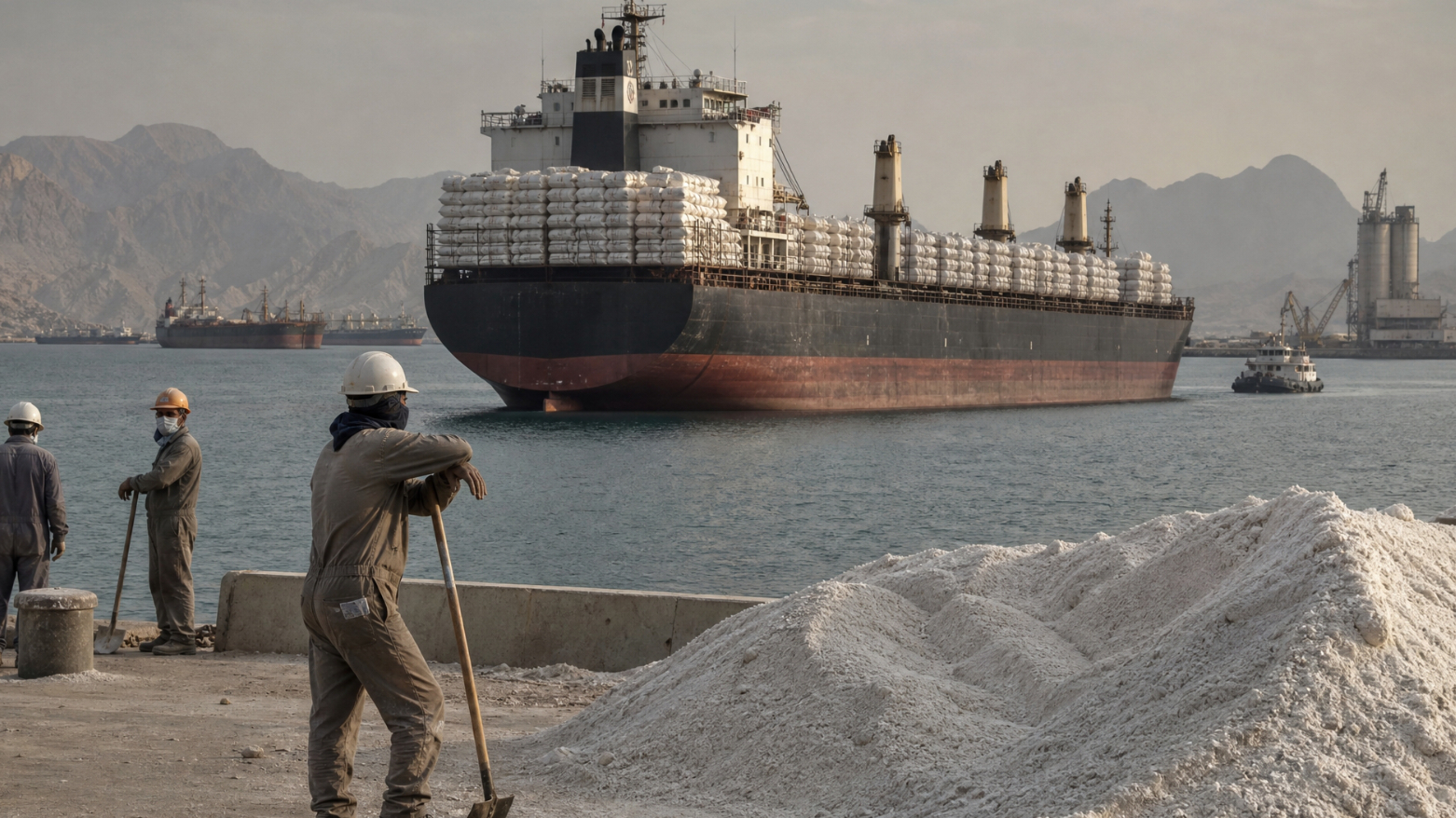
ERBIL (Kurdistan24) — A failure by the United States and Iran to reach an agreement on a United Nations-backed plan to transport fertilizer through the Strait of Hormuz could trigger a food security crisis in parts of Asia and Africa, a senior UN official has warned, as the prolonged disruption of Gulf shipping threatens agricultural production and global commodity markets.
Jorge Moreira da Silva, UN under-secretary-general and executive director of the UN Office for Project Services, said on Wednesday that the proposed mechanism could be activated within seven to 10 days once Washington and Tehran reach an agreement.
“It's absolutely crucial to get the deal in the next few weeks. Otherwise, we will miss the planting season,” Moreira da Silva told Reuters on Wednesday on the sidelines of the International Monetary Fund and World Bank annual meetings in Bangkok.
The UN established a task force in March to facilitate fertilizer shipments through the strategic waterway, but the mechanism has yet to be implemented as diplomatic efforts to resolve the wider conflict remain stalled.
The proposed arrangement would establish a coordination center in Oman to register vessels, verify cargoes, and organize safe passage through the strait.
UN monitors would work alongside local authorities at Gulf ports, while ships would be tracked during transit and subjected to additional inspections if concerns arose over their cargoes.
Moreira da Silva said the passage of at least five vessels daily could help maintain fertilizer supplies to countries facing critical shortages.
The initiative is intended to operate alongside broader negotiations between Washington and Tehran rather than wait for a comprehensive political settlement.
Hormuz Disruption Threatens Critical Fertilizer Supplies
The Strait of Hormuz is not only one of the world's most important oil transit routes but also a critical artery for the international fertilizer trade, linking major Gulf producers with agricultural markets across Asia, Africa, and beyond.
Before the conflict began on Feb. 28, the waterway handled approximately one-third of globally traded urea, the world's most widely used nitrogen fertilizer, and nearly half of seaborne sulfur shipments, a key industrial input used to manufacture phosphate fertilizers.
The disruption has sharply reduced fertilizer exports from the Gulf, with shipments remaining largely halted more than six months after the conflict began, according to the Washington-based International Food Policy Research Institute.
The consequences extend beyond fertilizer manufacturers and shipping companies. Farmers depend on timely and affordable access to agricultural inputs to maintain crop yields, while shortages or higher prices can force producers to reduce fertilizer applications, potentially lowering harvests and tightening food supplies.
The risks are particularly acute when supply disruptions coincide with planting seasons. Missing critical application windows can reduce agricultural productivity even if fertilizer supplies subsequently recover, while higher production costs can feed into prices for staple crops and other food commodities.
An August report by the International Chamber of Commerce warned that prolonged disruption could push commodity prices up by as much as 81 percent for cereals, 66 percent for oil crops, and 30 percent for animal products.
Those figures represent potential increases under the report's disruption scenario, rather than observed price rises or guaranteed forecasts.
Food Prices Could Rise Beyond the Middle East
The effects of the Hormuz crisis could spread well beyond countries directly affected by the conflict, exposing agricultural producers and consumers in import-dependent economies to higher costs.
Asian and African countries that rely on imported fertilizer are particularly vulnerable because interruptions in Gulf exports can constrain availability just as farmers prepare for planting. Higher fertilizer costs can also place additional pressure on governments already struggling with food affordability and inflation.
The supply shock is compounded by the relationship between energy and fertilizer production. Natural gas is a key feedstock and energy source for manufacturing ammonia and nitrogen fertilizers, meaning instability in energy markets can increase production costs even when fertilizer plants remain operational.
Sulfur shortages create another pressure point. The material is used to produce sulfuric acid, which is essential for processing phosphate rock and manufacturing phosphate fertilizers. A prolonged shortage can therefore affect several stages of the agricultural supply chain.
The United Nations' Food and Agriculture Organization has also warned that fertilizer scarcity caused by the Hormuz disruption could reduce agricultural yields and tighten food supplies in the second half of 2026 and into 2027.
For consumers, the impact may emerge gradually as higher input costs and reduced fertilizer use translate into smaller harvests, tighter supplies, and increased prices for cereals, vegetable oils, and animal products.
Multiple Shipping Crises Compound the Risk
The Hormuz disruption is occurring alongside insecurity affecting other major maritime routes, adding further pressure to global trade and food security.
Moreira da Silva pointed to deteriorating conditions in the Black Sea, where commercial vessels have come under attack, and threats to shipping in the Red Sea associated with Iran-backed Houthi militants.
“What we are witnessing now is a concentration of factors,” he said, referring to the simultaneous disruption of maritime chokepoints and the wider effects of the climate crisis.
The overlapping disruptions reduce the ability of international markets to compensate for shortages through alternative shipping routes and suppliers.
They can also increase insurance premiums, freight charges, and delivery times, adding costs that ultimately reach manufacturers, farmers, and consumers.
Although the proposed UN mechanism would address fertilizer shipments through Hormuz, it would not resolve the wider maritime security crisis or guarantee a lasting reopening of the waterway.
Washington and Tehran Remain at Odds
Efforts to restore shipping have stalled amid disagreements over the terms of a broader settlement between the United States and Iran.
The two sides have exchanged proposals through intermediaries since an interim ceasefire collapsed in June. Tehran has sought to use its position around the strait as leverage against Washington, while the United States has maintained a naval blockade of Iranian ports and insisted that negotiations address Iran's nuclear program from the outset.
A US State Department spokesman told Reuters that the American military had assisted thousands of commercial vessels transiting the strait and said Washington would continue taking action against Iranian efforts to disrupt freedom of navigation.
Moreira da Silva said the humanitarian and agricultural consequences should not have to wait for a comprehensive political agreement, urging both sides to allow the UN mechanism to proceed while negotiations continue.
The immediate challenge is to secure sufficient agreement to restore a limited but reliable flow of fertilizer cargoes before critical planting windows close. Failure to do so could turn a regional shipping crisis into a wider agricultural and food affordability emergency, with consequences extending into 2027.