Venezuela Says It Retains Oil Sovereignty Under Landmark US Deal
Rodriguez defends agreement giving Washington major access to Venezuela’s vast oil reserves, as critics question transparency, national benefits and the political price
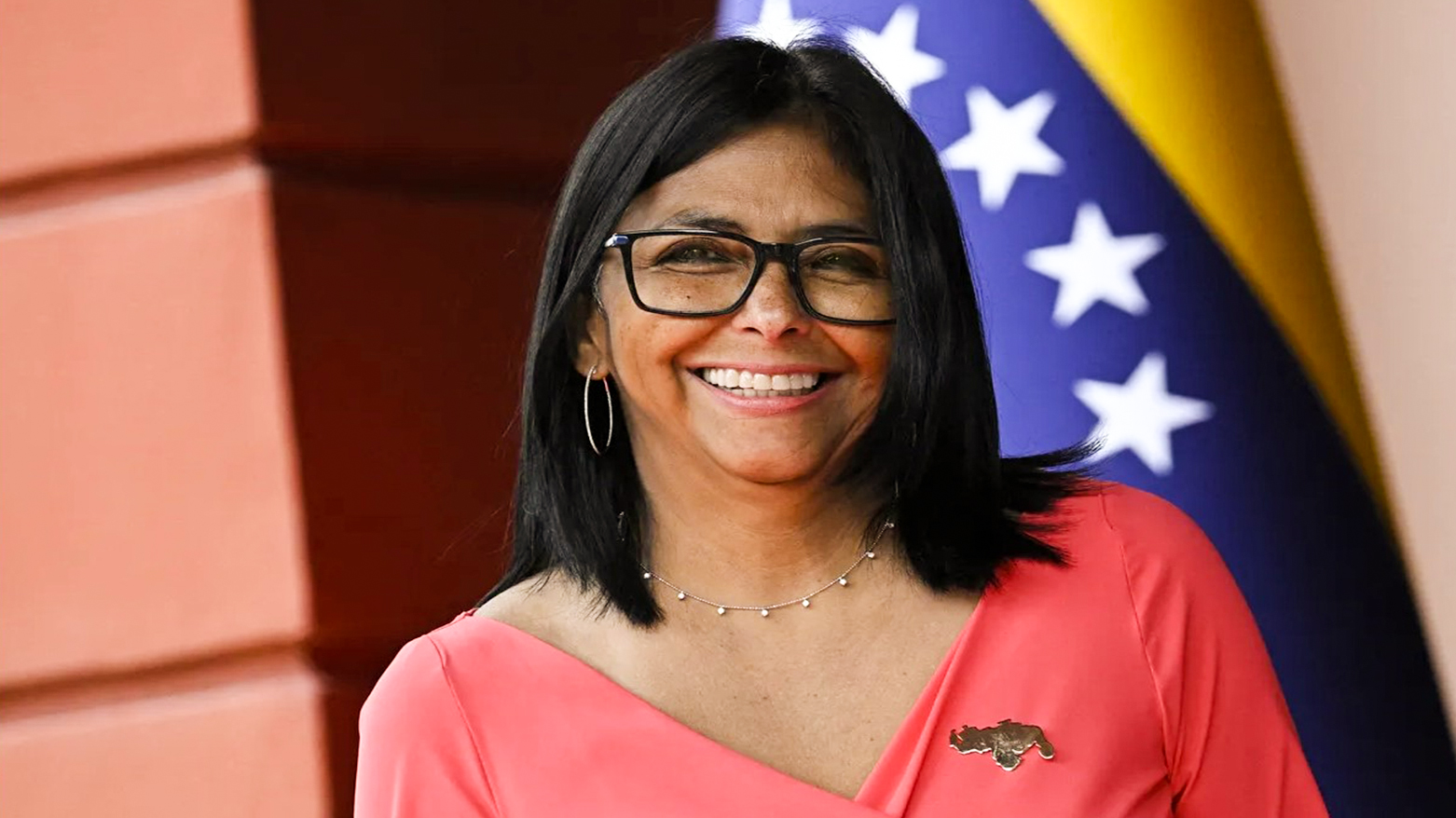
ERBIL (Kurdistan24) — Venezuela’s interim leader Delcy Rodriguez said Saturday that Caracas will retain ownership and sovereignty over its oil resources under a landmark agreement granting the United States significant access to the country’s vast petroleum reserves.
“One thing must be absolutely clear: Venezuela retains ownership and sovereignty over its resources,” Rodriguez said in a televised address, defending the agreement as a way to transform the country’s vast but underdeveloped oil reserves into a source of economic and social prosperity.
US President Donald Trump described the agreement on Friday as “the biggest oil deal in world history,” with Washington set to gain majority control over development involving some 65 billion barrels of Venezuela’s proven oil reserves.
The Venezuelan government says the agreement could attract around $100 billion in private investment to revive an oil industry that has suffered from years of economic crisis, sanctions, underinvestment and declining production.
But the deal has already triggered concerns inside Venezuela, where some citizens and even government supporters have questioned whether the country will receive sufficient benefits in return for granting Washington such extensive access to its energy resources.
“We don't know who this will benefit — whether it's Venezuela or the United States,” said Jesus Salazar, a 68-year-old security guard.
“I have my doubts, but we'll have to wait and see what happens.”
Oil wealth amid economic devastation
Rodriguez has promoted reforms in Venezuela’s mining and petroleum sectors, opening industries that were previously tightly controlled by the state to private capital and foreign investment.
Washington has also eased some sanctions imposed on Venezuela’s oil sector during the government of former President Nicolas Maduro.
Venezuela’s oil production increased by 29.8 percent between January and July, reaching around 1.2 million barrels per day, according to the figures cited in the report. That remains dramatically below the roughly three million barrels per day the country was producing around 25 years ago.
The new agreement seeks to eventually restore production toward those historic levels, although analysts caution that rebuilding Venezuela’s deteriorated petroleum infrastructure will take years.
“The increase in production won't be seen for at least three or four years,” said Oswaldo Felizzola, an engineer and professor at Caracas-based IESA.
Felizzola welcomed the US role as a potential guarantor of investment, arguing that Venezuela has struggled to attract substantial foreign capital for more than a decade.
Without such investment, he said, many of the country’s oil fields could remain undeveloped for another decade or longer because state-owned Petroleos de Venezuela, or PDVSA, lacks the financial resources needed to restore the industry on its own.
A high-stakes economic gamble
The agreement comes as Venezuela attempts to recover from one of the deepest economic contractions in modern history. The country’s economy shrank by about 80 percent between 2014 and 2021, driving millions into poverty despite Venezuela possessing the world’s largest proven oil reserves.
The government says the new investment could provide a path toward economic recovery and generate substantial new state revenues.
Rodriguez has promised more than $204 billion in tax revenue from the agreement, although she has not publicly provided detailed figures explaining how that amount would be generated.
For many Venezuelans, however, the immediate economic reality remains bleak. The monthly minimum wage is equivalent to roughly 16 cents, supplemented by government subsidies that can reach about $240 per month — still considerably below the estimated $730 required to cover basic food needs for a family of five.
Carlos Baco, a 74-year-old government employee, said he hoped the new oil revenues would eventually improve living conditions but had yet to see meaningful benefits from the recent increase in production.
“Consumer goods and food are more expensive... the dollar is rising, and prices are going up,” he said. “It's impossible here.”
Opportunity — and uncertainty
Venezuela’s ruling party on Saturday endorsed the government’s economic measures, saying they should prioritize national interests and help the country overcome the effects of more than a decade of US sanctions and what it called unilateral coercive measures and blockades.
The government has consistently blamed US sanctions for much of Venezuela’s economic collapse.
Analysts, meanwhile, remain divided between optimism over the potential economic benefits and concerns about the lack of transparency surrounding the agreement.
Elias Ferrer, an analyst at the Orinoco think tank, said the deal represented a clear improvement over Venezuela’s previous situation.
“It’s undoubtedly better than before. Before, this oil wasn’t being extracted; if no one extracts it, no one pays royalties, and no one profits from it,” he said.
Dolores Dobarro, a lawyer and former Venezuelan deputy energy minister, also described the agreement as a potentially major opportunity.
“If everything is done correctly... this will be a great opportunity for Venezuela to see its oil sector revived,” she said.
The agreement nevertheless places Rodriguez’s interim government in a delicate position: it must attract the foreign capital needed to rebuild an industry that Venezuela can no longer finance alone while convincing a skeptical population that opening its strategic oil sector to US interests will strengthen, rather than undermine, Venezuelan economic sovereignty.