Makkah Alliance Holds First Strategic Defense Meeting in Istanbul
Türkiye, Saudi Arabia, and Pakistan convene inaugural Strategic Political and Defense Committee session to establish military interoperability, defense industry cooperation, counterterrorism frameworks, and the alliance secretariat
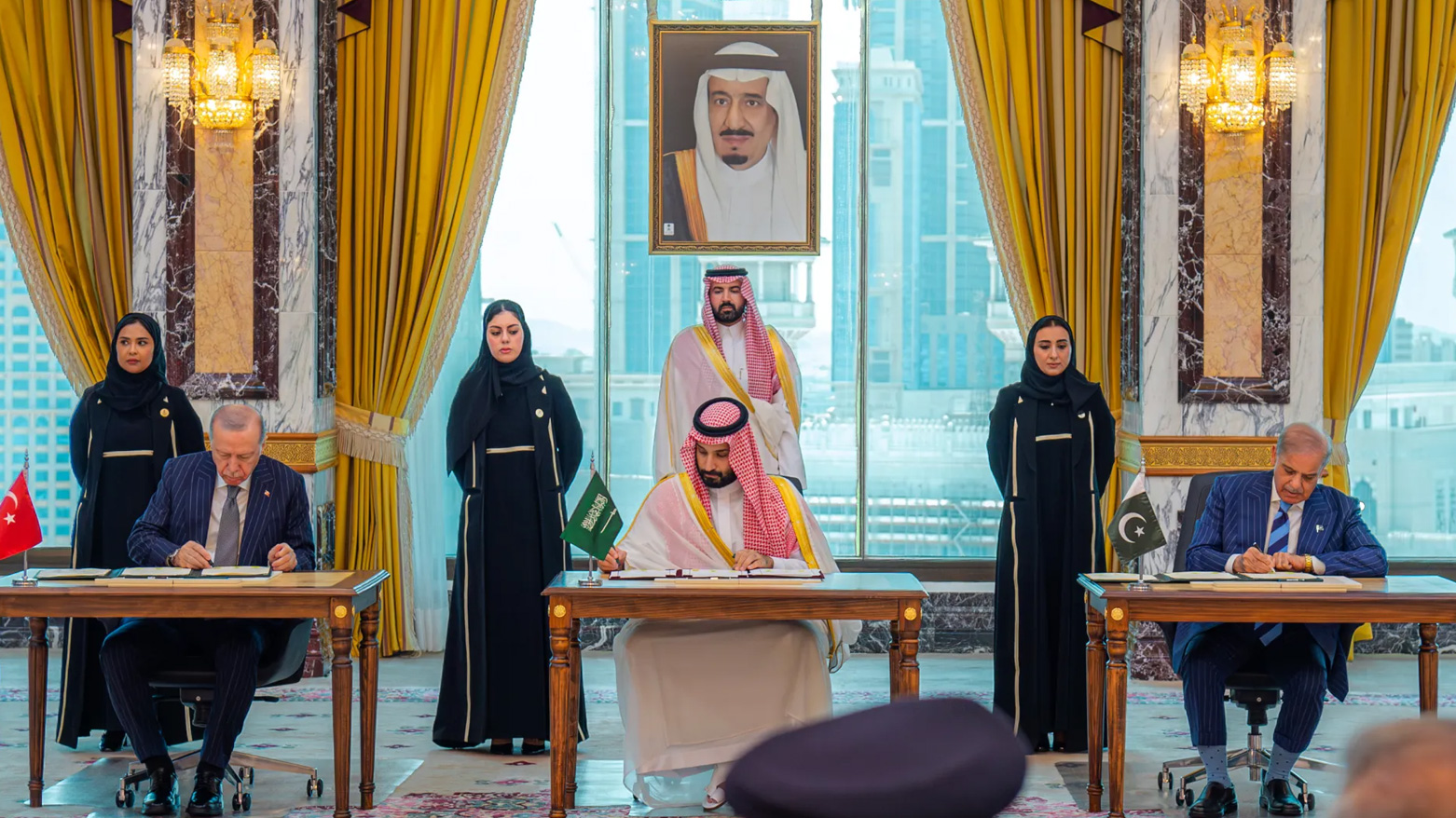
ERBIL (Kurdistan 24) - The Makkah Joint Defence Alliance formed by Türkiye, Saudi Arabia, and Pakistan will hold its first Strategic Political and Defense Committee meeting in Istanbul on Monday, bringing together the three nations' senior defense and political officials to begin translating the landmark agreement into an operational military and institutional framework.
The agenda for the inaugural meeting covers four core areas: military interoperability between the three nations' armed forces, defense industry cooperation, counterterrorism coordination, and the establishment of the alliance secretariat that will serve as the permanent administrative backbone of the new collective defense arrangement.
The choice of Istanbul as the venue for the first formal meeting reflects Türkiye's central geographic and strategic role within the alliance, positioned at the intersection of Europe and the Middle East and home to NATO's second-largest military establishment by personnel. The meeting's focus on military interoperability as a first-order agenda item signals that the three nations intend to move quickly from the political declaration of collective defense to the practical military integration that would give the alliance operational credibility.
President Donald Trump celebrated the signing of the Makkah Joint Defence Agreement in a Truth Social post, calling it a "BIG, BOLD, AND IMPORTANT FIRST STEP" and praising the great leadership of Saudi Arabia, Türkiye, and Pakistan for demonstrating how the Middle East is coming together around collective self-defense. Turkish President Recep Tayyip Erdogan described the agreement in his Al Jazeera interview as sending an important message to the world and establishing a mutual defense obligation among its signatories, calling on signatory countries to take unified steps if one of them is subjected to an external attack.
The three member states bring complementary and substantial capabilities to the alliance. Saudi Arabia contributes significant financial resources, its Gulf Cooperation Council leadership role, and demonstrated willingness to conduct joint military operations, including alongside American forces in strikes on Iranian proxy targets in eastern Iraq on July 28, 2026. Türkiye brings NATO's second-largest military by personnel, advanced drone warfare capabilities that have proven decisive in multiple recent conflicts, and deep defense industry expertise including its domestically produced Bayraktar TB2 and Akinci drone systems. Pakistan contributes one of the world's largest standing armies, a nuclear deterrent, and an established track record as one of the most active diplomatic mediators in the US-Iran conflict.
The establishment of the alliance secretariat, listed as one of Monday's agenda items, will be the meeting's most institutionally significant outcome if achieved. A permanent secretariat gives the Makkah Alliance the organizational infrastructure to function as a durable multilateral institution rather than a political declaration, with the capacity to coordinate military exercises, manage intelligence sharing, facilitate defense procurement, and represent the alliance in international forums.
The first Strategic Political and Defense Committee meeting in Istanbul comes as the broader regional security environment that motivated the alliance's creation remains highly volatile. The 60-day US-Iran memorandum of understanding expired on August 16 without a successor agreement. Operation Economic Outcast has been targeting Iranian financial networks since August 24. The IRGC has declared that Hormuz will not reopen unless the United States meets Tehran's full conditions. And Iran's parliament speaker Ghalibaf has issued an "all or none" ultimatum on Gulf oil exports. The Makkah Alliance's first formal defense meeting in that context is not a ceremonial exercise but an operational necessity.