KRG Details 2026-2030 Police Reform Strategy Built Around Public Trust
The KRG has detailed its 2026-2030 police reform strategy, including 35 master trainers, more than 10,000 participants and four pilot police stations.
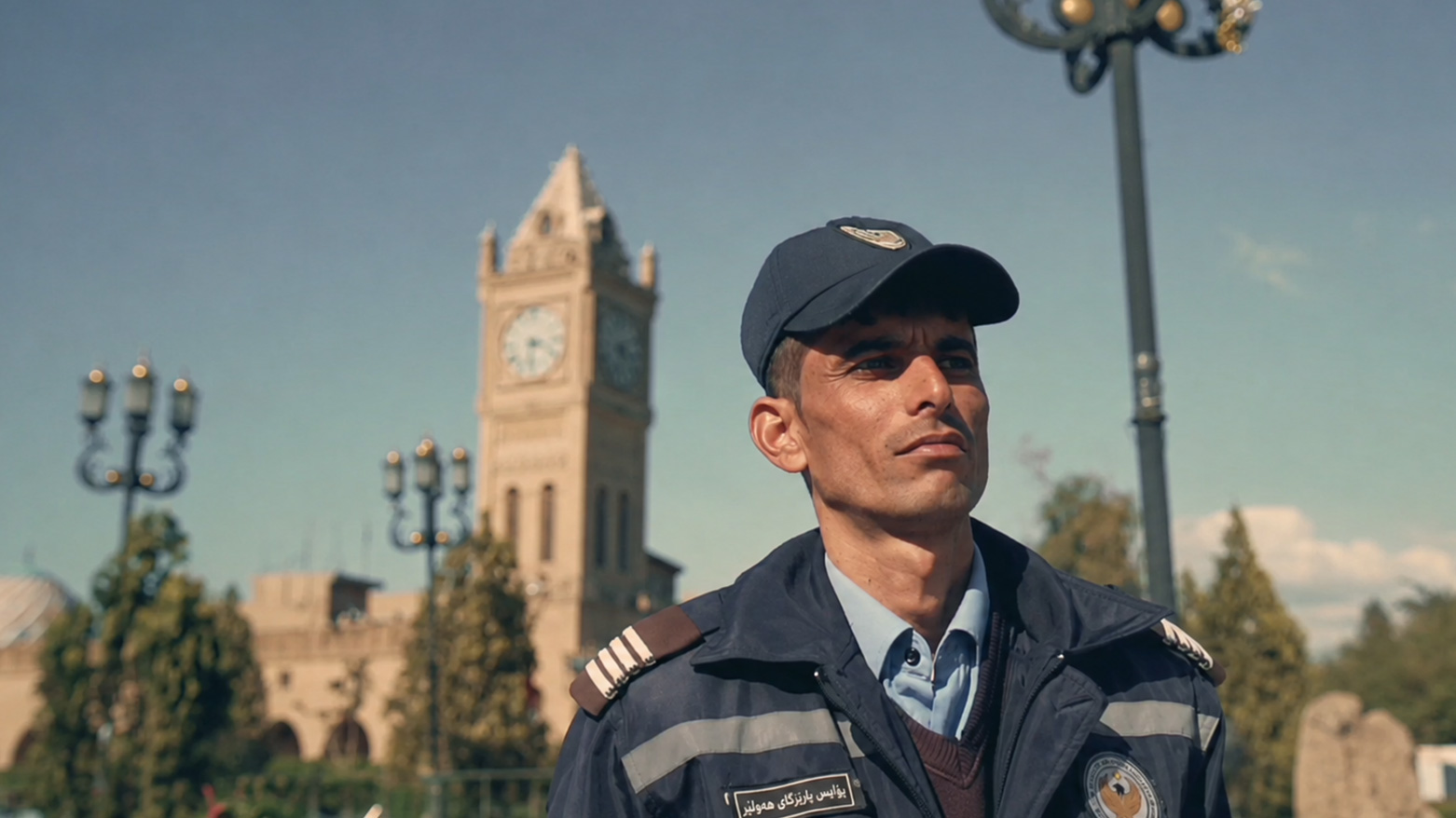
ERBIL (Kurdistan24) - The Kurdistan Regional Government has outlined the structure of its 2026-2030 police reform strategy, detailing a multi-year effort centered on public trust, service-oriented policing, professional training, institutional modernization and stronger adherence to the rule of law and human rights.
In a video released Sunday by the KRG Department of Media and Information, the government presented police reform as part of a broader effort to build a more professional security institution focused on citizens rather than solely on traditional enforcement structures.
"The rule of law depends on a strong, patriotic and well-trained police force," the Department of Media and Information said in a statement accompanying the video.
"Reform within police ranks is a step toward a safer, more advanced society," it added, describing the government's stated direction as one of building trust and improving services to citizens.
The video places the current reform process within a longer history of police development in the Kurdistan Region, while identifying the newly established Kurdistan Police Reform Strategy 2026-2030 as the framework intended to move that process into a more structured phase.
From security provision to service-oriented policing
Kurdistan Region Prime Minister Masrour Barzani, speaking in the video, linked daily life and public dignity directly to the work of the Region's security institutions.
"We can live freely and with dignity in this country because we enjoy safety, security and stability," Prime Minister Barzani said.
He thanked the Peshmerga and security forces for working continuously to provide a peaceful environment for the people of the Kurdistan Region.
The government presentation then shifted specifically to policing.
According to the video, the strategy is guided by what it calls the "Blue Concept," a service-oriented policing model built around service, respect, integrity and public confidence.
Its stated objectives include strengthening public trust, improving the institutional capacity to prevent and combat crime and reinforcing policing based on the rule of law and respect for human rights.
The government said the reform is intended to move beyond organizational change and alter how police institutions interact with the public.
That emphasis closely reflects remarks made Sunday by KRG Interior Minister Reber Ahmed during a strategic leadership and police-reform workshop, where he said public trust and better service should be considered central measures of reform.

35 trainers and more than 10,000 personnel
Professional development is one of the most developed components of the program so far, according to the KRG.
The government said that since July 2025, strategic advisory support from the European Union Advisory Mission in Iraq has helped develop 35 local trainers in the principles of service-oriented policing, the Blue Concept and human rights.
Those individuals form the first group of locally trained master trainers intended to expand the reform program inside the Kurdistan Region's own police institutions.
The KRG said more than 10,000 police officers and other personnel have subsequently taken part in reform-related professional development programs.
On Aug. 20, 2026, Interior Minister Reber Ahmed awarded what the government calls the "Pin of Trust" to officers who successfully completed a designated program under the reform initiative.
The government presented those training programs as part of an effort to create a professional culture that can eventually be sustained by local institutions rather than remaining dependent on outside advisers.
Ahmed said in the video that the process was launched under the guidance of Prime Minister Barzani and within the Ninth Cabinet's wider reform agenda.
"Drawing on the guidance of Prime Minister Masrour Barzani and aligning ourselves with the Kurdistan Regional Government's Ninth Cabinet reform agenda, we immediately began to reorganise and reform the police and internal security forces, including by developing a strategic plan for their future," Ahmed said.

Four police stations selected as pilot sites
The reform has also moved from policy design into practical testing at police-station level.
According to the KRG, four stations have been selected as pilot locations: Kasnazan in Erbil, Saiwan in Sulaimani, Nizarke in Duhok and Central Police Station in Halabja.
The pilot phase is designed to test reform principles in day-to-day police work before wider implementation.
The government said the process focuses on three areas: improving police-station organization and service delivery, strengthening citizen engagement and public confidence, and developing institutional and professional capabilities.
The pilot model also gives the Interior Ministry an opportunity to assess which practices work effectively in different local conditions before expanding them across the wider police system.
From Aug. 23 to 26, EUAM Iraq's head of mission and a delegation from the High-Level Police Reform Committee visited the four stations, according to the KRG video.
The visits were intended to review progress, exchange views with police leadership and assess how reform principles were being applied in practice.
Reform structure built through high-level committees
The institutional framework underpinning the program began taking clearer shape in October 2025.
Within two High-Level Reform Committees, Ahmed tasked the Leadership & Management Academy and the General Directorate of Kurdistan Region Police with advancing the police-reform process and developing its strategic structure.
That work includes reviewing police roles and responsibilities, organizational arrangements, institutional effectiveness and service delivery.
The reform is therefore broader than individual officer training.
It is intended to examine how police institutions are structured, how responsibilities are allocated, how leaders make decisions and how services are delivered to citizens.
The government says the process is now entering a new stage focused on senior leadership engagement and implementation planning.
Senior Interior Ministry leaders met at ministry headquarters on Aug. 18 to review progress and discuss the next phase.
The leadership dialogue was designed to establish common reform priorities, examine international experience, identify institutional challenges and define responsibilities for senior officials during implementation.

EUAM stresses local ownership
EUAM Iraq has played an advisory role throughout the process, but mission chief Ralf Schroeder emphasized Sunday that the reform belongs to the Kurdistan Region's institutions.
Speaking to journalists, Schroeder rejected the suggestion that the Kurdish police had simply been selected by the European Union for an externally designed project.
"It's a program run by the Ministry of Interior, it's owned by the Kurdish police, and they asked us for support of their internal reform program," he said.
EUAM provides strategic and technical advice, including support for strategy development, change management, workshops, expert exchanges and specialized areas such as combating organized crime.
The mission does not primarily provide equipment or logistical support.
Schroeder also confirmed that EUAM will remain in Iraq independently of the international coalition's future presence.
The mission's new mandate begins Nov. 1 and will keep it operating for at least another two years, he said.
EUAM's mandate extends to civilian security institutions, including police and Asayish, but not directly to military forces such as the Peshmerga.
Building reform around trust
Taken together, the KRG's new presentation shows a police reform process moving from training and policy design toward institutional implementation.
The four pilot stations, the development of local trainers, high-level reform committees and leadership dialogues are intended to test whether the principles outlined in the 2026-2030 strategy can translate into changes citizens experience directly.
The government's stated objective is not simply a better-trained police force, but one that is more accountable, more responsive and more closely connected to the communities it serves.
That makes public confidence one of the central tests of the strategy.
The KRG has framed the next four years as an effort to embed trust, professionalism and service into the structure of policing itself, shifting reform from individual training programs toward lasting institutional change across the Kurdistan Region.