Trump Considers Limited Strikes on Iran in Strait of Hormuz, Axios Reports
The plan was developed over the past week by US Central Command (CENTCOM) and has the backing of Defense Secretary Pete Hegseth, according to the report. However, Trump had not approved the proposal before a recent exchange of fire between the United States and Iran.
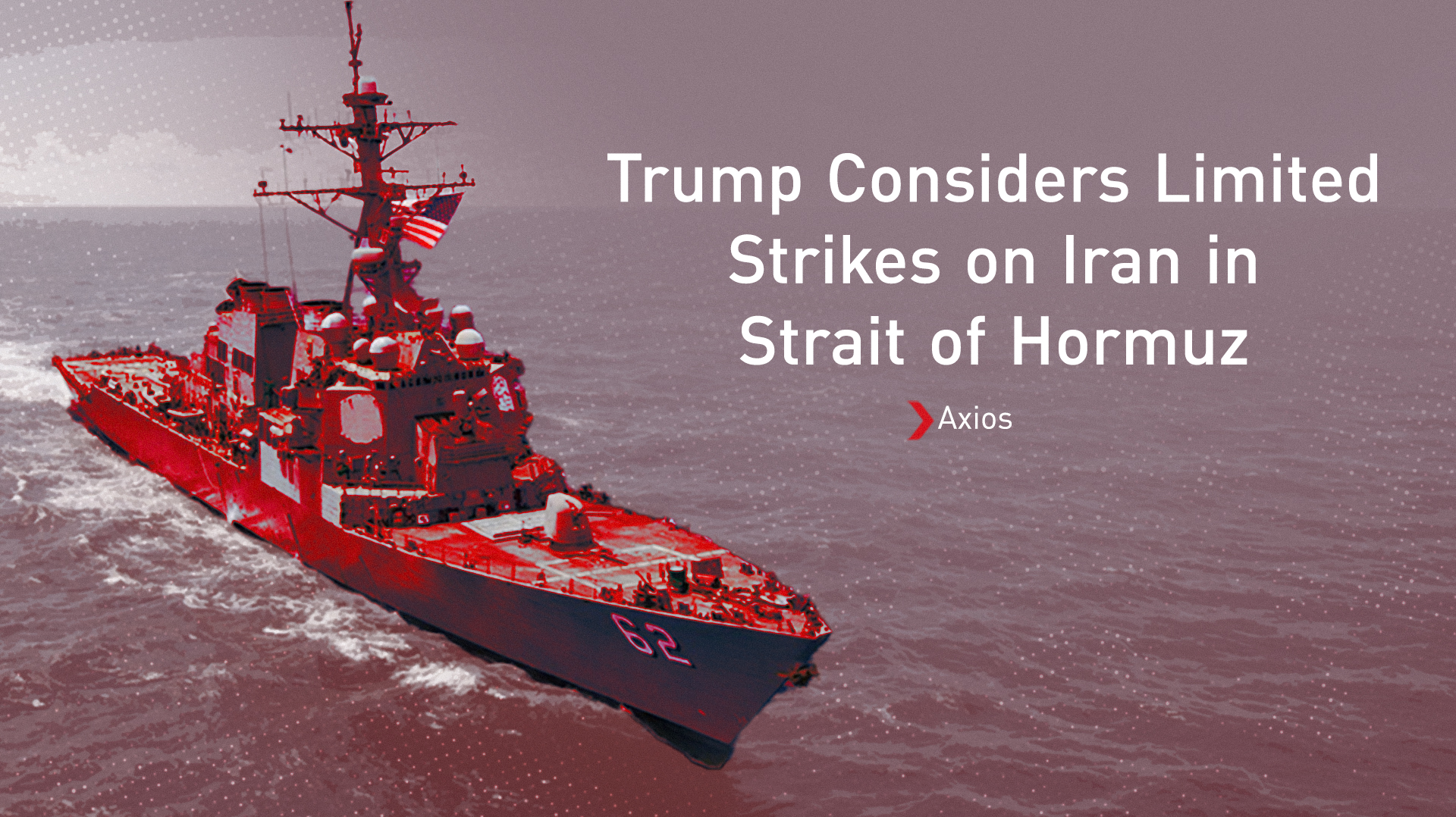
ERBIL (Kurdistan24) – US President Donald Trump and senior administration officials are considering limited military strikes against Iran in the Strait of Hormuz to prevent Tehran from rebuilding radar and missile capabilities that could be used to attack commercial and US military vessels, Axios reported Monday, citing three US officials.
The plan was developed over the past week by US Central Command (CENTCOM) and has the backing of Defense Secretary Pete Hegseth, according to the report. However, Trump had not approved the proposal before a recent exchange of fire between the United States and Iran.
The latest escalation could prompt the president to authorize the plan, Axios reported.
A US official said the objective would be to reduce the risk of Iranian attacks against oil tankers, US Navy ships and US Air Force aircraft operating in and around the strategic waterway. The official described the approach as an effort to periodically "mow the lawn" by degrading Iran's military capabilities before they can be fully rebuilt.
The White House said in a statement that Trump "retains all options at his disposal," adding that Iran wants to reach a deal but is "always a day late and a dollar short."
US seeks to maintain shipping through Hormuz
According to Axios, the US military has gradually taken greater control of operations in much of the Strait of Hormuz over the past two months as part of a campaign aimed at weakening Iranian military capabilities, clearing mines and helping commercial vessels navigate the waterway.
The US campaign has reduced Iran's ability to target oil tankers and has enabled more commercial traffic and oil exports to pass through the strait, consequently reducing Tehran's leverage over the strategically vital waterway.
US officials have become increasingly concerned, however, that Iran is rebuilding radar systems, air defenses and anti-ship missile capabilities that could allow its forces to more accurately target vessels in the strait.
One recent incident reportedly heightened those concerns. An Iranian anti-aircraft missile was launched toward a US F-35 fighter jet providing cover for ships in the Strait of Hormuz, according to a US official cited by Axios.
The missile did not come close enough to pose a direct threat to the aircraft, but US officials viewed the launch as an indication that Iran is attempting to restore military capabilities that had previously been degraded.
CENTCOM has reportedly informed Hegseth, Chairman of the Joint Chiefs of Staff Gen. Dan Caine and the White House that US forces may need to conduct periodic strikes against Iranian military assets to help ensure the relatively safe movement of dozens of oil tankers out of the Gulf each day.
The Strait of Hormuz is one of the world's most strategically important energy corridors, connecting the Persian Gulf with the Gulf of Oman and the Arabian Sea. A significant share of global oil and liquefied natural gas shipments passes through the waterway, making any disruption there a major concern for international energy markets.