Bessent: Iran's Economic Collapse Is Now Only a Matter of Time
Treasury Secretary says Tehran has lost all access to US dollars, allies have endorsed the isolation campaign, and pressure will continue until Iran returns to the negotiating table
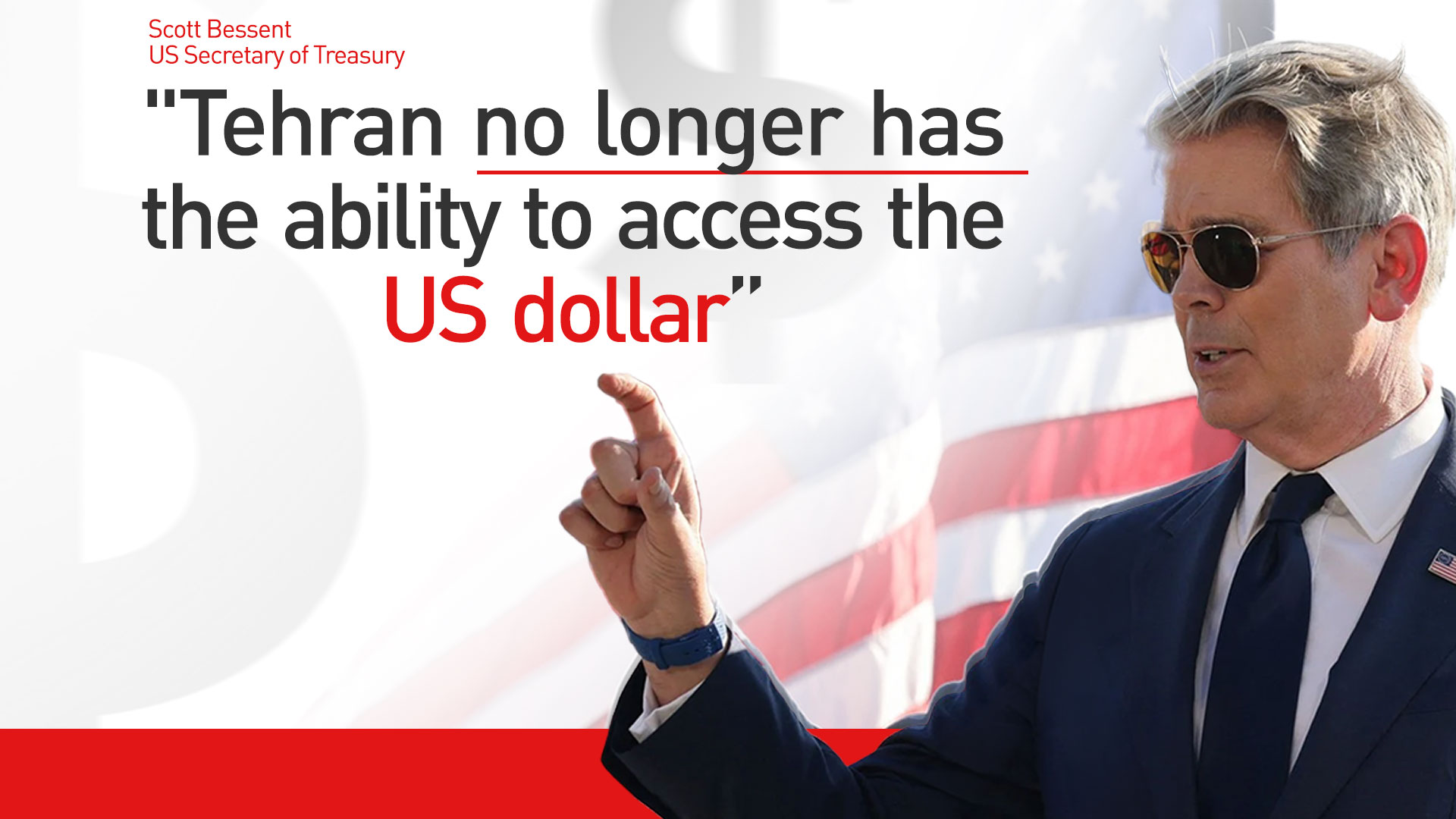
ERBIL (Kurdistan 24) - US Treasury Secretary Scott Bessent declared in the early hours of Wednesday that Iran's economic collapse is now only a matter of time, saying Washington's allies have expressed their support for the economic isolation campaign and that the United States will pursue any entity or party that provides financial assistance to the Islamic Republic.
"Tehran no longer has the ability to access the US dollar," Bessent said, confirming that Washington is working to close every channel that could be used to transfer money into Iran, in remarks that came as part of the broader economic pressure campaign the Trump administration is pursuing alongside military and naval operations against Tehran.
Bessent painted a bleak picture of Iran's economic future to back his assessment. He cited statements by Iranian President Massoud Pezeshkian, Parliament Speaker Mohammad Bagher Ghalibaf, and the governor of Iran's central bank, all of whom have acknowledged the existence of serious economic problems inside the country. Iran is currently grappling with a sharp decline in the value of its currency, high inflation, and severe difficulty accessing foreign currency, a set of conditions Bessent described as proof that the pressure campaign is producing real and measurable results.
The Treasury Secretary was careful to frame the ultimate objective of the pressure campaign as political rather than purely economic, saying the goal is to force Iran back to the negotiating table. He held Tehran responsible for the failure of previous agreements and said directly: "The Iranians are not ready for a deal," a characterization that contrasts with Iranian President Pezeshkian's statement earlier this week that Iran will immediately reciprocate if the United States returns to its June MOU commitments.
On China's role, Bessent revealed that substantive discussions have taken place with Beijing, while noting that China refused to join a G20 finance ministers' statement against Iran. China, as Iran's primary oil buyer, plays a critical role in the current equation, and its refusal to formally endorse the G20 anti-Iran financial statement represents a significant gap in the coalition Washington is attempting to build around Operation Economic Outcast.
The G20 separately called for ensuring safe and free maritime navigation in the Strait of Hormuz, following the escalation of missile and drone exchanges between the United States and Iran in the region, adding an institutional multilateral voice to what has until now been primarily a bilateral and allied-coalition demand.
Bessent also acknowledged that the effectiveness of Washington's new pressure campaign depends on Iran's ability to continue trading through partner countries and alternative financial networks. Experts have noted that as long as Tehran can route transactions through intermediaries and shadow banking systems, the full impact of the isolation campaign will be constrained by the same structural limitations that have allowed Iran to sustain partial economic functionality throughout the conflict.
Washington is pursuing what Bessent described as a triangle of sanctions, diplomatic pressure, and military operations designed to increase the cost of confrontation for Tehran until Iran changes its calculations and assessments. "The pressure campaign will continue until Iran changes its calculations and assessments," he said, confirming that no relief is being offered in advance of a new negotiating framework.