What is El Niño and how it Could Reshape Global Weather Patterns?
The WMO warns a "supersized" El Niño could be the strongest in over 70 years, driving droughts, floods, and stronger typhoons worldwide through 2027.
ERBIL (Kurdistan24) - The United Nations has warned that the world has entered a "danger zone of extreme weather" as a rapidly intensifying El Niño event threatens to become the strongest recorded in more than 70 years, with effects expected to ripple across the globe through early 2027.
UN Secretary-General António Guterres said the phenomenon was being "supersized before our eyes," pointing to what he described as an unprecedented rise in ocean temperatures layered on top of existing global warming trends.
The World Meteorological Organization (WMO), a UN agency tasked with monitoring global weather systems, released new data indicating the current El Niño could surpass all events recorded since 1950.
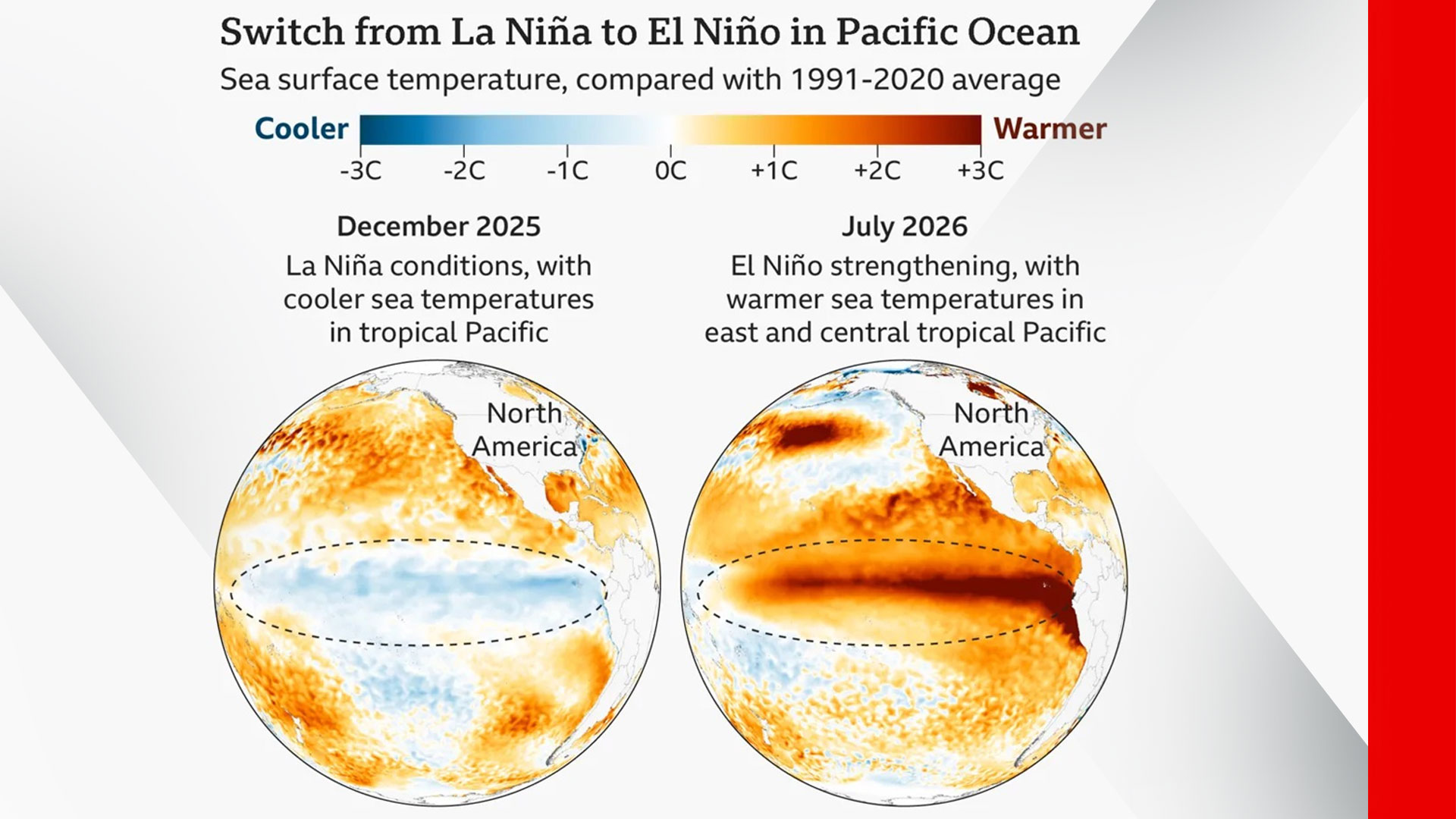
El Niño is a naturally occurring climate pattern that develops in the Pacific Ocean, altering wind patterns and allowing warm water to spread eastward while releasing additional heat into the atmosphere.
According to the WMO, sea surface temperatures in the central and eastern tropical Pacific have risen sharply in recent months, with some monitoring regions already recording readings more than 2 degrees Celsius above average — a threshold sufficient to classify the event as "very strong."
Forecasters now expect monthly temperatures in the region to approach 4 degrees Celsius above average by late this year, a level that would make it the most powerful El Niño on record.
Temperatures below the ocean surface are said to be even more extreme, in some areas exceeding 8 degrees above normal.
Elevated sea temperatures are also being recorded in the Indian Ocean, the tropical Atlantic, and around parts of the Australian coastline, according to the agency.
WMO Secretary-General Celeste Saulo said the organization had undertaken a major mobilization effort to circulate extreme weather forecasts linked to the event to as many vulnerable communities as possible, warning that the phenomenon carries the potential to deal a severe blow to both communities and economies worldwide.
The WMO said the most significant shifts in rainfall patterns are expected over the coming months, even as broader impacts are likely to extend well into 2027.
Drier-than-usual conditions have been forecast across large areas of South East Asia, Central America, and northern South America, raising the risk of both drought and wildfires.
In Panama, authorities are set to reduce the number of vessels permitted through the Panama Canal by more than 10 percent this week in anticipation of lower rainfall, a measure affecting one of the world's most critical trade corridors.
The canal, used by roughly 14,000 ships annually, generates close to US$3 billion each year for the country.
In Indonesia, wildfires have already burned more than 107,000 hectares of land nationwide during the current dry season, with officials warning the fire season is running longer than usual.
Authorities have deployed cloud-seeding aircraft in an effort to induce rainfall and have arrested dozens of individuals accused of using fire to illegally clear land.
Southern African nations, including Botswana, have historically experienced severe drought during past El Niño events, underscoring the scale of disruption the current phenomenon could bring to already vulnerable regions.
While some regions brace for drought, others are expected to face the opposite extreme. China is forecast to experience seven typhoon landfalls this year, a pattern experts have linked to the effects of the intensifying El Niño. In July alone, the country was struck by three typhoons that left dozens dead, followed by Typhoon Dolphin in August, which forced more than one million people to evacuate their homes.
The WMO said wetter-than-average conditions are also expected across parts of eastern Africa, southern Brazil, and the southern United States, raising the likelihood of flooding in those regions.
Saulo noted that disruption from both droughts and floods was already visible and was expected to worsen as the event strengthens further.
Scientists caution that these effects are compounding long-term, human-caused global warming, potentially intensifying their overall impact, though it remains uncertain whether climate change is directly strengthening El Niño events themselves.
Peru, whose coastline borders the eastern Pacific, is considered particularly exposed to the effects of El Niño. The country, along with Ecuador and parts of Brazil, has previously experienced heavy rainfall leading to flash flooding and landslides, particularly in urban areas where drainage systems are limited.
In response, the United States announced last month that it would deploy the naval vessel USNS Comfort to the Peruvian coast to provide medical assistance and technical support as the event approaches its peak.