Iran's Qalibaf Says Era of 'Proportionate Responses' Is Over
Iranian Parliament Speaker Mohammad Baqer Qalibaf says the era of proportionate retaliation is over and warns future attacks on Iran will draw faster and heavier responses.
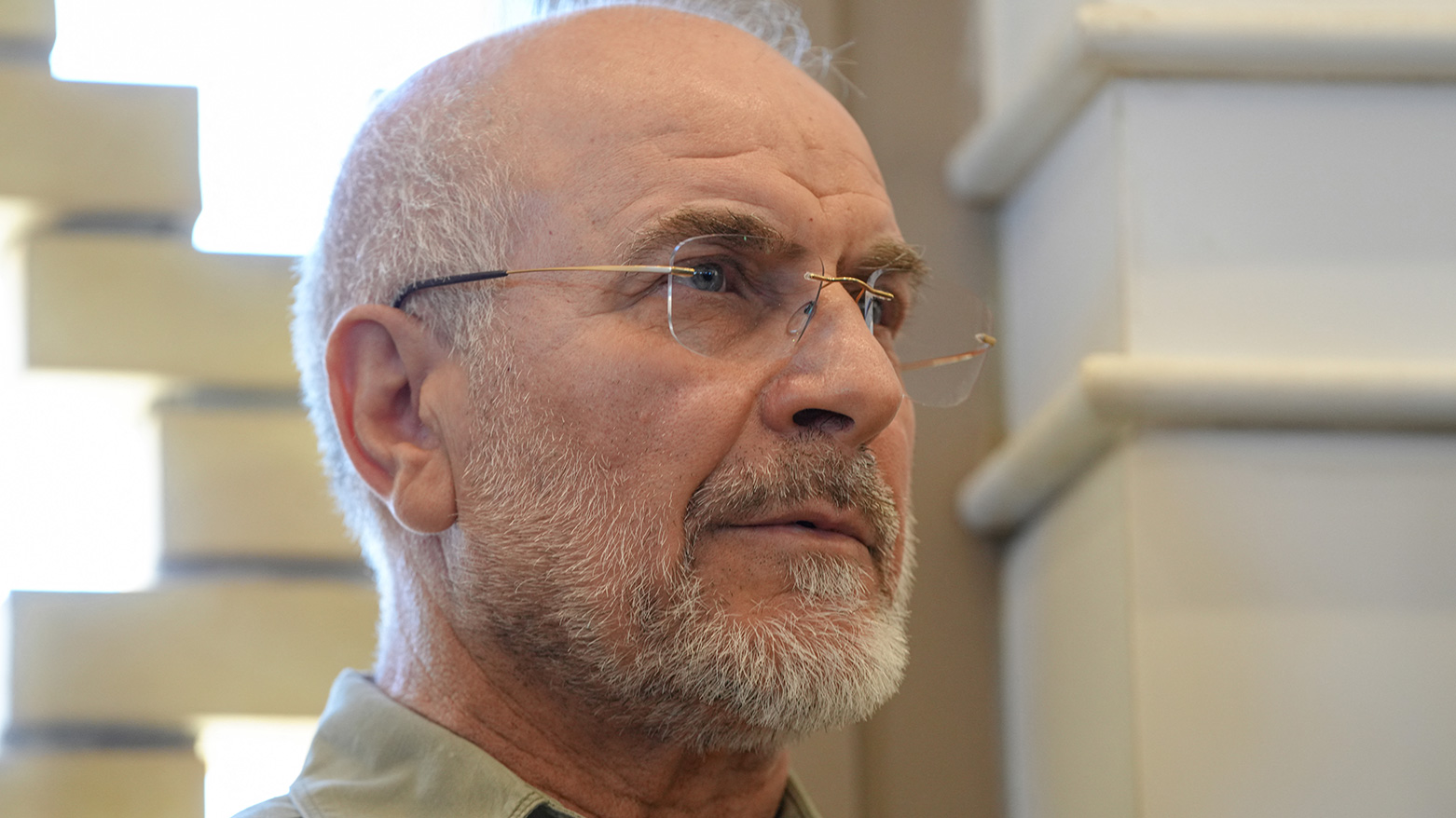
ERBIL (Kurdistan24) - Iranian Parliament Speaker Mohammad Baqer Qalibaf warned Sunday that any future attack on Iran's interests or security would receive a "faster, heavier and more painful" response, declaring that Tehran had moved beyond what he described as an era of proportionate retaliation.
Speaking before the Islamic Consultative Assembly, Qalibaf said recent Iranian strikes against U.S. military bases were only the beginning of a new approach to deterrence.
"The rules of the game have changed," he said, according to Iran's official IRNA news agency.
Qalibaf argued that Washington should understand that Tehran would no longer limit itself to matching attacks proportionally.
"If they have not understood this by now, they must do so before it is too late," he said.
His remarks came amid a renewed escalation in the six-month U.S.-Iran conflict, particularly around the Strait of Hormuz and the Gulf of Oman, where both sides have increasingly targeted maritime assets and oil-related infrastructure.
Qalibaf portrayed the conflict as extending beyond the battlefield into Iran's economy and domestic political stability.
He said preserving "internal cohesion" and "external deterrence" were essential to confronting outside pressure and warned that statements or actions weakening either pillar ran counter to the guidance of Iran's leadership.
He also acknowledged the scale of the country's domestic economic problems.
Severe exchange-rate instability, inflation, unemployment and difficulties managing markets were placing significant pressure on Iranian households, Qalibaf said.
He argued that Tehran needed stronger domestic production, more effective import management and greater use of technological capabilities to withstand sanctions and disruption to supply chains.
Qalibaf framed those economic challenges as another front in the wider confrontation, arguing that Iran must resist pressure economically just as it does militarily and diplomatically.
At the same time, he urged officials not to present criticism or economic difficulties in ways that could create an image of national weakness.
That message comes as Iran's political establishment faces a growing debate over how long the country should sustain the confrontation with Washington and how military retaliation should be balanced against diplomacy.
Former President Hassan Rouhani has recently drawn criticism from conservative political figures and media after calling for greater public consultation over the direction and eventual end of the war.
Rouhani has also argued for a more measured approach toward retaliation and the Strait of Hormuz.
His critics have portrayed those positions as potentially weakening deterrence.
Read More: Hassan Rouhani's Remarks on War and Hormuz Stir Controversy in Iran
Qalibaf's speech, by contrast, placed deterrence at the center of Iran's strategy and made clear that he favors stronger retaliation rather than restraint.
The warning also follows one of the most serious maritime escalations of the conflict.
Earlier on Sunday, the U.S. Central Command said the M/T Kylo, an Iranian crude carrier struck by American forces a day earlier, had sunk in the Gulf of Oman.
CENTCOM said the Kylo was among three tankers targeted after what Washington described as attempted Iranian attacks against an American aircraft carrier and a destroyer.
The U.S. military said the M/T Downy was disabled off Kharg Island and the M/T Stark 1 near Jask, while the Kylo was struck in multiple locations after its crew was directed to abandon ship.
CENTCOM commander Adm. Brad Cooper warned Saturday that attacks on U.S. warships would carry a higher economic cost for Iran.
Iran condemned the tanker strikes as illegal and aggressive.
Read More: CENTCOM Says Iranian Tanker M/T Kylo Sinks in Gulf of Oman
Tehran also said Sunday that its forces attacked an American unmanned surface vessel attempting to enter the Strait of Hormuz. Washington had not immediately confirmed that claim.
Iranian forces have additionally said they targeted tankers moving through what Tehran considers unauthorized shipping routes in the strait.
The exchanges illustrate why Hormuz has become one of Iran's most important sources of leverage.
Before the war, roughly one-fifth of global oil supplies passed through the waterway, meaning even limited disruption can affect international shipping and energy prices.
Qalibaf's insistence that future retaliation will be heavier therefore comes at a moment when military escalation increasingly carries direct economic consequences for both Iran and the wider region.
Hard-Line Response to Calls for Restraint
The parliament speaker's remarks also sharpen the contrast between competing political approaches inside Iran.
Rouhani and other pragmatic figures have increasingly questioned whether an indefinite war can serve Iran's interests as sanctions, damaged infrastructure and restrictions on oil exports deepen economic pressure.
Qalibaf's position is that retreat or signs of weakness would invite further pressure.
He said Iran was confronting what he described as an "all-out war" and argued that recent strikes had left U.S. leaders under significant pressure.
His claim that Iranian attacks had devastated U.S. bases was presented without independent evidence in the IRNA report and should be understood as the parliament speaker's characterization of the battlefield.
Qalibaf also accused the United States of relying on artificial intelligence to create battlefield imagery and propaganda, another claim for which no supporting evidence was provided in the source material.
His broader political message, however, was unmistakable.
Iran, he said, should not respond to military attacks with restraint calculated to remain proportionate.
Instead, Tehran should impose progressively greater costs.
That approach places Qalibaf firmly on the hard-line side of an emerging debate over whether Iran's path out of the conflict lies through stronger deterrence or greater diplomatic flexibility.
As maritime attacks intensify and economic pressure grows, that disagreement is becoming increasingly central to Iran's internal political struggle over how the war should be fought, and eventually ended.