Navy SEALs Spent Four Months Secretly Clearing Iranian Mines From Hormuz
Financial Times reveals covert operation using SEAL divers, unmanned vessels, and underwater robots working at night amid ongoing US-Iran strikes, as IMO estimated 80 mines had been deployed along key shipping routes
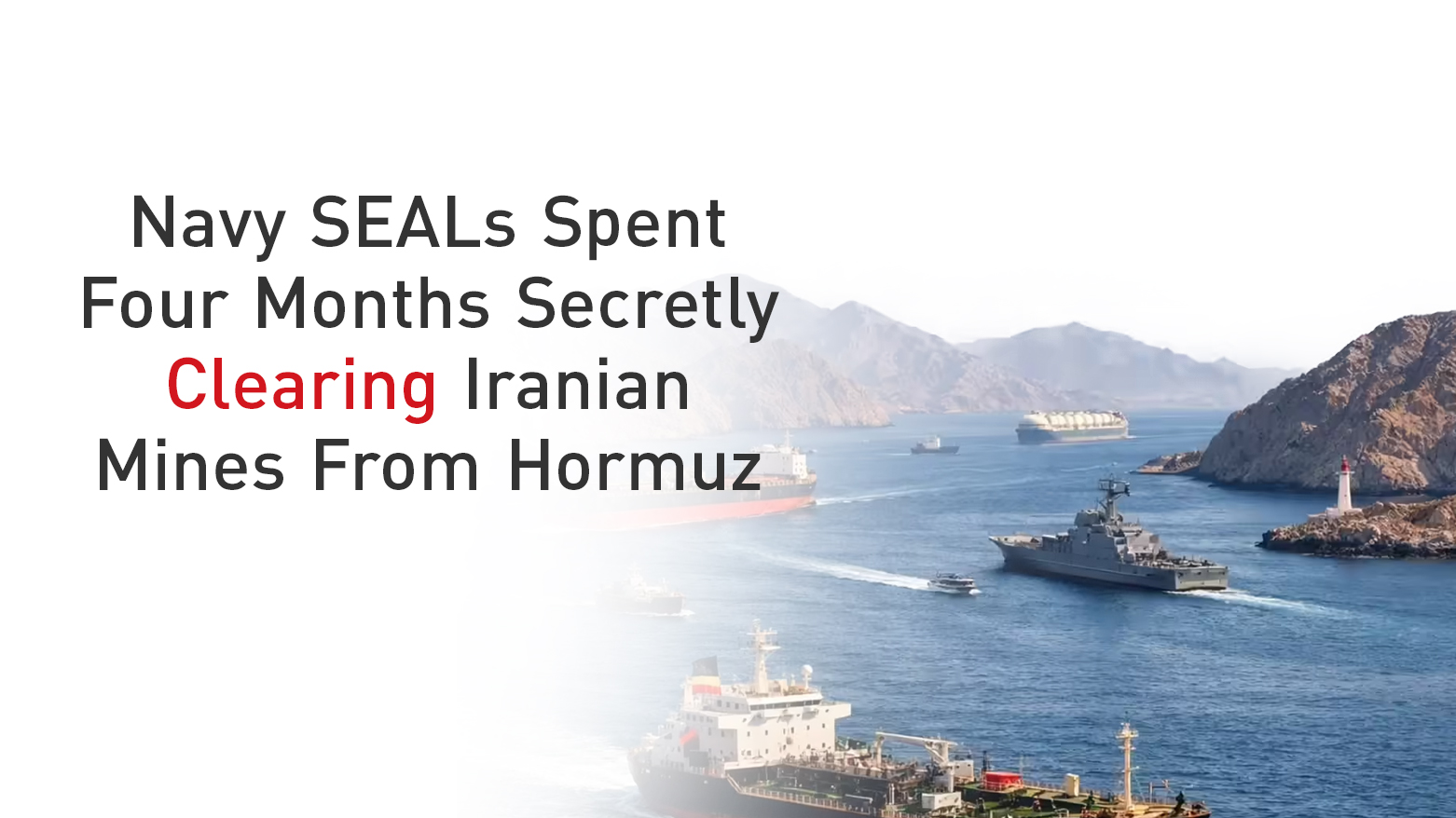
ERBIL (Kurdistan 24) - US Navy SEALs conducted a covert four-month mine-clearing mission in the Strait of Hormuz, working in secret amid ongoing exchanges of strikes between the United States and Iran to make the world's most critical oil corridor safer for commercial vessels that had largely avoided the waterway since the war began in February, the Financial Times reported on Sunday citing people familiar with the mission.
The covert operation involved Navy SEAL divers working alongside unmanned vessels, robots, and specialized underwater equipment to locate and remove suspected Iranian mines, often conducting operations at night to reduce exposure during a period in which US and Iranian forces were simultaneously exchanging strikes in and around the strait, the Financial Times confirmed.
Iran acknowledged placing mines in international and Omani waters following the outbreak of the war on February 28, 2026. The International Maritime Organization estimated in June 2026 that roughly 80 mines had been deployed along important shipping routes in and around the strait, creating a sustained threat to commercial navigation that contributed to the near-total cessation of normal commercial traffic through the waterway in the conflict's early and middle phases.
The objective of the secret SEAL operation was to gradually and systematically remove that threat, making the Strait of Hormuz safe enough for commercial vessels to resume transiting at scale. The operation was conducted without public disclosure throughout its four-month duration, reflecting the sensitivity of conducting mine-clearing operations in a contested waterway while simultaneously engaging in military strikes against the country that placed the mines.
President Donald Trump announced last week that all mines in the strait's international waters had been removed or destroyed, a claim subsequently confirmed by the US military. Iran's Foreign Ministry spokesman Esmail Baghaei called the claim "propaganda deception" on August 26, 2026, warning that Iran would target US minesweepers entering the area. The following day, an oil tanker struck two Iranian naval mines and caught fire in the strait after attempting to transit an unauthorized route, directly contradicting Trump's declaration and raising questions about whether the mine-clearing operation had been fully completed or whether new mines had been laid after the SEAL operation concluded.
The disclosure that Navy SEALs rather than conventional naval mine-clearance vessels conducted the operation reflects the extraordinary sensitivity of the mission. SEAL teams operating covertly from unmarked platforms could conduct mine-clearing work with a lower profile than a formal mine countermeasures operation, reducing the political and military exposure of the mine-clearing effort during a period when both sides were conducting strikes against each other's military assets in the same geographic area.
The four-month timeline of the operation places its beginning approximately in April or May 2026, during the period when the June 17 memorandum of understanding was being negotiated and signed. The simultaneous conduct of secret mine-clearing operations and peace negotiations reflects the layered and often contradictory nature of the conflict's management, in which military, intelligence, diplomatic, and economic instruments were being deployed concurrently rather than sequentially.
The partial success of the SEAL mine-clearing mission is reflected in the dramatic recovery of Hormuz traffic documented in recent weeks. UK Maritime Trade Operations Center data confirmed that nearly 200 ships navigated the strait in a single week last week, up from just 40 two weeks earlier, a nearly 400 percent surge attributed in part to the US-backed Omani corridor and in part to the reduction in the mine threat that the SEAL operation had been working to achieve.