Rawanduz Tourism Plan Targets Visitors in All Four Seasons
Rawanduz is being developed as a year-round tourism destination through new KRG projects, including Kawlokan Boulevard, alongside its canyons, waterfalls and mountain resorts.
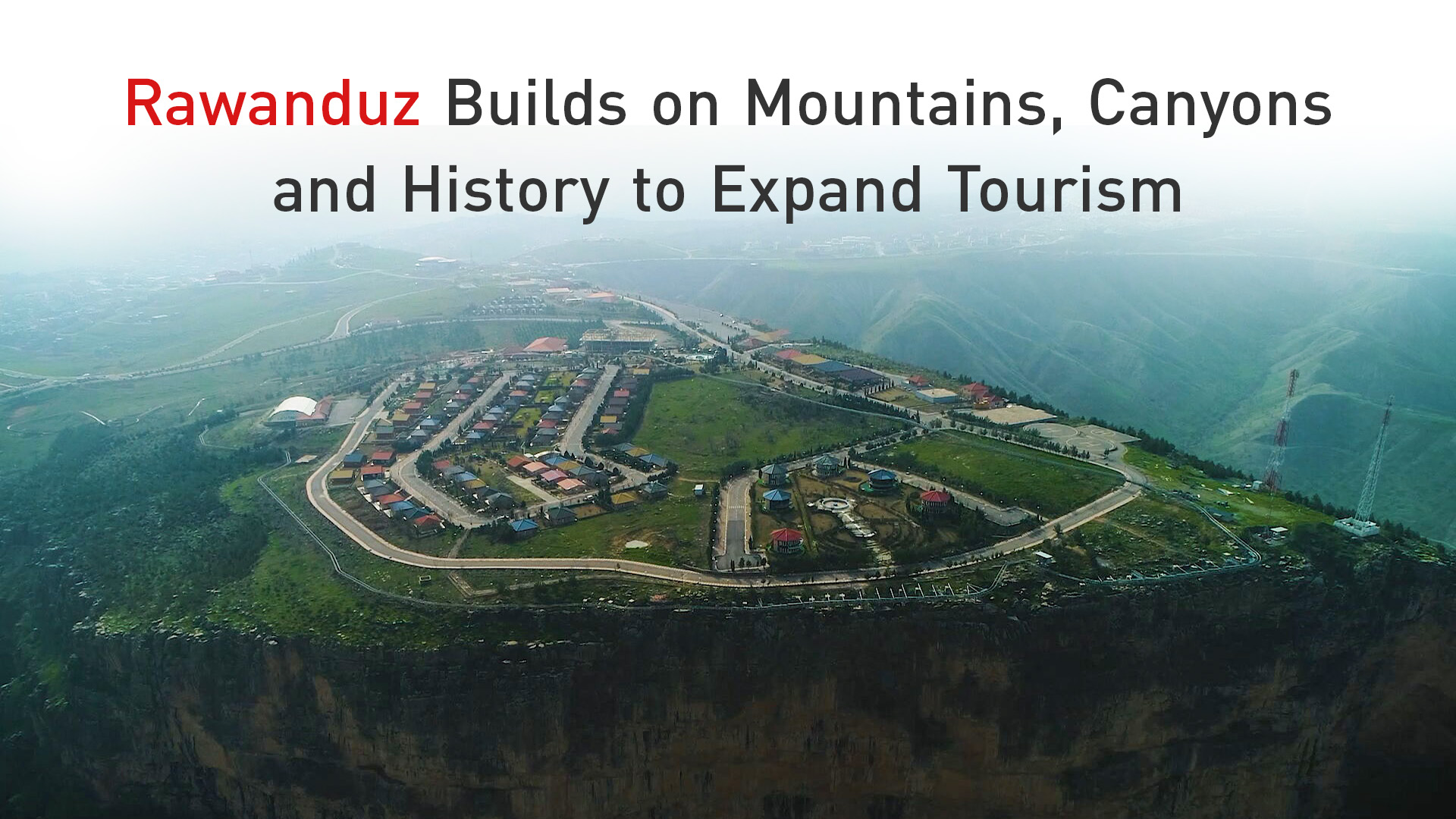
ERBIL (Kurdistan24) - The Kurdistan Regional Government is advancing a comprehensive tourism development plan in Rawanduz aimed at transforming the mountain town and its surrounding attractions into a destination capable of drawing visitors throughout all four seasons.
At the center of the project is the Kawlokan Boulevard, a new riverside road being constructed below Rawanduz, a town renowned for its dramatic canyons, steep mountain walls and proximity to some of the Kurdistan Region's best-known resorts.
Ahmed Qadir, mayor of Rawanduz district, told Kurdistan24 that several tourism areas within the district have been incorporated into the wider plan, with designs completed and implementation now underway.
He said the program is expected to move Rawanduz's tourism industry into a new phase and increase visitor numbers beyond the traditional spring and summer tourism seasons.
Rawanduz lies around 120 kilometers from Erbil and is administratively part of the Soran Independent Administration. The town sits between two deep canyons and is surrounded by mountains including Korek, Handren and Zozik, giving it one of the most distinctive landscapes in the Kurdistan Region.
Its position along the Erbil-Rawanduz-Haji Omeran-Piranshahr route also places it on an important corridor connecting tourism, trade and cross-border travel.
A Landscape Built for Four-Season Tourism
Rawanduz's tourism appeal is spread across a network of natural and recreational destinations rather than a single attraction.
Among the most prominent is Bekhal Waterfall, located near Rawanduz and Gali Ali Beg Canyon.
Water emerges directly from the mountain rock and cascades down the green slopes, creating one of the area's most recognizable natural scenes.
During spring and summer, Bekhal attracts large numbers of domestic and international visitors drawn by its cooler climate, landscape and flowing water.
Restaurants, cafés and local food outlets around the waterfall have helped turn the area into an important seasonal tourism center.
Nearby Mount Korek provides a different attraction during winter.
Snow frequently covers the mountain's upper slopes, making it a destination for visitors seeking winter scenery, snow activities and skiing.
The Korek Mountain Resort includes a cable-car system carrying visitors from a lower station near Rawanduz toward the summit, offering panoramic views across valleys and rugged mountain terrain.
Hotels, villas, restaurants and cafés at the resort have helped extend Rawanduz's tourism season into the colder months.
The wider development strategy seeks to build on those seasonal strengths and make the district attractive year-round.
Rawanduz Canyon, also known as Kharand Canyon, is another defining feature.
The deep rocky gorge was shaped over centuries by river flow and erosion, while the historic town itself developed along its upper edges.
The Rawanduz River passes through the canyon before continuing toward Gali Ali Beg, creating a landscape that has long attracted photographers, tourists and visitors seeking mountain scenery.
History, Recreation and a Wider Tourism Economy
Rawanduz's appeal also rests on its history.
The town rose to particular political significance during the 19th century when it served as the capital of the Soran Emirate under Mir Mohammed Pasha, widely known as the Great Mir of Rawanduz.
During that period, the town developed politically and economically, including through weapons and ammunition production at the Qalatit factory and the minting of coins.
Rawanduz has also produced prominent poets, writers, literary figures and national personalities, giving the town cultural significance alongside its natural attractions.
Its history has been marked by repeated wars and bombardments, but the town has retained a strong place in Kurdish national memory as a symbol of endurance.
Modern tourism development is increasingly seeking to combine that historic identity with new recreational infrastructure.
The Shingalbana tourist complex, located on elevated ground overlooking Rawanduz Canyon and the town, offers villas, cabins and modern motel accommodation.
The area also includes green spaces, a large park, amusement facilities for children and teenagers, restaurants, cafés and walking routes.
Its cooler summer temperatures and broad views have made it particularly attractive for families and visitors seeking quieter recreational spaces.
The new Kawlokan Boulevard is intended to complement these existing destinations by opening another area below the town for tourism and improving the overall visitor experience.
The wider plan reflects the KRG's effort to develop tourism as part of economic diversification and reduce reliance on a narrower range of revenue sources.
Rawanduz is well positioned for that strategy because it combines natural scenery, historical identity, summer resorts and winter attractions within a relatively compact district.
Its proximity to Bekhal, Gali Ali Beg, Mount Korek and Shingalbana already brings hundreds of thousands of visitors to the area each year.
The challenge now is to convert that established popularity into a more organized, year-round tourism economy.
If the planned developments are completed as envisioned, Rawanduz could increasingly function not only as a seasonal mountain escape, but as one of the Kurdistan Region's most diversified tourism destinations, drawing visitors for its waterfalls and greenery in warmer months, snow-covered mountains in winter, and its canyons, history and cultural landscape throughout the year.