Iceland Summons US Ambassador Over Trump Map Showing Island Under US Flag
The diplomatic dispute comes after Trump shares a map depicting Iceland, Greenland, Canada and Mexico under the US flag, raising fresh concerns in Reykjavík over Washington’s Arctic ambitions
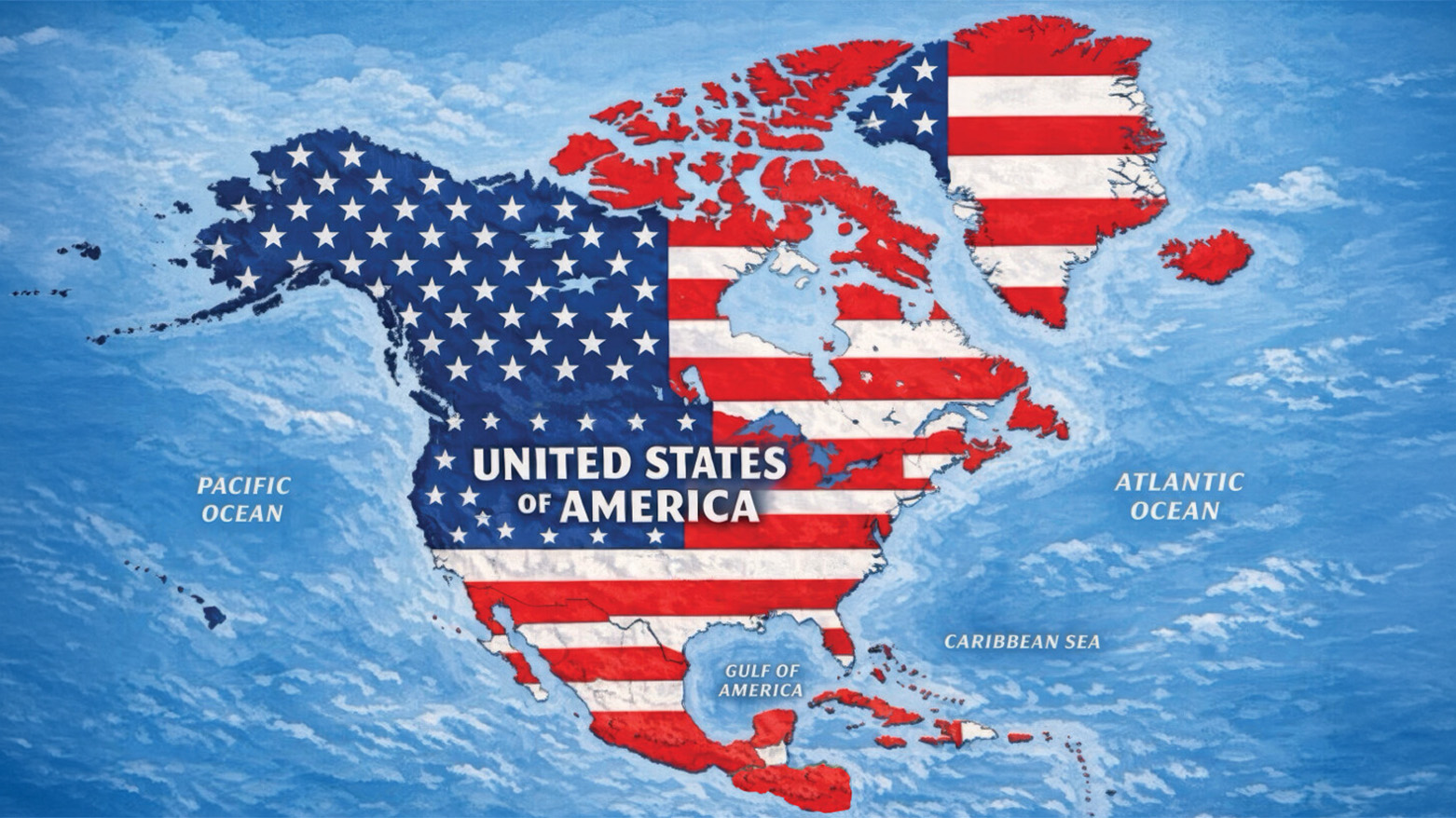
ERBIL (Kurdistan24) — Iceland has summoned the United States ambassador after President Donald Trump posted a map on social media that appeared to depict Iceland as part of the United States, prompting Reykjavík to formally object to what it called an inappropriate representation of the sovereign Nordic country.
Iceland’s Foreign Minister Thorgerdur Katrin Gunnarsdottir summoned US Ambassador Billy Long to convey the government’s position, with the Foreign Ministry saying the message was clear that Trump’s post was “wholly inappropriate.”
Long only formally took up his post in Iceland last month.
Trump posted the image on his Truth Social platform on Monday without an accompanying explanation or policy statement.
The map showed the United States, Canada, Greenland, Iceland, Mexico, Central America and the Caribbean covered by the US flag, while the entire landmass was labelled “United States of America.”
The incident comes amid growing sensitivity in Iceland over Trump’s repeated statements about expanding US control in the Arctic.
Trump has repeatedly said the United States should acquire Greenland, an autonomous territory within the Kingdom of Denmark, citing US national security interests. He has also repeatedly referred to Canada as the “51st State.”
Iceland’s concerns are particularly significant because of its strategic position in the North Atlantic and its close proximity to Greenland.
The country has no standing military of its own and relies on its NATO membership and a 1951 defense agreement with Washington for national security. Under that agreement, the United States undertook responsibilities for Iceland’s defense while Iceland provided facilities that could be used for the defense of Iceland and the wider NATO area.
The diplomatic dispute comes at a particularly sensitive time for Iceland. Last month, Icelandic voters rejected a proposal to reopen negotiations on European Union membership, while the government has increasingly discussed strengthening security cooperation with European countries and other partners.
Foreign Minister Gunnarsdottir has said Iceland should explore deeper bilateral and multilateral security arrangements, including with European and other allied states.
Trump’s Greenland ambitions have also generated wider concern among Arctic allies. Canada, Denmark, Greenland, Finland, Iceland, Norway, Sweden and the United States agreed in May to strengthen cooperation on Arctic security, amid growing strategic competition involving Russia and China.
For Iceland, the map has therefore landed in a broader geopolitical context in which questions over Arctic sovereignty, US intentions and the future of transatlantic security have become increasingly prominent.
While Trump’s post did not contain an explicit proposal to claim Iceland, Reykjavík’s decision to summon the US ambassador underscores the sensitivity surrounding any suggestion that the country could be incorporated into the United States.