Mahmoud Zamdar's Ideas Remain Alive 15 Years After His Death
Fifteen years after Mahmoud Zamdar's death, his daughter Vian reflects on the Kurdish writer's enduring legacy of freedom, human dignity and intellectual resistance.
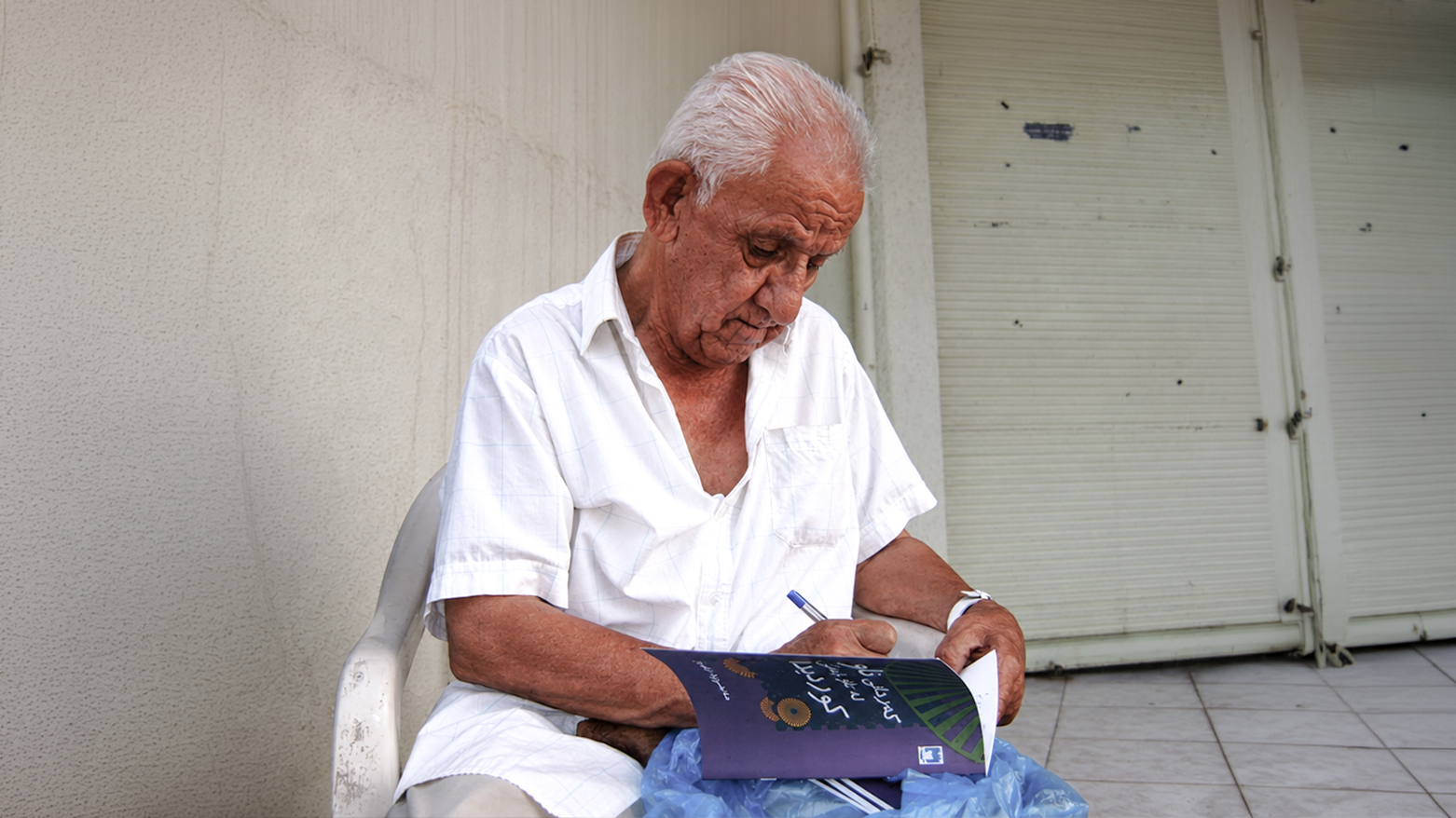
ERBIL (Kurdistan24) - Fifteen years after the death of Mahmoud Zamdar, the Kurdish writer, intellectual and thinker remains a significant figure in Kurdish literary and intellectual life, remembered not only for the scale of his written work but also for a worldview centered on freedom, human dignity and opposition to oppression.
Speaking to Kurdistan24 on Tuesday, Sept. 8, the anniversary of her father's death, poet and writer Vian Zamdar said his intellectual life was shaped by a persistent search for a more humane and freer world.
Throughout his work, she said, Zamdar sought a society in which people could preserve their dignity and live free from discrimination, repression, domination and violence.
"He felt deeply connected to humanity's suffering, and from that suffering he envisioned a free and just life," Vian said.
She described her father as someone who identified deeply with the marginalized and those whose voices had been suppressed.
Wherever he encountered oppression, she said, he understood it not as an isolated personal tragedy but as a broader moral responsibility shared by humanity.
That perspective, she added, gave his writing a humanitarian dimension that extended beyond literature and beyond Kurdistan itself.
Freedom, Kurdistan and the Human Condition
Vian said Zamdar's intellectual outlook was rooted in the conviction that freedom was essential to restoring what he saw as humanity's natural dignity.
His concern for oppressed people was not limited by geography or identity, she said, but Kurdistan nevertheless occupied a central and deeply personal place within his political and philosophical aspirations.
The freedom of the Kurdish nation and the sovereignty of Kurdistan were among the causes closest to him and remained central to his understanding of justice and liberation.
His writings frequently sought to connect national freedom with a wider human struggle against domination.
For Vian, that combination of Kurdish commitment and universal humanitarianism is one of the defining characteristics of his legacy.
She said Zamdar's personality was also marked by unusual modesty and a close relationship with ordinary people.
He maintained friendships and connections across different sections of society, including merchants, workers, writers and politicians.
That ability to engage with people from varied backgrounds, she said, helped give his writing both intellectual depth and accessibility.
Assessing his work is difficult precisely because of that quality.
Vian said her father possessed the ability to express complicated ideas in deceptively simple language, giving his texts several levels of meaning.
A reader could return to the same piece repeatedly, she said, and discover another dimension of his argument or another layer of thought.
That accessibility did not diminish the philosophical character of his writing. Instead, it allowed him to communicate difficult questions about society, freedom and human relationships without limiting his audience to specialists.

A Father, Critic and Teacher
Vian also reflected on Mahmoud Zamdar not simply as a public intellectual, but as a father who shaped her own development as a writer.
"To me, he was not merely a renowned writer, but a model of an intellectual, a revolutionary and an advocate of freedom," she said, describing him also as a teacher who offered literary criticism openly and directly.
She recalled an incident from the beginning of her writing career when her father learned that she had torn up one of her own pieces after receiving criticism.
Rather than encouraging her to abandon the work, he urged her to value what she created.
"Love the children of your pen," he told her.
He explained that when he criticized her writing, he did so as a critic rather than as a father and encouraged her to defend her ideas with confidence.
"You, too, must courageously defend your work," she recalled him saying. "You are capable of much more."
Vian described that advice as one of the most important lessons of her life.
Fifteen years after his death, she said she feels his affection and guidance even more strongly.
The loss, she added, left a space that could not easily be filled.
Yet his absence has not diminished his presence in Kurdish intellectual and literary circles.
His name continues to be discussed, while his works remain open to new readings and interpretations.
For Vian, that continuing engagement shows that his ideas have moved beyond the life of one individual and entered the wider heritage of Kurdish thought.
More Than Three Decades of Writing
Mahmoud Zamdar was born in Erbil in 1944.
He studied Kurdish language at the University of Baghdad's College of Arts, graduating during the 1970–1971 academic year.
His early career was marked by extraordinary literary and journalistic productivity.
Between 1970 and 1981, Zamdar published 937 articles and other pieces in magazines and newspapers.
Over the course of his life, he published more than 30 books.
His work extended beyond journalism into broader cultural and artistic activity, reflecting the wide intellectual interests for which he became known.
The volume of his writing alone made him a prominent figure, but for those closest to his work, its lasting importance lies in the principles that ran through it: freedom, dignity, resistance to oppression and the belief that intellectual life should remain connected to the struggles of ordinary people.
His legacy has also continued through the work of his family.
In 2025, Dr. Vian Zamdar published a collection of 33 poems titled Zamdar in memory of her father.
Mahmoud Zamdar died in Erbil on Sept. 8, 2011, at the age of 67.
Fifteen years later, his writings continue to be read not simply as products of their time, but as part of an ongoing conversation about freedom, national identity and the responsibilities of the intellectual.
For Vian Zamdar, that enduring relevance reflects the central purpose of her father's life: an effort to imagine humanity liberated from fear, oppression and domination while preserving dignity, justice and freedom at the heart of public life.