Iraq’s First Plant To Turn Food Waste Into High-Quality Compost
The waste-sorting and processing plant is recycling food waste through a carefully controlled process to produce standardized, high-quality organic compost.
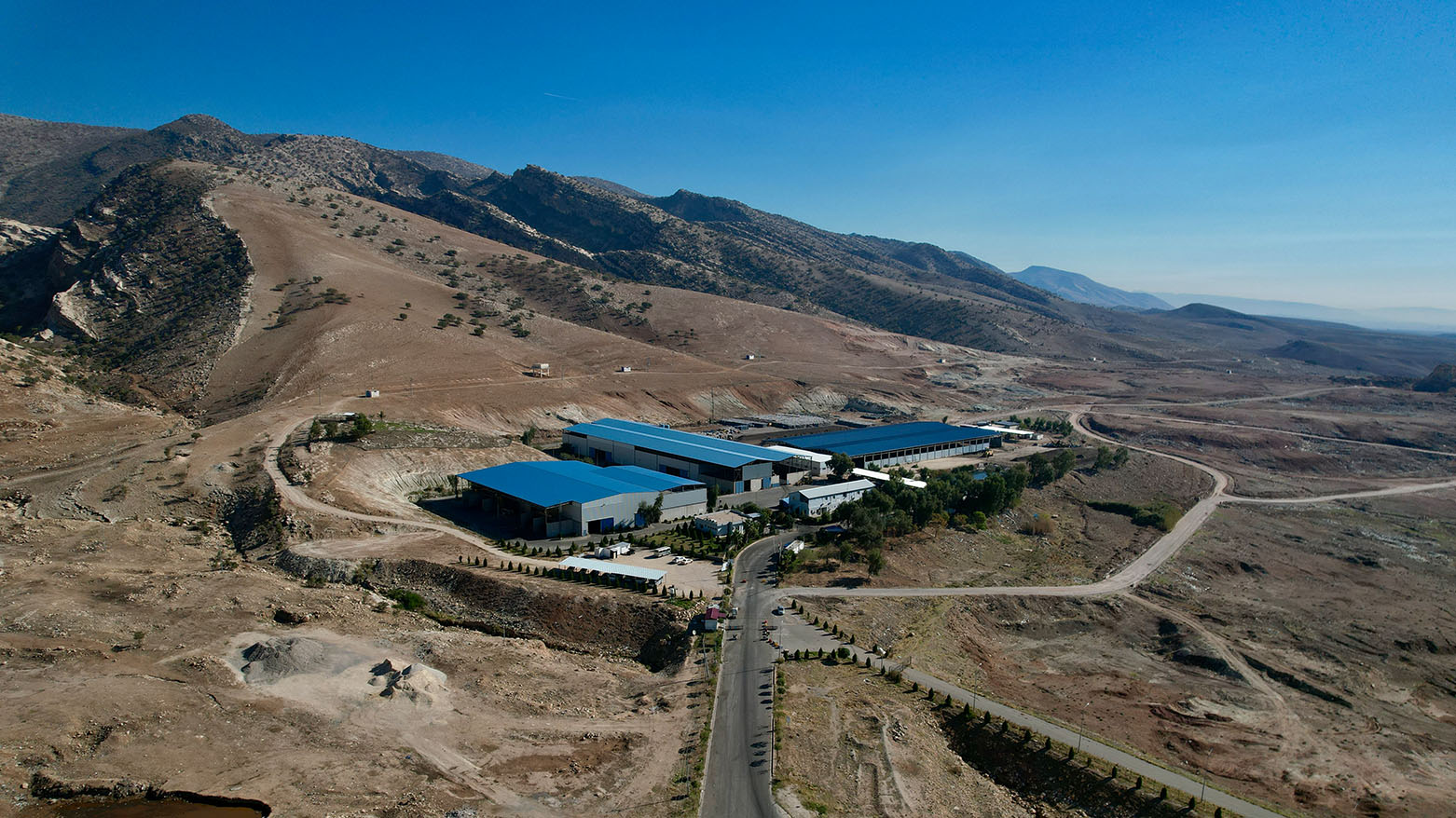
ERBIL (Kurdistan24) - In a pioneering scientific and environmental initiative, the Kwashe waste-sorting and processing plant in Duhok Governorate is recycling food waste and transforming it through carefully controlled stages into high-quality standardized organic compost, providing support for both agriculture and environmental protection in the Kurdistan Region.
The production of the natural fertilizer is subject to strict environmental and health standards, making it a strong competitor to traditional animal-based fertilizers while also helping reduce pollution and improve soil fertility.
Explaining the production process, project supervisor Nijirvan Kanaan told Kurdistan24:
“We have been producing compost of very high quality for some time, and we are continuously working to develop our production and packaging methods. We mix it with precise proportions of animal waste, sawdust and soil. These standards allow us to produce a more advanced, finer and higher-quality fertilizer to support agricultural land.”
The Kwashe plant receives approximately 650 tons of waste every day, with food waste accounting for around 35 percent of the total. Nine percent of this organic waste is used in the production of compost.
The plant currently produces five tons of organic fertilizer per day and sells it to farmers and citizens at symbolic, subsidized prices, significantly below the prices of fertilizers available on the local market.
Haval Omar, deputy director of the Kwashe waste-sorting plant, said the administration is committed to reducing the financial burden on farmers:
“We offer this product at subsidized prices to support the agricultural sector, and we provide it in several options to meet different needs. We package it in special 10-kilogram bags, and we can also provide it in solid form, in bulk, in large quantities if farmers require it, rather than limiting it to packaged quantities.”
The project is directly supervised by experts and specialists, giving farmers confidence that their land will be protected from harmful chemicals and ensuring that their agricultural products reach markets with higher quality and better nutritional value.
The Kwashe plant in Duhok is the first in Iraq to successfully produce this advanced type of organic compost, while future plans are focused on expanding production lines and increasing capacity.
The expansion is intended to benefit farmers and consumers while also contributing to revenue generation and supporting the economy and environment.
A broader waste-recycling strategy
The production of organic fertilizer is part of a broader waste-management effort at the Duhok facility.
In November 2025, the plant was reported to be operating around the clock on a three-shift schedule, sorting more than 600 tons of waste every day. The facility had more than 150 workers, with 80 percent of its workforce dedicated to the manual and technical sorting of waste.
At the time, plastic accounted for up to 23 percent of the sorted waste. The segregated plastic was being prepared for export outside the Kurdistan Region, while local authorities were working on plans to establish a dedicated plastic recycling plant within the facility.
Diyar Sadiq, the plant’s administrative director, said there was a concrete plan to establish the plastic recycling facility within six months to one year, with support required from non-governmental organizations based in the Netherlands.
The local team had already received intensive training in the Netherlands in preparation for the planned expansion.
“After that, the plastic will not go to the landfill, but will be returned to the recycling plant,” Sadiq said.
The facility was established in two phases. The first phase was inaugurated in 2011, followed by a second expansion in 2015 to accommodate the growing needs of the population.
The plant’s operations focus heavily on recovering usable materials from waste. The remaining 20 percent of the material flow is directed toward burial in landfills or converted into fertilizer, allowing organic waste to be put to agricultural use rather than simply discarded.
Environmental specialist Hazim Abdi has warned of the long-term risks associated with untreated plastic waste and stressed the need to recycle plastic to reduce the overall volume of waste.
Abdi said plastic reacts with soil and other elemental components, causing widespread pollution. He warned that such contamination can enter the agricultural cycle and eventually reach humans through the food supply, causing significant health and environmental damage.
The organic fertilizer project is directly supervised by experts and specialists, giving farmers confidence that their land will be protected from harmful chemicals and ensuring that their agricultural products reach markets with higher quality and better nutritional value.
The Kwashe plant in Duhok is the first in Iraq to successfully produce this advanced type of organic compost, while future plans are focused on expanding production lines and increasing its capacity.
Alongside the planned localization of plastic recycling, the expansion of organic fertilizer production represents a broader effort to recover value from waste and reduce its environmental impact.
The projects are intended to benefit farmers and consumers while also contributing to revenue generation and supporting the economy and environment.