Kurdistan Region President Signs Decree Promoting 519 Interior Ministry Security Officers
Nechirvan Barzani's regional decree takes immediate effect, advancing officers of the General Directorate of Internal Security Forces to their entitled ranks under applicable law
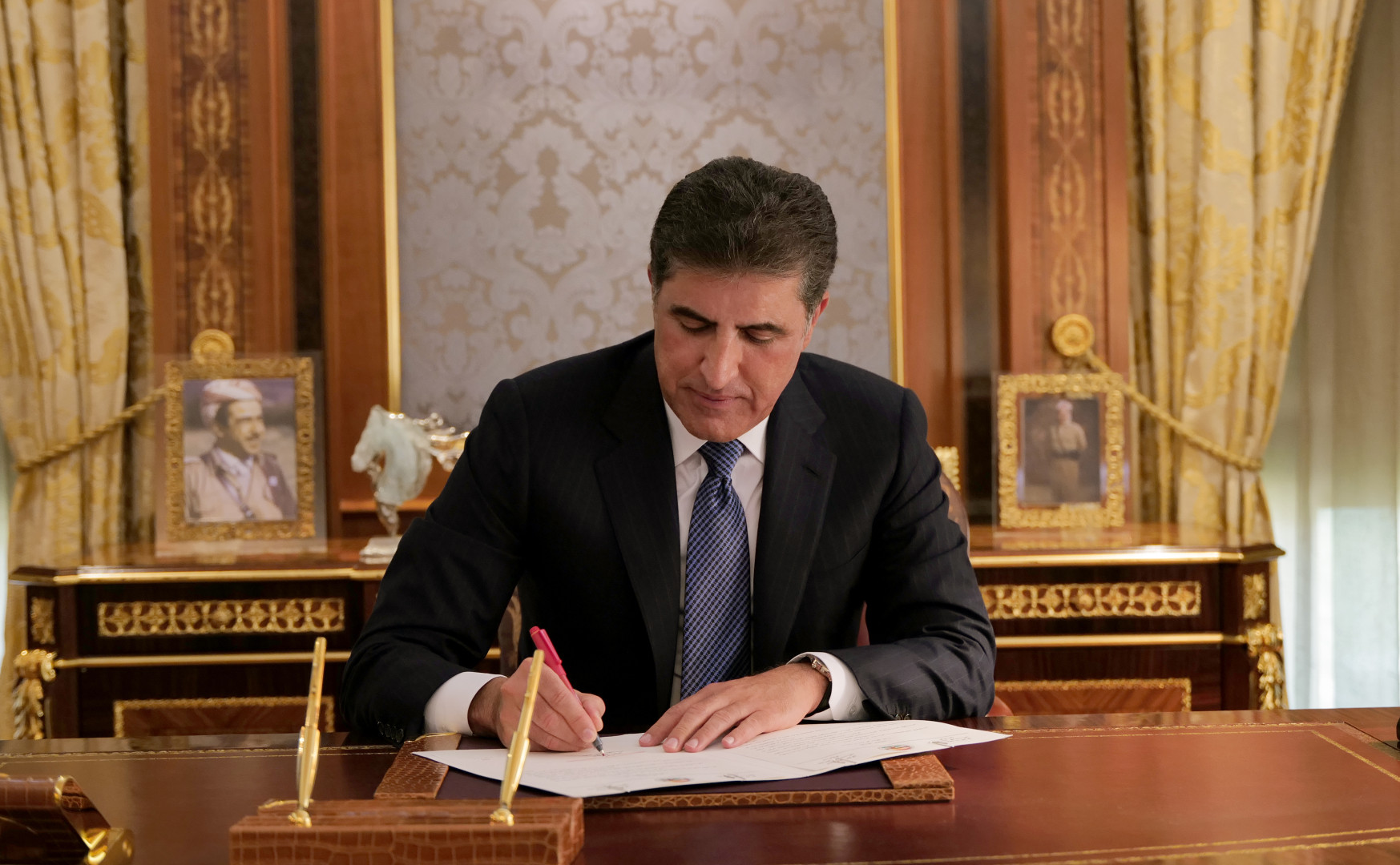
ERBIL (Kurdistan 24) - Kurdistan Region President Nechirvan Barzani signed a regional decree on Wednesday promoting 519 officers serving under the Ministry of Interior's General Directorate of Internal Security Forces to their entitled ranks, with the decree taking effect immediately from the date of its issuance.
According to the decree, which was issued in accordance with the Kurdistan Region Presidency Law and applicable legislation, the officers are to be advanced to the ranks they are entitled to under the relevant legal framework governing the Internal Security Forces.
The decree takes effect on the day of its issuance, Wednesday, September 9, 2026, meaning the promotions enter into force immediately without a transitional period.
The promotion of 519 Internal Security Forces officers in a single presidential decree is one of the largest single advancement actions the Kurdistan Region Presidency has taken within the Ministry of Interior's security establishment. The Internal Security Forces, known as the Asayish, are responsible for internal security, counterterrorism, and public order across the Kurdistan Region, and form one of the most operationally active elements of the Region's broader security architecture alongside the Peshmerga forces.
The decree comes as the Kurdistan Region continues to absorb security pressures from the six-month US-Iran conflict, having intercepted 10 attack drones over Erbil governorate airspace on September 2, 2026, and having sustained the August 17 Hadid-110 drone strikes on Prime Minister Masrour Barzani's office in Pirmam. President Nechirvan Barzani has chaired multiple high-level military and security meetings throughout the conflict, reaffirming the Kurdistan Region's policy of neutrality while directing security forces to maintain the highest state of readiness.