Finland Joins French Nuclear Deterrence Initiative as Europe Reinforces Security Against Russia
Helsinki’s participation brings France’s “forward deterrence” initiative to a NATO country sharing a 1,340-kilometer border with Russia
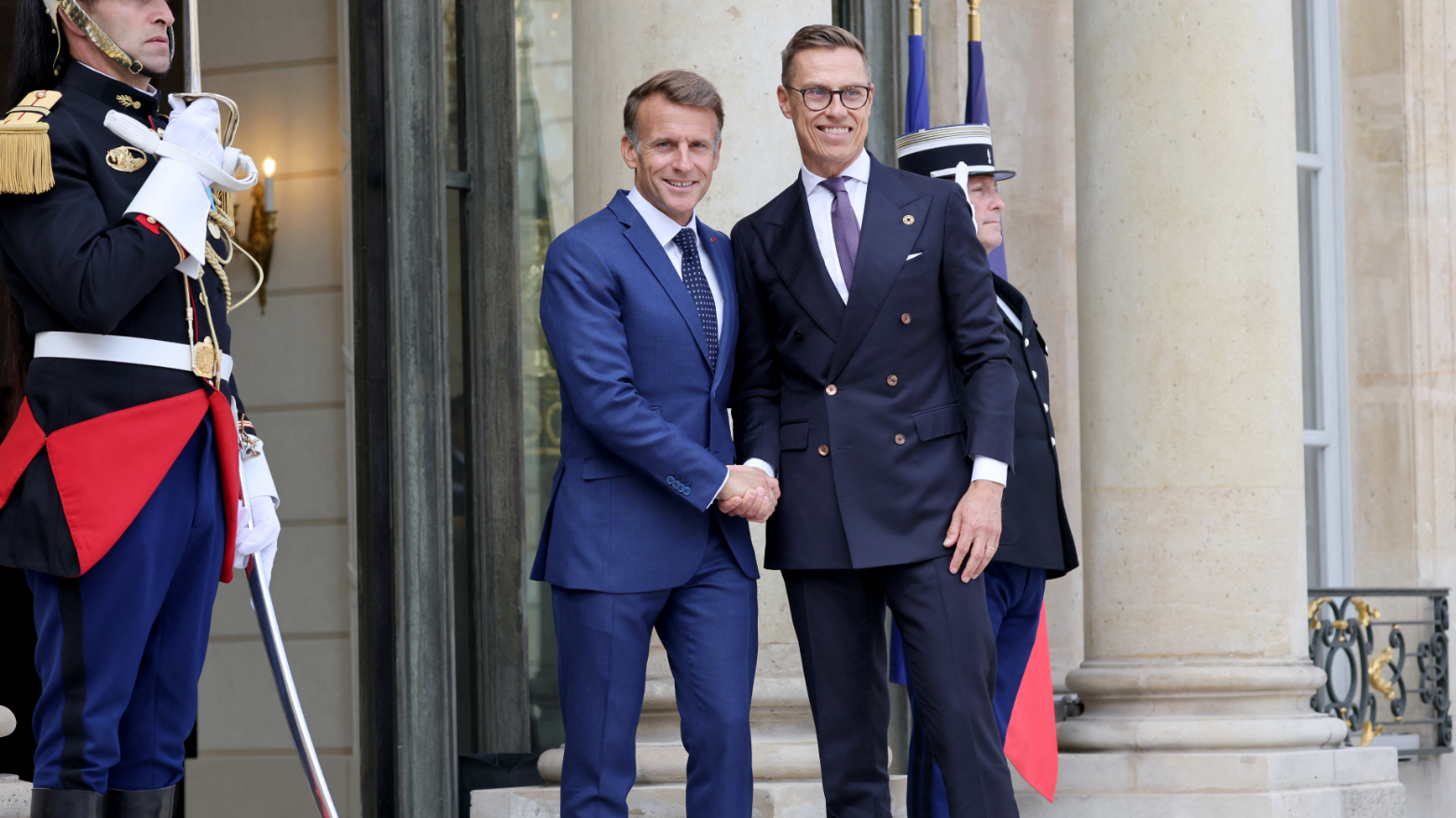
ERBIL (Kurdistan24) — Finland has joined France’s initiative to extend its nuclear deterrence cooperation to European allies, bringing the framework to a NATO member that shares a 1,340-kilometer border with Russia as European countries reassess their security arrangements amid growing concerns over Moscow and uncertainty about the future of US engagement in European defense.
France and Finland announced the decision in a joint statement on Monday, saying a nuclear steering group would be established in the coming months to begin implementing the cooperation.
The move makes Finland the 10th European country to join France’s initiative, which President Emmanuel Macron announced in March as part of a broader effort to develop a European dimension to France’s independent nuclear deterrent.
The initiative, known as “forward deterrence,” is intended to deepen strategic cooperation between France and its European partners while preserving French control over its nuclear arsenal.
It does not establish a formal French nuclear umbrella or give participating countries a role in deciding whether France would use nuclear weapons.
Macron has said the ultimate decision to use French nuclear weapons will remain solely with the French president. However, the initiative could allow European partners to participate in deterrence exercises and, potentially, involve temporary deployments of elements of France’s strategic air forces to allied territory.
France has stressed that the initiative is complementary to NATO’s nuclear deterrence arrangements rather than a replacement for them. Paris has also said its discussions with European partners are being conducted transparently with the United States and in close coordination with the United Kingdom.
Finland’s participation carries particular strategic significance because of its geographic position. The Nordic country has a 1,340-kilometer land border with Russia and joined NATO in April 2023, abandoning decades of military non-alignment following Russia’s full-scale invasion of Ukraine in 2022.
Since joining the alliance, Helsinki has significantly expanded its integration into NATO’s defense planning and regional military activities.
Finland has also been strengthening its national preparedness and defense capabilities as security conditions along Europe’s northeastern flank have deteriorated.
Finnish officials have repeatedly identified Russia as a central factor in the country’s security planning. The Finnish government says Russia’s invasion of Ukraine fundamentally changed Finland’s security environment and has emphasized the importance of NATO’s collective deterrence and defense.
The decision also comes as European governments seek greater strategic autonomy amid uncertainty over the future role of the United States in European security under President Donald Trump.
Trump’s return to the White House in January 2025 has prompted European allies to reassess their defense capabilities and reduce reliance on Washington.
France, which maintains its own independent nuclear force and does not participate in NATO’s nuclear-sharing arrangements, has increasingly promoted a stronger European role in deterrence.
Macron’s initiative initially attracted several major European powers. Germany agreed to establish a high-level nuclear steering group with France, while Poland, the Netherlands, Belgium, Greece, Sweden, Denmark and Norway have also joined the discussions.
The initiative reflects a broader European debate over how the continent can maintain credible deterrence if the US security commitment becomes less predictable.
France possesses one of Europe’s two independent nuclear arsenals, alongside the United Kingdom. Macron has argued that France’s nuclear deterrent has a European dimension because a major threat to European security could ultimately affect France’s own vital interests.
At the same time, Paris has maintained that France alone will determine when and how its nuclear weapons are used. Macron has explicitly rejected sharing the ultimate decision-making authority with partner countries.
For Finland, participation adds another layer to its rapidly expanding security cooperation with European allies. NATO remains the cornerstone of Finnish defense policy, while the country has also strengthened military cooperation with Sweden, Norway and other NATO members in the Nordic and Arctic regions.
The Finnish government has described European defense cooperation as complementary to NATO efforts, while emphasizing that the alliance remains central to the country’s deterrence and defense posture.
The creation of the Franco-Finnish nuclear steering group is therefore unlikely to immediately alter Europe’s nuclear balance, but it signals a significant political development: countries on Russia’s eastern flank are increasingly willing to participate in discussions about France’s nuclear capabilities as Europe seeks additional layers of deterrence alongside the existing NATO framework.