US Defends Blocking Iran Nuclear Chief From IAEA Meeting
The US defended excluding Iran nuclear chief Mohammad Eslami from the IAEA conference, while Tehran accused Washington of political bullying.
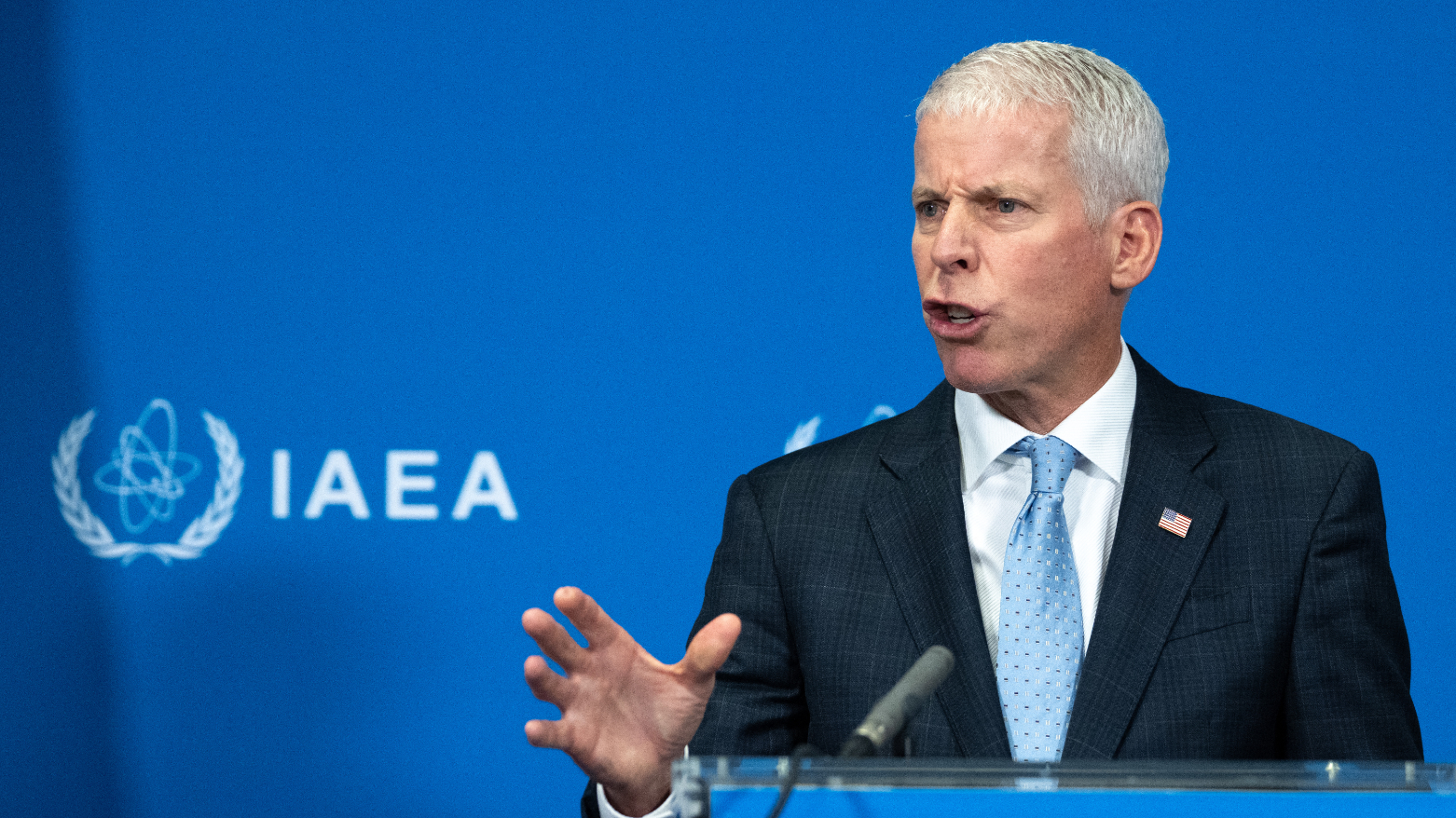
ERBIL (Kurdistan24) - The United States and Iran traded accusations Monday over the exclusion of Iranian nuclear chief Mohammad Eslami from the International Atomic Energy Agency's General Conference in Vienna, with Washington saying sanctions must be enforced and Tehran condemning the decision as political "bullying."
US Energy Secretary Chris Wright confirmed that Washington opposed allowing Eslami, Iran's vice president and head of the Atomic Energy Organization of Iran (AEOI), to attend the annual gathering of the UN nuclear watchdog.
"He's a sanctioned individual and we don't want sanctioned individuals evading their sanctions," Wright told reporters in Vienna, according to Agence France-Presse (AFP).
Wright said an exemption had been requested but denied.
His comments provided the clearest public US explanation for Eslami's absence after conflicting reports emerged over whether the Iranian official would be able to participate in the conference.
Iran responded sharply.
Behrouz Kamalvandi, a senior AEOI official, told AFP that preventing Eslami from attending could establish a precedent affecting other countries' participation in international meetings.
"The denial of access to the general conference is something that is creating a precedent which is going to affect everybody," Kamalvandi said, arguing that states should resist what he described as political pressure.
He accused the US administration of "malicious" behavior and characterized the move as "childish."
The statements deepen a dispute that began before delegates gathered in Vienna.
Kurdistan24 reported earlier, citing Associated Press correspondent Stephanie Liechtenstein, that an official briefed on the matter said Austria had sought an exemption from the UN travel restrictions affecting Eslami, but that the request was not approved.
Read More: Iran Nuclear Chief's IAEA Attendance in Doubt Over UN Travel Ban
Austria hosts the IAEA and other UN bodies in Vienna and can seek exemptions enabling sanctioned officials to attend international meetings.
Iranian state news agency IRNA had previously reported that Eslami departed Tehran on Saturday with senior atomic-energy officials and intended to address the IAEA General Conference and hold bilateral meetings.
The supplied reporting does not establish whether Eslami reached Austria before being prevented from participating.
Sanctions Dispute Meets Nuclear Standoff
The disagreement comes after UN sanctions on Iran were restored last year when France, Britain and Germany triggered the snapback mechanism associated with the 2015 nuclear agreement.
The restored measures include travel restrictions, asset freezes, an arms embargo and limits related to ballistic missiles and nuclear technology, according to AP reporting cited previously by Kurdistan24.
The dispute over Eslami's attendance is unfolding alongside a broader deterioration in relations between Tehran, Western governments and the IAEA.
Since US and Israeli strikes damaged Iranian nuclear facilities during the June 2025 war, IAEA inspectors have not regained access to the affected sites, preventing the agency from fully establishing the current status of Iran's nuclear material.
The IAEA has also been unable to verify the condition of a stockpile that it previously estimated at 440.9 kilograms of uranium enriched to 60% purity.
Iran maintains that its nuclear program is exclusively peaceful and denies seeking a nuclear weapon.
Tehran has also strongly criticized the military strikes on its nuclear facilities, arguing that sites operating under international safeguards should not have been attacked.
Read More: IAEA Chief Extends Hand to Iran, Pledges to Consider Security Concerns if Tehran Resumes Cooperation
Competing Arguments in Vienna
The confrontation at the General Conference therefore reflects two competing positions.
Washington argues that allowing a sanctioned official to attend without an approved exemption would undermine the sanctions regime.
Tehran says excluding the head of its nuclear agency from the principal annual meeting of the IAEA politicizes an international institution and potentially restricts member states' ability to participate in its work.
The IAEA General Conference, running from Monday through Friday, brings together representatives of member states to approve the agency's budget and address nuclear-policy and safeguards issues, including questions concerning the Middle East.
Eslami has regularly attended the gathering since becoming head of Iran's Atomic Energy Organization in 2021.
His exclusion this year adds another diplomatic dispute to an already strained relationship over inspections, sanctions and Iran's nuclear activities.
For now, the confrontation has moved from uncertainty over whether Eslami would appear in Vienna to an open US-Iran disagreement over why he was kept out, and whether enforcing the travel ban protects international sanctions or undermines the functioning of the nuclear watchdog itself.