Al-Zaidi sets June 2027 deadline for militia disarmament under phased plan
Prime Minister proposes a 90-day halt in militia attacks matched by US restraint, followed by weapons handover, as some factions push for end of 2027 and the plan's success depends heavily on whether the US-Iran war ends
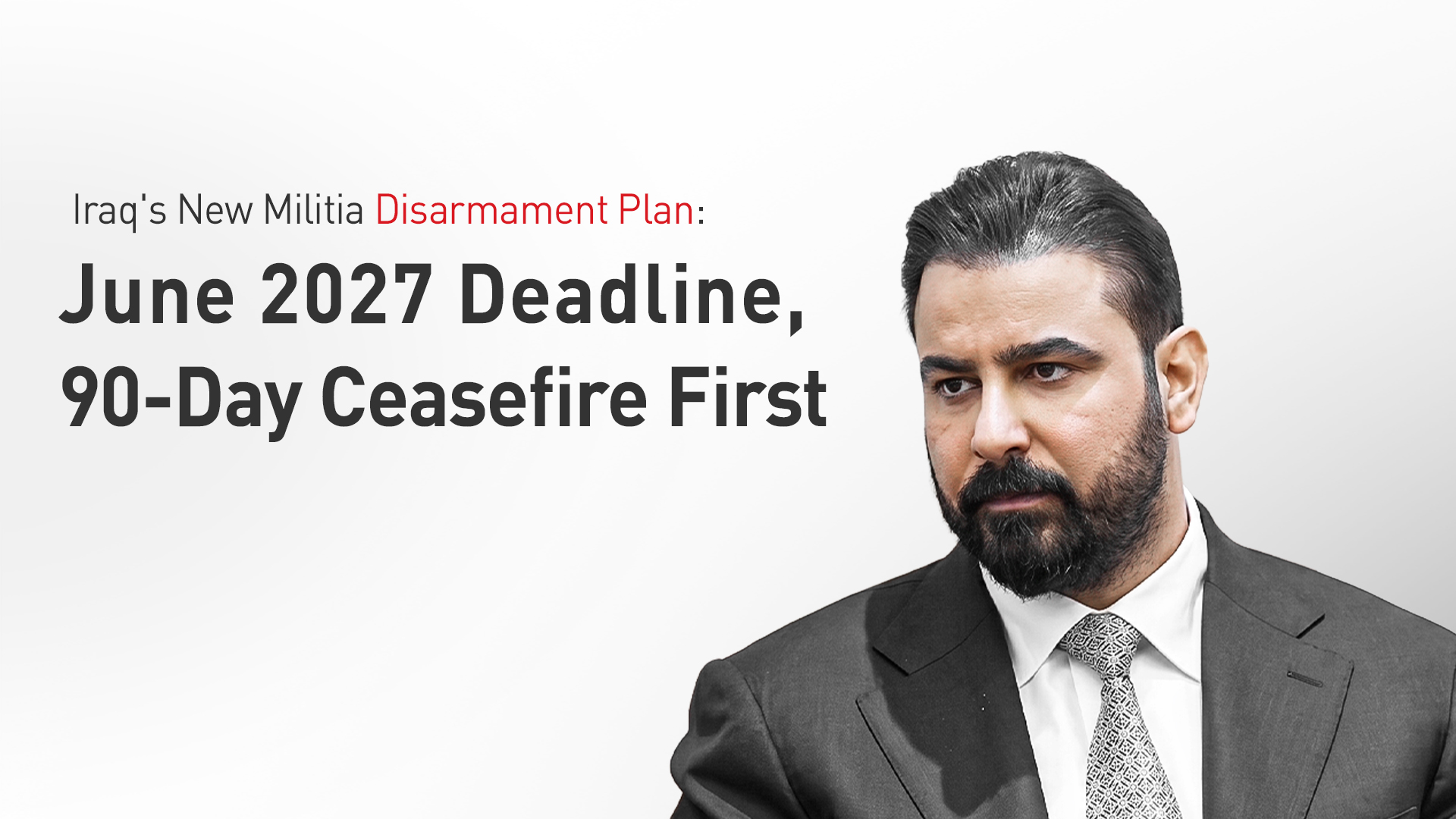
ERBIL (Kurdistan 24) - Iraqi Prime Minister Ali al-Zaidi announced on Tuesday, September 22, 2026, a phased plan to bring Iran-backed militia groups under state control, setting June 30, 2027, as the new deadline for full disarmament, in a significant extension of the September 30, 2026, deadline that had been the centerpiece of his government's security agenda since taking office in May.
Under the plan, the process would begin with a 90-day halt in militia attacks, during which US forces would also refrain from attacking the militia groups, creating a mutual de-escalation window as the foundation for the subsequent weapons handover phase. Following the 90-day period, the militias would then hand over their weapons to state authorities, completing the transition to exclusive state control of armed force in Iraq.
The extension of the deadline to June 2027 represents a significant concession to political reality. The September 30 deadline that al-Zaidi had originally set, to coincide with the conclusion of the international anti-ISIS coalition's military mission in Iraq, was facing near-certain failure with multiple major factions including Kataib Hezbollah, Harakat al-Nujaba, Kataib Sayyid al-Shuhada, Saraya Awliya al-Dam, Ashab al-Kahf, and the Karbala Battalions all refusing to comply. Kataib Sayyid al-Shuhada formally reframed the process as a reorganization rather than a disarmament on August 29, 2026, reserving the right to rearm whenever circumstances require.
Some factions are pushing for an even longer timeline, demanding that the deadline be extended to the end of 2027, a further six months beyond the June 30 date that al-Zaidi has proposed, reflecting the depth of resistance within the militia establishment to a process they have consistently described as politically motivated and constitutionally contestable.
The plan faces strong resistance on multiple fronts simultaneously. The holdout factions have set conditions for participation that go far beyond what any Iraqi government can unilaterally deliver, including the full withdrawal of US forces from Iraq, the expulsion of PKK fighters, the departure of Turkish forces from northern Iraqi territory, and the end of American interference in Iraq's political and financial decision-making. The Trump administration had warned al-Zaidi during his Washington visit that monthly dollar transfers to Iraq would be suspended if Iran-aligned armed groups did not disarm, a financial ultimatum that Kurdistan 24 exclusively confirmed through two Iraqi government sources.
The plan's success is also heavily contingent on whether the US-Iran war ends, as Washington is simultaneously pressing Baghdad to curb the Iran-aligned groups while the groups themselves point to the ongoing conflict as justification for maintaining their armed posture. A war-ending agreement between Washington and Tehran would remove the primary political argument the holdout factions have used to resist disarmament, while a continued conflict gives them both the motivation and the international cover to maintain their weapons and their operational independence from the Iraqi state.
Washington is watching the June 2027 target closely. The Trump administration has made militia disarmament a condition for continued dollar transfers to Iraq and has framed it as a foundational requirement for the post-war regional order it is attempting to build through Operation Economic Outcast and the broader Iran containment strategy currently being drafted as a post-war Middle East plan.