Türkiye's MIT Chief Outlines Two-Track Approach to Resolving Kurdish Question
Türkiye's intelligence chief Ibrahim Kalin says resolving the Kurdish question requires democratic reforms, disarmament and new legislation for PKK members.
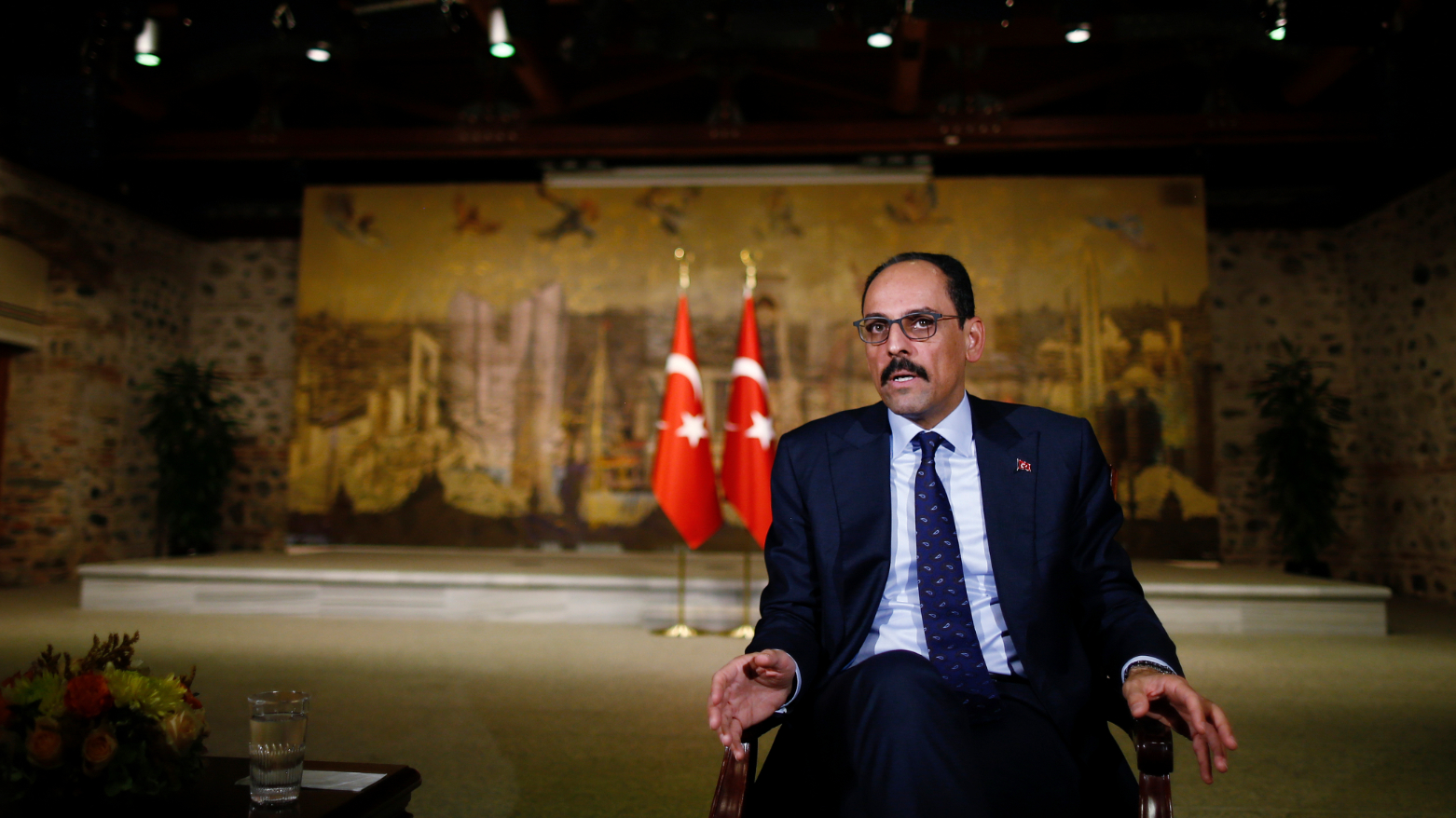
ERBIL (Kurdistan24) - Türkiye's National Intelligence Organization (MIT) chief Ibrahim Kalin has said resolving the Kurdish question requires democratic reform as well as disarmament, arguing that the grievances underlying the longstanding issue cannot be addressed by ending armed activity alone.
Speaking during a discussion with University of Oxford researcher Galip Dalay in Ankara on Monday, Nov. 9, Kalin said some Kurds' experiences of marginalization, discrimination and denial of rights must form part of efforts to reach a lasting settlement.
"The feeling among some Kurds that they have been marginalized, discriminated against and deprived of their rights is one of the main dimensions of the problem, and it must be addressed seriously," he said.
Two Tracks for a Settlement
Kalin described disarmament and democratization as two essential components of the process. He said the political dimension must address identity, multiculturalism and rights, rather than treating the surrender of weapons as a complete solution.
The remarks place social and political reforms alongside security measures in Ankara's stated approach to the Kurdish question. Kalin did not provide a timetable for the broader reforms or specify which measures would be introduced first.
He also acknowledged hesitation within the Kurdistan Workers' Party (PKK) leadership over what would happen to its members if they laid down their arms.
"I understand those concerns, but we are in talks to address and overcome those issues," Kalin said.
He indicated that additional legislation would be needed for PKK members who fall outside the scope of existing legal arrangements. According to his account, the steps would follow the disarmament stages and approval by Türkiye's Security Council, with parliament then expected to consider supplementary laws.
Kalin said democratic reforms could advance rapidly after those steps. He did not announce that the proposed legislation had been enacted or that negotiations with the remaining parties had concluded.
PKK Calls for Concrete Measures
PKK leaders, meanwhile, maintain that they have already taken steps intended to advance the peace process. They cite the suspension of military operations, the withdrawal of fighters, the evacuation of positions inside Türkiye and the symbolic burning of weapons.
They argue that Turkish authorities have so far relied on public statements without taking corresponding practical measures, a characterization that stands in contrast to Kalin's description of ongoing negotiations and planned legal changes.
The PKK leadership has also called for the release of its imprisoned leader, Abdullah Ocalan, saying his direct involvement is essential to resolving the Kurdish question. No agreement on that demand was announced in Kalin's remarks.
Implications Beyond Türkiye
Kalin said the Kurdish question has a regional dimension, touching Syria, Iraq and Iran as well as Türkiye. He acknowledged the heavy price Kurds paid in the struggle against ISIS and described the inclusion of Kurds from Western Kurdistan in Syria's political and state institutions as "a major achievement."
His comments came as discussions over the next steps in Türkiye's peace process continue, with the government's emphasis on a negotiated disarmament framework and the PKK's demands for concrete political action remaining central to the debate.
Kalin's central message was that ending armed activity, while necessary in his view, would leave the Kurdish question unresolved unless accompanied by measures addressing rights, identity and democratic participation.
Ebidulselam Tutinçî, Kurdistan24's journalist and news writer from Turkish desk, contributed to this report.