Masrour Barzani Vows Flood Victim Compensation, Says Baghdad Has Pledged to Ensure Regular Salaries
Kurdistan Region Prime Minister says assessments are underway to determine flood losses, while talks with Baghdad have produced encouraging commitments on salaries, budget rights, oil and gas, and other outstanding issues
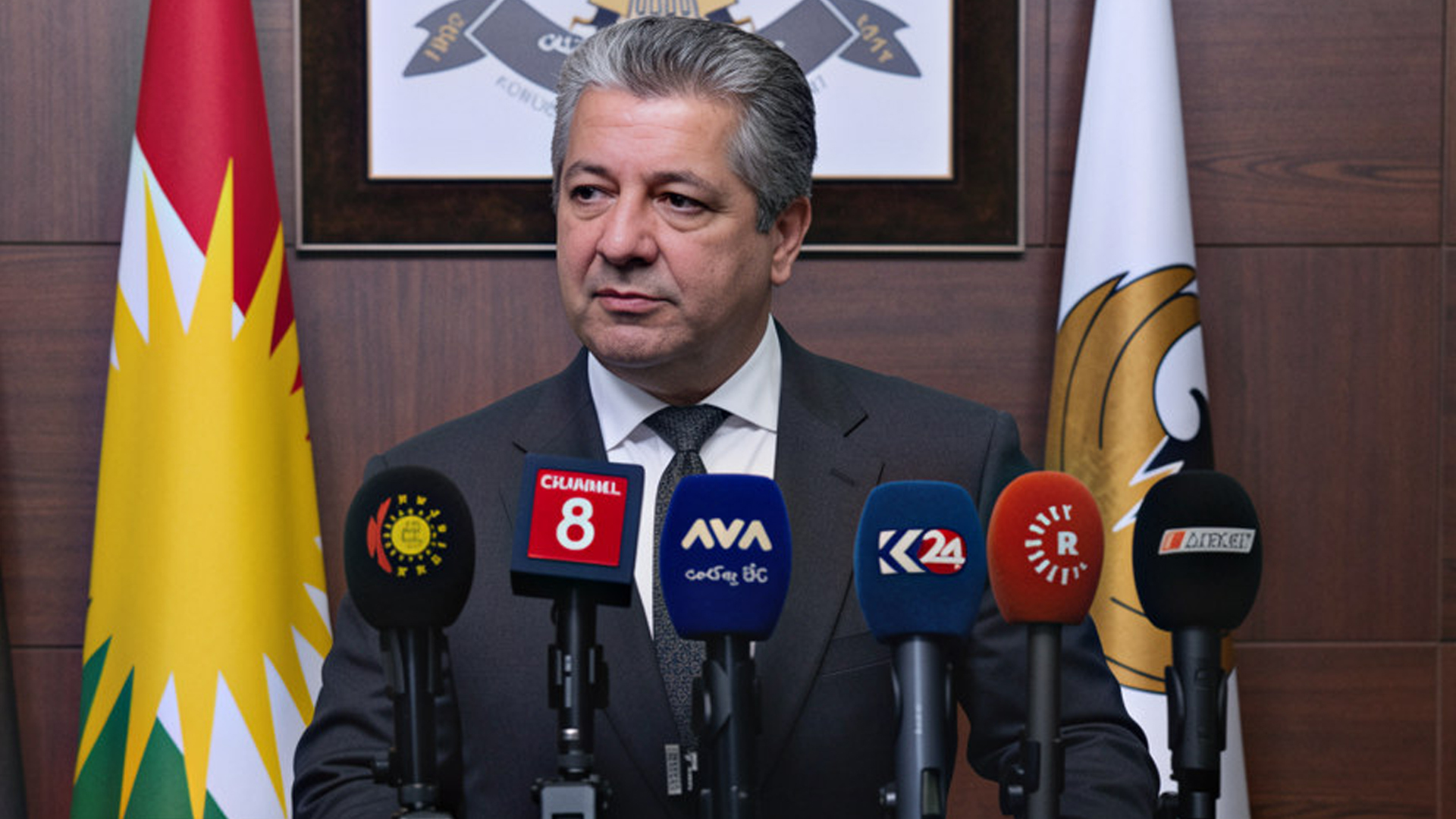
ERBIL (Kurdistan24) — Kurdistan Region Prime Minister Masrour Barzani said on Tuesday that his government would make serious efforts to compensate residents affected by the deadly flash floods in Erbil, while stressing that Baghdad had pledged to ensure the regular and continued payment of public-sector salaries in the Kurdistan Region.
Speaking at a press conference following a roundtable meeting with Erbil's governor Omed Xoshnaw and other provincial officials, Barzani reviewed the government's response to the recent flooding, which claimed two lives and caused significant damage to homes and property.
He said the government had ordered an assessment of the damage to establish the extent of individual losses, adding that serious efforts would follow to compensate those affected.
Barzani also expressed condolences to the families of the two victims and praised the coordination among government departments, security forces, Peshmerga forces, humanitarian organizations, and residents in responding to the disaster.
Flood Response and Investigation
Barzani said exceptionally heavy rainfall within a short period was the main cause of the flooding, but stressed that further investigations were needed to determine whether negligence or shortcomings in infrastructure and emergency preparedness had contributed to the damage.
He said the government would review all possible causes and take whatever measures were within its capacity to prevent similar disasters and minimize their impact in the future.
While acknowledging that natural disasters could not always be prevented, even in developed countries, he emphasized that authorities must do everything possible to reduce the resulting damage.
The prime minister praised the cooperation between Peshmerga forces, government employees, security agencies, humanitarian organizations, and volunteers who helped residents and worked to limit the consequences of the floods.
He specifically thanked the Barzani Charity Foundation, Kurdistan Foundation, and other humanitarian organizations for their assistance.
Barzani also urged residents to follow government safety instructions during emergencies and cooperate with relevant authorities to facilitate rescue and relief operations.
He called on the public to help keep cities and drainage systems clean, particularly by clearing manholes, warning that blocked drainage systems could contribute to further flooding and other emergencies.
Baghdad's Salary Pledge and Financial Crisis
Addressing the Kurdistan Region's financial difficulties, Barzani said the government was working to secure a fundamental resolution to its budget dispute with Baghdad rather than relying solely on temporary arrangements for salary payments.
He confirmed that the federal government had pledged to guarantee the provision and continuity of public-sector salaries in the Kurdistan Region, expressing hope that Baghdad would honor its commitments.
"They have given us that commitment," Barzani said, adding that the Kurdistan Region expected the federal government to ensure salaries were paid regularly and continuously.
He explained that the financial crisis had significantly affected the regional government's ability to provide public services, arguing that salaries alone were insufficient to meet the needs of the population.
Barzani said the Kurdistan Region needed an appropriate budget allocation to provide essential equipment, resources, and public services on time, particularly for managing cities such as Erbil.
He also stressed that the regional government continued to insist on securing its constitutional financial entitlements from Baghdad to enable it to fulfill its responsibilities toward residents.
Talks With Baghdad and Washington
Barzani said his recent visit to Baghdad involved serious discussions on several outstanding issues between the Kurdistan Regional Government (KRG) and the federal government, expressing hope that the talks would lead to positive results and greater understanding.
He said the discussions covered budget allocations, domestic revenues, oil and gas, and the disputed territories, emphasizing that the disagreements between Erbil and Baghdad extended beyond the salary issue.
Regarding domestic non-oil revenues, Barzani said the two sides had discussed how revenues generated in the Kurdistan Region would be handled alongside the provision of public-sector salaries. He described the commitments received from Baghdad on this issue as encouraging.
On oil-related disagreements, he acknowledged that differences remained and said negotiations would continue to reach an arrangement serving the interests of the Kurdistan Region.
Barzani also confirmed that he had discussed the situation with U.S. officials, including Ambassador Tom Barrack, saying Washington supported having a strong and resilient Kurdistan Region.
He said a strong and united Kurdistan Region would contribute to stability and the development of Iraq as a whole.
Khor Mor Attack and Constitutional Rights
Barzani said the KRG had discussed the recent attack on the Khor Mor gas field with Iraqi federal authorities, with both sides agreeing that such attacks must not happen again.
He said the attacks had been strongly condemned and stressed the need for continued cooperation between Erbil and Baghdad to prevent further incidents.
Barzani confirmed that a joint committee formed by the Iraqi prime minister had visited the site to begin an investigation into the attack and establish who was responsible.
He said the Kurdistan Region expected those found responsible for such attacks to face legal consequences.
The prime minister also reiterated that discussions with Baghdad had focused on implementing the Iraqi Constitution and safeguarding the constitutional rights of the people of the Kurdistan Region.
He stressed that the Constitution must remain the foundation of any agreement between the two governments, particularly regarding oil and gas management and the federal status of the Kurdistan Region.
Barzani acknowledged that differing views existed within the federal government over oil management, including calls for greater central control, which he said contradicted the Constitution.
He emphasized that Erbil would continue to insist on constitutional implementation and on treating the Kurdistan Region as a federal entity.
Political Dialogue and Cooperation
On the Kurdistan Region's internal political situation, Barzani said the KRG's doors remained open to all political parties willing to engage in dialogue.
He pointed to the reactivation of the Kurdistan Parliament as an important opportunity for political parties to discuss outstanding issues and work toward common solutions.
He called on all political forces concerned about the interests of the people of the Kurdistan Region to take part in dialogue, stressing that the government was ready to engage with them.
Barzani concluded by reaffirming his government's commitment to serving the people of the Kurdistan Region and continuing efforts to secure their financial and constitutional rights while addressing the challenges facing the region.