Turkish Media: 2,200 YBŞ Fighters to Join Iraqi Army
Hürriyet reports that 2,200 YBŞ members could join the Iraqi Army as Türkiye and Iraq move to restore federal authority and address armed groups in Sinjar.
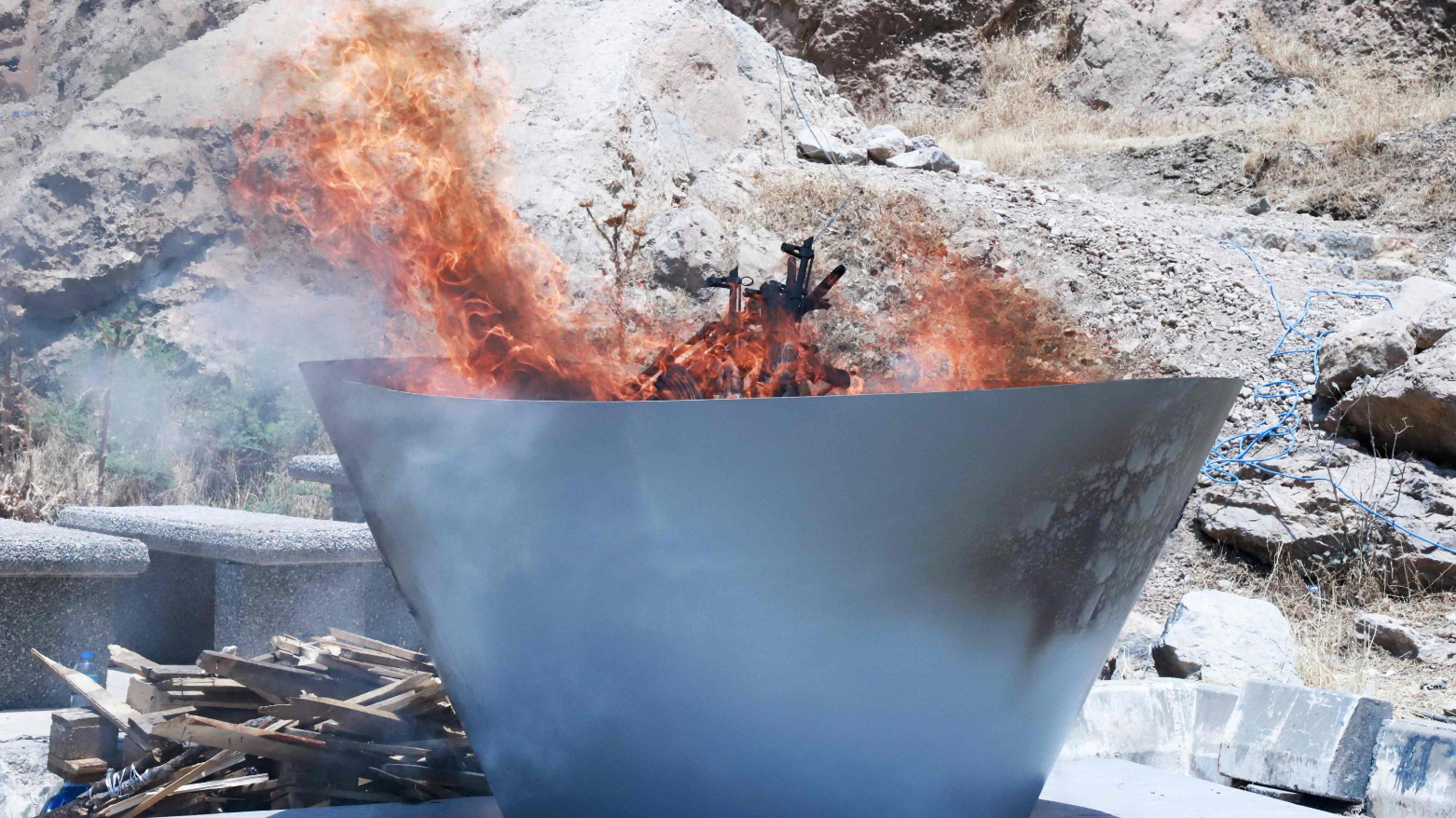
ERBIL (Kurdistan24) - Türkiye's Hürriyet newspaper reported Friday that 2,200 members of the Sinjar Resistance Units (YBŞ) are expected to lay down their weapons and be integrated into Iraq's security structure as Ankara and Baghdad move to restore federal authority in Sinjar.
In a column published Sept. 25, Hürriyet writer Nedim Şener said the arrangement forms part of a broader understanding reached after Turkish President Recep Tayyip Erdoğan met Iraqi Prime Minister Ali al-Zaidi on the sidelines of the 81st United Nations General Assembly in New York.
The Turkish presidency's Directorate of Communications confirmed after the Sept. 23 meeting that the two sides had agreed to deepen security cooperation, restore full state authority in Sinjar and end the presence of banned foreign armed elements there.
It also said Turkish forces would gradually hand over the Bashiqa-Zilkan base to Iraq's federal government as Baghdad made progress on those security measures under an agreed mechanism and timetable.
The official statement, however, did not specify that 2,200 YBŞ members would be incorporated into the Iraqi Army. That figure and the proposed integration mechanism were reported by Hürriyet.
Şener wrote that the YBŞ, formed among Ezidis after ISIS attacked Sinjar in 2014, is regarded by Türkiye as the PKK's structure in the district.
He described the reported disarmament and integration plan as part of Ankara's wider regional security policy and said Sinjar had served as a corridor connecting Qandil, Makhmour and Syria.
According to the Hürriyet account, the district had been described by Turkish security sources as a "Second Qandil" because of its position, tunnels and shelters, and its role in the movement of personnel, weapons and logistics.
The report said dismantling that network would strengthen Iraqi state authority and expand security coordination among Ankara, Baghdad and Erbil.
The newspaper also linked the Sinjar arrangements to the planned transfer of the Bashiqa-Zilkan base. Under the official Turkish-Iraqi statement, the handover is to proceed gradually as Iraq implements the agreed security measures in Sinjar.
Erdoğan said separately after the talks that Iraqi government authority would prevail in Sinjar and that Ankara and Baghdad had discussed what control of the area would look like after it was cleared of what he described as terrorist elements.
He also said Türkiye wanted its relationship with Iraq to focus increasingly on the Development Road, trade, stability and prosperity rather than terrorism.
Hürriyet's report follows earlier Turkish media claims about a wider disarmament framework.
On Aug. 31, Kurdistan24 reported that Hürriyet had described a joint Ankara-Baghdad-Erbil-Sulaimani mechanism under which 2,200 fighters in Sinjar would be integrated into Iraqi forces, while thousands of PKK members would disarm or return to Türkiye.
The status of implementation on the ground has remained less clear.
On Sept. 12, Mohammed Jassim, head of the Nineveh Provincial Council's Security Committee, told Kurdistan24 that no concrete steps had yet been taken toward disarming armed groups in Sinjar. In reporting by Dr. Kamaran Aziz, Jassim said more than 4,000 armed fighters remained in the district and that earlier attempts to register fighters for a weapons-surrender process had failed.
Jassim also said Iraqi media had reported that Baghdad was considering integrating around 2,000 PKK-affiliated fighters in Sinjar into the security forces, but that no such arrangement had been implemented at that stage.
Read More: Nineveh Security Official: No Concrete Steps Taken Toward Disarmament in Sinjar
That distinction remains central to the latest Hürriyet report: Ankara and Baghdad have officially confirmed an agreement to restore state authority in Sinjar and remove banned foreign armed elements, while the precise figure of 2,200 YBŞ members and the mechanism for bringing them into Iraqi forces remain claims reported by the Turkish newspaper.
The Sinjar security file has remained unresolved despite the 2020 Sinjar Agreement between the Kurdistan Regional Government and Iraq's federal government, which sought to reorganize security and administration in the district. Its implementation has repeatedly stalled amid the continued presence of multiple armed formations.
The latest Turkish-Iraqi understanding therefore establishes a new political framework for addressing Sinjar, but the extent and timing of any YBŞ disarmament or integration will depend on how the agreement is implemented on the ground.