Iran Leader's Adviser Warns Regional Airports Amid Flight Curbs
Iranian official Mohammad Mokhber warns regional states over aviation restrictions as Mahan Air cancels Kurdistan flights and Najaf suspends Iran services.
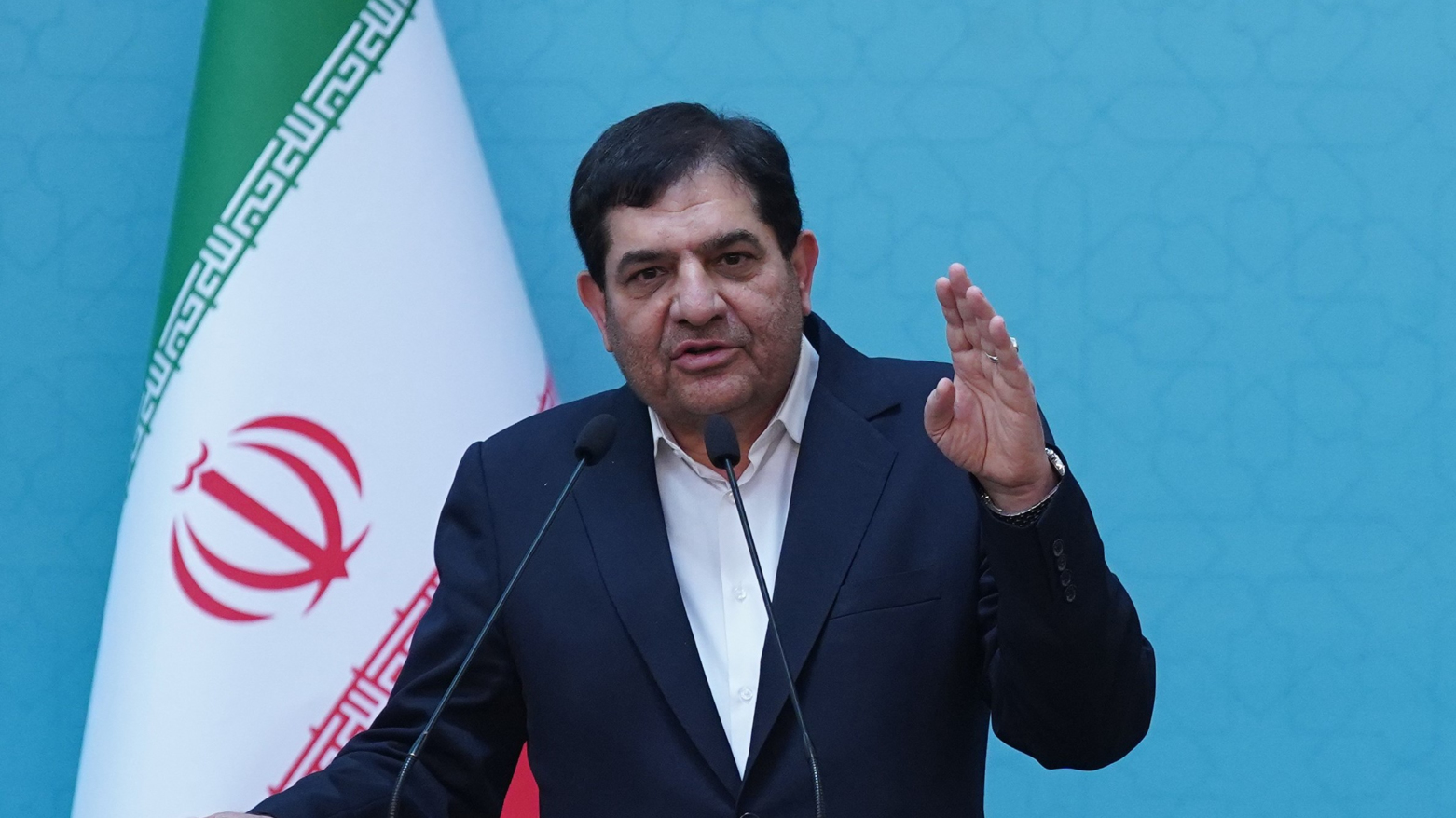
ERBIL (Kurdistan24) - Mohammad Mokhber, an adviser to Iranian Supreme Leader Mojtaba Khamenei and a member of the Expediency Council, warned Friday that countries across the region could face aviation restrictions if Iranian airports and airlines are denied access to international services. Mokhber's current advisory role and Khamenei's position as Iran's supreme leader are also reflected in recent Iranian and international reporting.
Writing on X on Friday, Mokhber accused regional countries of coordinating with the United States in implementing what he described as hostile policies against Iran.
"Either flights throughout the entire region must be free and open to everyone, or to no one," Mokhber wrote.
He added that if Iranian airports were deprived of flights and aviation services, other countries in the region should not expect to retain the same access.
His remarks came as Iranian carriers faced widening disruptions in Iraq and the Kurdistan Region following new U.S. measures targeting Iran's aviation industry.
The U.S. Treasury Department announced on Sept. 8 that its Office of Foreign Assets Control had sanctioned 36 targets supporting Iran's aviation sector, including 27 Iranian airlines. Washington says the sector has been used to move weapons, personnel and illicit cargo.
The immediate impact was visible Friday in the Kurdistan Region.
Sarsang Mamundi, Mahan Air's manager in Iraq and the Kurdistan Region, told Kurdistan24 that the airline had been scheduled to operate a Tehran-Erbil service and a return flight on Friday but was informed Thursday night that authorization had not been granted.
"Our airline's flight to Sulaimani was also canceled today," Mamundi said.
Jalal Talabani International Airport's Friday schedule listed the Mahan Air flight to Tehran as cancelled.
Mamundi said the airports themselves had no objection to the airline's operations and attributed the disruption instead to ground-handling companies declining to provide services.
"The airports themselves have no problem with our flights, but Dnata and several other companies are not providing their services at the airports," he told Kurdistan24.
Mahan Air normally operates three round-trip services to the Kurdistan Region each week, with Tehran-Erbil flights on Tuesdays and Fridays and an additional Friday service connecting Tehran and Sulaimani.
Read More: Mahan Air Cancels Erbil, Sulaimani Flights Amid Service Restrictions
Restrictions also reached Najaf on Friday.
An urgent official notice from Najaf International Airport ordered the suspension of all arrivals and departures involving Iran from 2 a.m. on Sept. 25 until further notice. The airport did not identify the authority behind the instruction or state why the suspension had been imposed.
Airport management instructed airlines and terminal operators not to proceed with arrangements connected to Iranian services while the order remained in effect.
Read More: Najaf Airport Suspends Flights to Iran Until Further Notice
The Najaf decision followed several days of uncertainty over Iranian aviation links with Iraq. Iranian officials had earlier discussed redirecting Baghdad-bound services to Najaf after flights to the Iraqi capital were disrupted. Friday's directive removed that option for the time being.
The latest disruptions form part of a wider U.S. campaign targeting Iran's aviation sector.
Mahan Air has been under U.S. counterterrorism sanctions since 2011 over Washington's allegation that it provided support to Iran's Islamic Revolutionary Guard Corps-Quds Force. The U.S. State Department later imposed additional proliferation-related sanctions on the airline.
Associated Press reporter Farnoush Amiri reported on Sept. 8 that the new measures were part of a wider U.S. effort to increase pressure on Iran's aviation sector. The restrictions have also placed foreign companies providing fuel, ground handling, ticketing and other services under pressure over possible exposure to U.S. sanctions.
The effect has extended beyond Iraq. Iranian flights have faced cancellations or service restrictions on several international routes, while U.S. Treasury Secretary Scott Bessent has warned companies servicing sanctioned Iranian carriers that they could lose access to the U.S. financial system.
For travelers in Iraq and the Kurdistan Region, the dispute has already translated into cancelled services in Erbil and Sulaimani and a complete suspension of Iran-related flights at Najaf.
Mokhber's statement raises the political stakes further, with Tehran now warning that restrictions imposed on Iranian aviation could have consequences for air travel elsewhere in the region.