Iran's military: Americans must leave West Asia, we will not retreat one step
Senior Iranian military spokesman says the US deployed all the power it had set aside for World War III against Iran and achieved nothing, warns of a slap if Washington interferes in Hormuz, and declares Iran will never allow America to return to its former position in the new world order
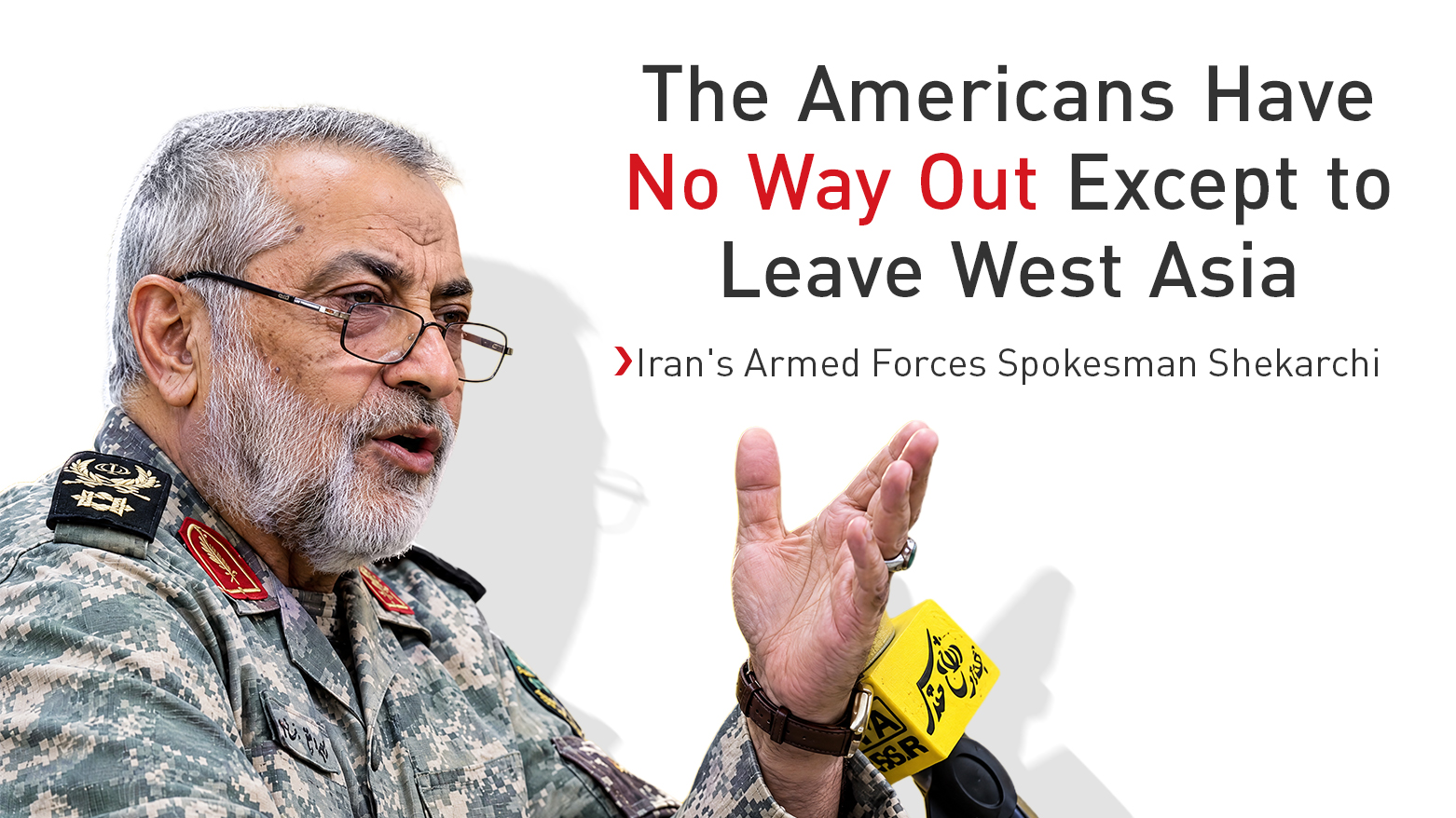
ERBIL (Kurdistan 24) - Iran's senior armed forces spokesman Brigadier General Abolfazl Shekarchi issued a sweeping military and strategic declaration on Saturday night, warning that the United States has no way out of the current conflict except to leave the West Asia region, that Iran will never allow America to return to its previous position in the new world order, that any interference in the Strait of Hormuz will be met with a slap, and that Iran is determined not to retreat one step before the enemy.
We are determined not to retreat in the slightest before the enemy and to suppress him.
Shekarchi said in his statement.
On the military balance of the seven-month conflict, Shekarchi made one of the most sweeping assessments yet from an Iranian military official. "The Americans deployed all the power they had set aside for World War III against Iran and achieved nothing," he said, framing the conflict not as a bilateral war but as the full deployment of America's reserved strategic military capacity, and declaring that deployment a failure.
On the strategic future of the American presence in the region, Shekarchi was categorical. "The Islamic Republic of Iran, as a world power, will never allow America to return to its previous position in the new world order," he said. "The Americans have no way out except to leave the West Asia region, and the sooner they leave, the smaller their losses."
On the Strait of Hormuz specifically, Shekarchi issued a direct operational warning. "If they interfere in the Strait of Hormuz, they will be slapped," he said, in language that echoes the Khatam al-Anbiya Emergency Command Headquarters warning of September 20, which threatened continuous, effective, and painful attacks without limits on all American positions in the region if Washington makes a mistake against Iran.
Shekarchi's statements arrive as the most intensive diplomatic week of the seven-month conflict shows its first signs of genuine movement. Iranian President Pezeshkian told Al Jazeera earlier on Saturday that Iran has no trust in the American side but that Qatar and Pakistan are mediating Tehran's seven-day Hormuz reopening proposal, under which the strait would reopen on day six and nuclear talks begin on day seven in exchange for lifting the naval blockade, releasing $12 billion in frozen assets, and a regional ceasefire. Foreign Minister Araghchi laid out the sequenced timeline in detail on Friday. Trump said Saturday the current Iranian offer is not acceptable. The US has yet to formally respond.
The simultaneous deployment of a detailed diplomatic proposal through Qatari and Pakistani mediation and the issuance of categorical military warnings by the armed forces spokesman reflects the dual-track nature of Iranian strategic communication throughout the conflict, in which the diplomatic channel and the military threat are operated in parallel rather than sequentially, each reinforcing the other's leverage.