US Forces Leave Iraq After Two Decades As Iran Emerges Stronger
Washington Post reports the last 1,500 US and coalition personnel relocate to Jordan as the September 30 deadline arrives, Patriot battery removed from Erbil, equipment airlifted from the last US base, and a new IRGC-backed splinter militia already attacking Saudi infrastructure
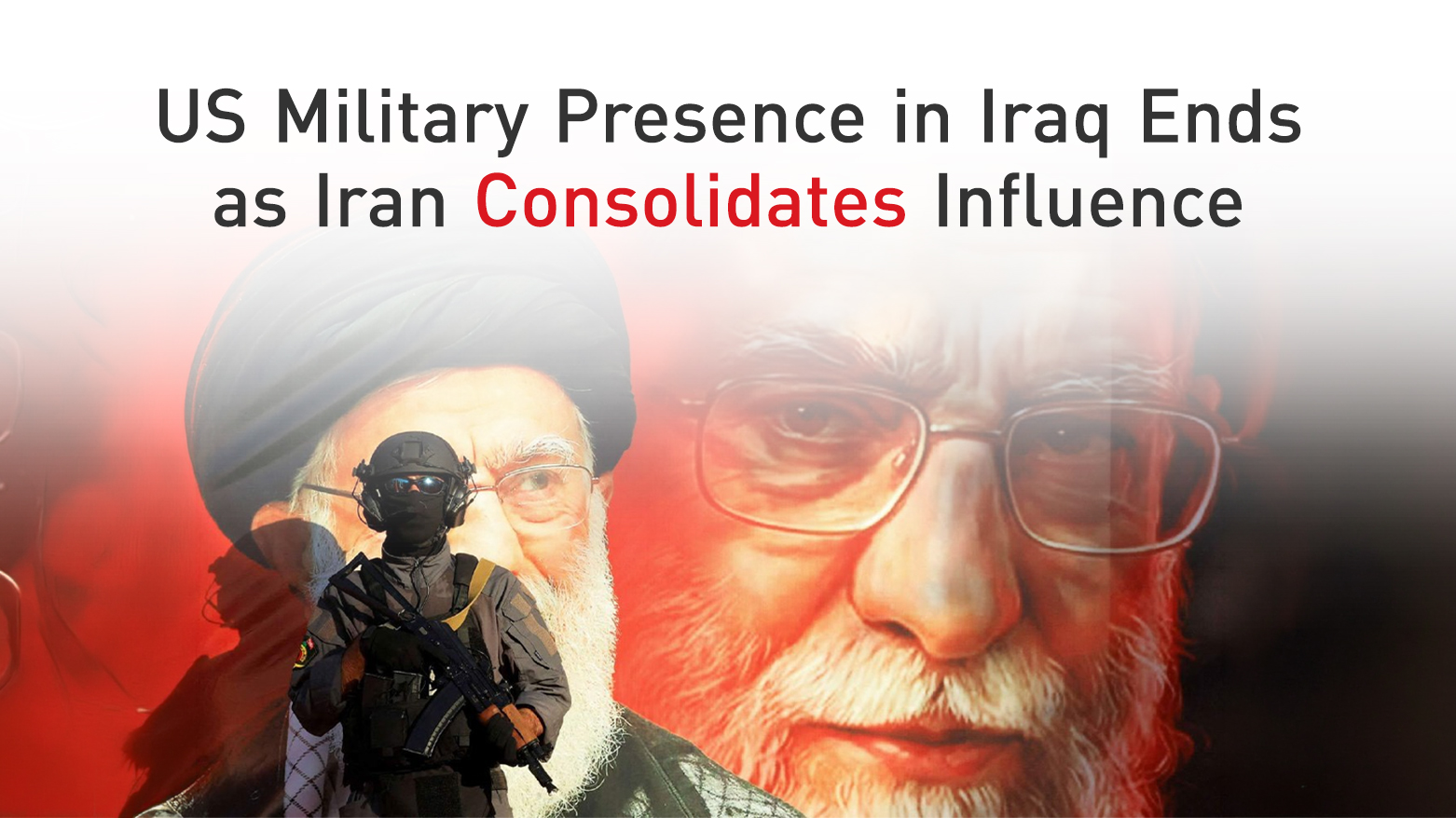
ERBIL (Kurdistan 24) - The United States formally withdrew its remaining military forces from Iraq on Wednesday, ending more than two decades of American military involvement in the country that cost the lives of as many as 210,000 Iraqi civilians and 4,599 US service members and more than $2.8 trillion in US taxpayer money, as Iran emerges from the withdrawal as the dominant external power in Iraq and the broader region, the Washington Post reported.
The last remaining approximately 1,500 combined US personnel and anti-Islamic State coalition members in Iraq have relocated to Jordan, which will serve as the headquarters for the ongoing mission to counter Islamic State militants, US officials confirmed. The Pentagon says it can continue to target militants who pose a threat to US personnel and interests from the Jordanian base. "If they metastasise to something beyond control, and they want our help, then we'll come in and help them," one US official told the Washington Post.
The Final Airlift From Erbil
A US defense official confirmed that the military was airlifting equipment and personnel out of Erbil, the last American military base in Iraq, in time to meet Wednesday's deadline.
Some US Marines will remain in Iraq to protect American diplomatic missions, along with contractors responsible for maintaining Iraq's fleet of F-16 jet fighters and American-made tanks
according to current and former US officials.
In a development with direct implications for the Kurdistan Region's security, the US military has already removed the Patriot air defense battery that was stationed around Erbil, current and former US officials confirmed. The US is likely to concentrate its remaining air defenses to protect the US Embassy in Baghdad and the consulate in Erbil, despite continuing Iranian and militia strikes, those officials said. For Kurdistan Region Prime Minister Masrour Barzani, who told the Financial Times on Sunday that leaving the Region without any defensive system is a cause for concern after more than 1,000 Iranian drone and missile attacks since February 2026, the Patriot battery's removal is precisely the vulnerability he warned about.
The withdrawal concludes a Biden administration agreement made in 2024 to zero out US military personnel in Iraq by this year. The redeployment has been a notably muted event in Washington, given the scale of the conflict it concludes. Roughly 170,000 US troops were in Iraq at the height of the war in 2007. President Barack Obama declared an end to combat operations and completed an initial pullout in 2011. The rise of ISIS in 2014 prompted a return that lasted into the first Trump administration and culminated in Wednesday's final departure.
Iran's Victory Lap
The US departure has been celebrated as a victory in Iran, which remains in an uneasy ceasefire with the US and Israel following months of war. Iran's parliamentary speaker Mohammad Bagher Qalibaf remarked on the US withdrawal during a diplomatic visit to Baghdad last month that included a visit to the site where Iranian commander Qasem Soleimani was killed in a US strike in 2020. "The resistance front is the one prevailing now," he said at a news conference.
Iran has long exploited Iraq's post-2003 destabilization, seeding the government with friendly officials and arming militia groups that have expanded Tehran's influence across the country. The Popular Mobilization Forces, organized to confront ISIS, are on Iraqi military payrolls but serve as Iranian proxy forces numbering more than 200,000, according to analysts, and have fielded one-way attack drones and missiles to strike US troops and regional adversaries throughout the conflict.
"These militia groups exist because Iran wants them to exist, and Iran finds continued utility in using them as a tool and a lever against the Iraqi government and the US in the region," said Taylor, a former senior State Department official.
The Disarmament Gap
The September 30 departure of US forces was intended to coincide with the disarmament of those Iranian-backed militia groups, but the groups have largely ignored or defied the calls to disband. Prime Minister Ali al-Zaidi has extended the militia disarmament timeline to June 2027 under a phased plan beginning with a 90-day mutual ceasefire. Contending with those groups will henceforth be an Iraqi responsibility, a US official told the Washington Post.
New Cells and A New Splinter Militia
Iran's hard-line IRGC has recently evolved its paramilitary operations in Iraq in ways that may pose significant difficulties for Baghdad. The IRGC has focused its resources on smaller cells operating outside the larger militia networks specifically to evade detection and deterrence. Asaib Ahl al-Haq turned over only approximately half the arsenal it was estimated to hold during the disarmament process, with its leaders saying the rest had been claimed by defectors who formed a new militia. That new organization receives substantial Iranian support, has cooperated with Houthi allies in Yemen, and was involved in recent attacks on energy infrastructure in Saudi Arabia, a senior Iraqi prime ministerial official told the Washington Post.
A Changed Region
Despite Iran's apparent gains from the US withdrawal, analysts note that its regional behavior has also produced unlikely countervailing alliances. "Iran may be boosted by the US withdrawal, but its recent behavior in the region has also created unlikely alliances against Tehran that challenge its power," said Mark Cancian, a senior adviser with the Center for Strategic and International Studies. The 2003 operation that toppled Saddam Hussein eliminated Tehran's primary adversary on its western border, but Iran's targeting of countries that house US troops during the current war has pushed nations like Saudi Arabia closer to Israel, Cancian noted, creating a strategic alignment that was unimaginable decades ago. "That's a great help for the United States because we always had difficulty in balancing the Arabs and the Israelis," he said.