Muqtada al-Sadr Declares Iraq ‘Independent’ as US-Led Coalition Mission Ends
Shiite cleric calls for weapons to be placed under state control, political leaders to step aside, and stronger Iraqi security forces
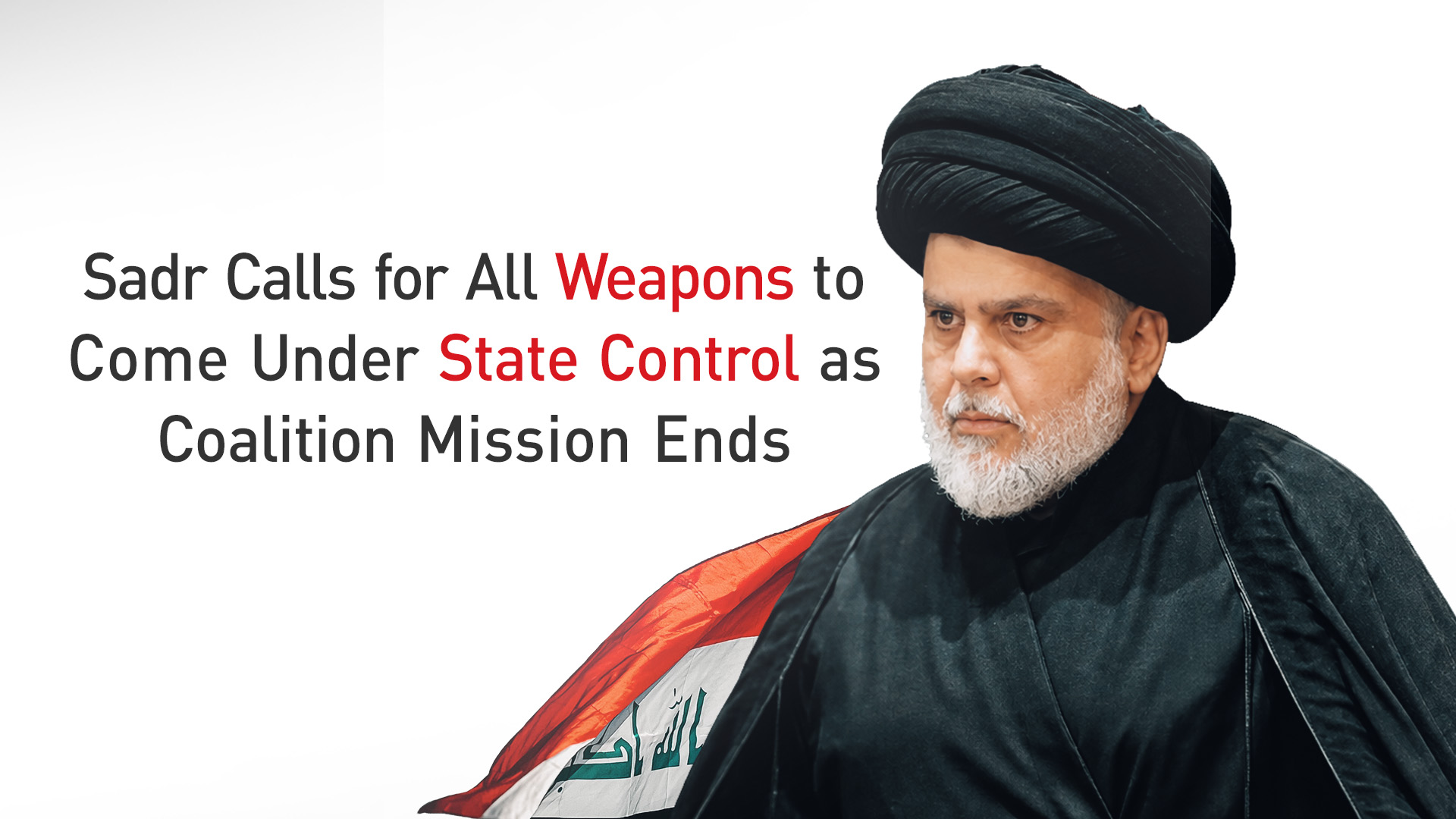
ERBIL (Kurdistan24) — Prominent Iraqi Shiite cleric Muqtada al-Sadr on Wednesday declared Iraq “independent” following the formal end of the US-led international coalition’s military mission in the country, while calling for the consolidation of state authority and major political and security reforms.
In a statement published on Wednesday, Sadr said the end of the US and international coalition presence marked the conclusion of what he described as an era of US presence in Iraq.
The statement came as Iraqi Prime Minister and Commander-in-Chief of the Armed Forces Ali Faleh al-Zaidi earlier in the day formally announced the completion of the international coalition’s mission during a ceremony in Baghdad marking Iraq’s Sovereignty Day.
Sadr thanked God and those who had previously fought against the US presence in Iraq, while outlining several demands and proposals for the post-coalition period.
He announced the immediate dissolution of the “Promised Day Brigades” and said the Mahdi Army would be transformed into an institution called the “Supporters of Imam al-Mahdi.”
Calls for compensation and non-interference
Sadr called for legal claims seeking compensation from the United States for damages he attributed to the "US occupation of Iraq."
He also warned Washington and neighboring countries against interfering in Iraq’s internal affairs, saying such intervention could lead Baghdad to cut relations and respond in kind, particularly regarding political and ideological issues and efforts to draw Iraq into regional conflicts.
Sadr called on the United States to adopt what he described as reciprocal diplomatic treatment and to avoid what he characterized as condescension toward Iraq, its government and its people.
His comments came as the United States formally completed its military withdrawal from Iraq on Wednesday, ending the coalition’s 12-year military campaign against ISIS.
The final US troops departed from Erbil, with Washington and Baghdad moving toward a bilateral security relationship.
Sadr calls for weapons under state control
Addressing what he described as requirements following the end of the foreign military presence, Sadr called for all weapons to be placed under state control through a publicly announced program with measurable and practical results acceptable to the Iraqi people and religious authorities.
He also called on political leaders to leave political work immediately and make way for new figures, linking the proposal to efforts to combat corruption and pursue reform.
Sadr further urged the government to strengthen all branches of Iraq’s security forces, particularly border guards.
The call for weapons to be brought under state authority coincides with an ongoing debate in Iraq over the future of armed factions following the coalition’s withdrawal.
The government has sought to restrict weapons to state institutions, although the process of disarming or integrating powerful armed groups remains unresolved.
Sadr had previously welcomed the planned US and coalition withdrawal, while warning that the departure should not create an opening for foreign powers to interfere in Iraq.
He had also called for strengthening Iraq’s security institutions, particularly border forces and the air force, under federal authority.
The coalition’s departure marks a major change in Iraq’s security relationship with the United States, while Baghdad says security cooperation with coalition partners will continue under a new framework.